


How Hydrogen Methane Breath Test Works
by Prem Nand, Clinical Dietitian - Nutritionist, NZRD Copyright 2022 Maximised Nutrition
Introduction
The Hydrogen–Methane Breath Test is a simple, non-invasive diagnostic tool used to detect Small Intestinal Bacterial Overgrowth (SIBO), Intestinal Methanogen Overgrowth (IMO), and carbohydrate malabsorption issues such as lactose or fructose intolerance.
By analyzing the levels of hydrogen and methane gases exhaled in your breath, clinicians can assess whether excess fermentation is occurring in your intestines—one of the hallmarks of gut dysbiosis and related IBS symptoms.
What Does the Hydrogen–Methane Breath Test Detect?
Breath testing is commonly used to identify:
- SIBO (Small Intestinal Bacterial Overgrowth)
- IMO (Intestinal Methanogen Overgrowth)
- Lactose malabsorption
- Fructose malabsorption
In these conditions, carbohydrates are fermented by gut microbes, producing measurable levels of hydrogen and methane gases.
Where Do Intestinal Gases Come From?
There are four main sources of gas in the gastrointestinal tract:
1. Swallowed air during eating or drinking
2. Microbial fermentation of food in the gut (main contributor to hydrogen and methane)
3. Chemical digestion reactions
4. Gases transferred from the bloodstream into the gut
Of the many intestinal gases produced—hydrogen, methane, carbon dioxide, hydrogen sulfide, nitrogen, and ammonia—only hydrogen and methane are currently measurable in New Zealand through commercial breath testing.
How Breath Testing Works
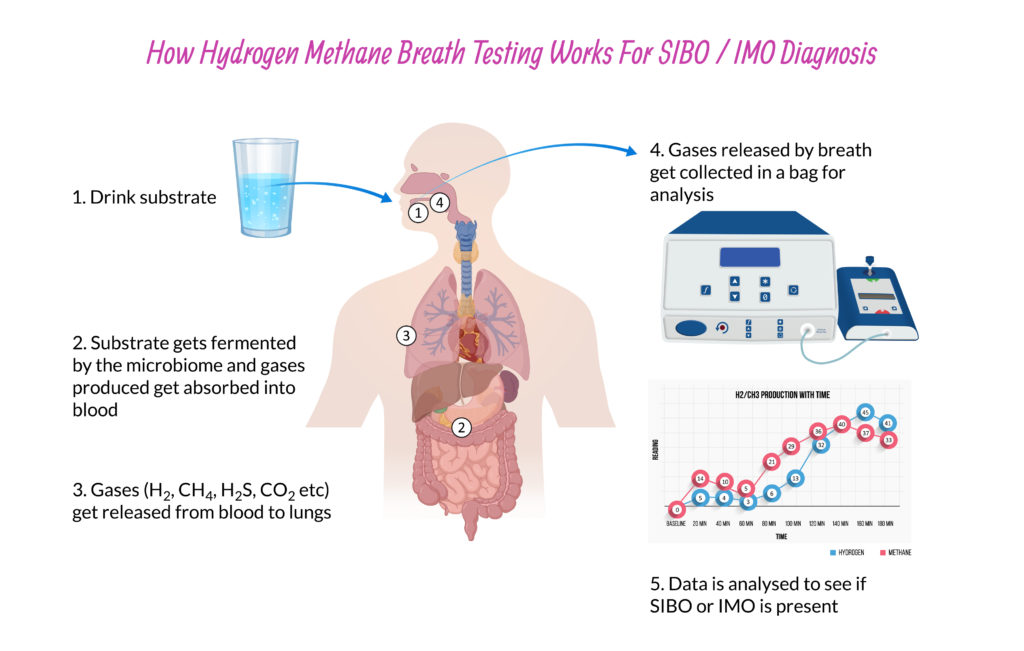
How the Breath Test Works
Step 1: Carbohydrate Ingestion
You begin the test by drinking a solution of glucose or lactulose—types of carbohydrates that are digested (or not digested) depending on gut health.
Step 2: Fermentation by Microbes
If dysbiosis, SIBO, or IMO is present, gut microbes ferment these sugars early in the digestive process, producing hydrogen and methane gases.
Step 3: Gas Absorption and Exhalation
These gases are absorbed through the intestinal wall into the bloodstream, transported to the lungs, and exhaled through the breath.
Step 4: Breath Sample Analysis
Breath samples are collected at regular intervals. The levels of hydrogen and methane are measured to determine:
- Timing of fermentation (early vs. late)
- Type of overgrowth (hydrogen-dominant = SIBO, methane-dominant = IMO)
- Malabsorption patterns (e.g., elevated hydrogen after lactose ingestion = lactose malabsorption)
⚠️ Note: Hydrogen sulfide gas, linked to some cases of diarrhoea-predominant IBS, cannot currently be measured in New Zealand.
Why Use Breath Testing for IBS and Gut Dysbiosis?
The hydrogen–methane breath test offers a safe and accessible way to evaluate the root causes of:
- Persistent bloating and gas
- Unexplained constipation or diarrhoea
- Reactions to carbohydrate-containing foods
- Poor results from the low FODMAP diet
Identifying the underlying cause—whether SIBO, IMO, or carbohydrate intolerance—can lead to targeted treatment options including dietary interventions, probiotics, or antimicrobial therapy.
Next Steps: Testing with Maximised Nutrition
Maximised Nutrition provides at-home hydrogen–methane breath test kits. Easy to use and shipped directly to your door, they come with full instructions to guide your test preparation and sample collection.
Order Your Breath Test Kit
To find out more about SIBO (Small Intestinal Bacterial Overgrowth), Click here.

Holistic Nutrition For A Happy, Healthy, Confident You!
Quick Links
INFORMATION ON THIS WEBSITE IS FOR INFORMATIONAL PURPOSES ONLY.
PLEASE ALWAYS CONSULT A QUALIFIED HEALTH PRACTITIONER FOR A PERSONALISED ADVICE FOR YOUR HEALTH CONDITION
© 2025 MAXIMISED NUTRITION LTD. All Rights Reserved.