


Severe Acid Reflux After H. pylori Treatment
by Prem Nand, Clinical Dietitian - Nutritionist, NZRD Copyright: Maximised Nutrition Ltd
Introduction
Are you struggling with severe acid reflux after completing treatment for H. pylori? You’re not alone. Many people experience worsening reflux symptoms after antibiotics and PPIs, leaving them with burning, regurgitation, and even acid in the mouth—despite “successful” treatment.
This article explores why reflux after H. pylori treatment happens, how to diagnose it properly, and natural treatment strategies that go beyond acid suppression. We’ll also dive into how gut dysbiosis, parasites, IMO (intestinal methanogen overgrowth), and tight diaphragm muscles can all play a role.

Image generated by Dalle-Chatgtp - does not reflect any real person.
What Is H. pylori?
Helicobacter pylori is a bacterium that infects the stomach lining. It's linked to:
• Chronic gastritis
• Peptic ulcers
• Gastric cancer
Treatment usually involves:
• Proton pump inhibitors (PPIs)
• Antibiotics (like clarithromycin and amoxicillin)
• Sometimes bismuth in quadruple therapy
While this approach can kill the infection, it also disrupts your gut microbiome, interferes with stomach acid levels, and may trigger long-term reflux symptoms.
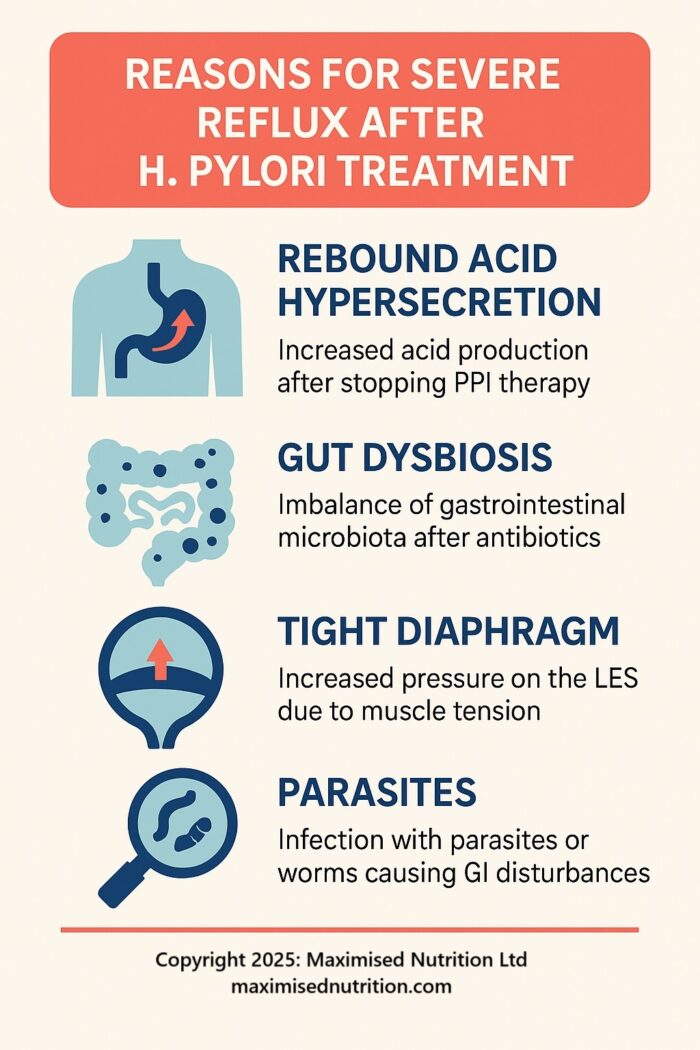
Why Does Reflux Get Worse After H. pylori Treatment?
1. Rebound Acid Hypersecretion
After PPI therapy, your body produces more gastrin—a hormone that stimulates acid. Once PPIs are stopped, this can lead to rebound hyperacidity, worsening reflux symptoms (Reimer et al., 2009).
2. Low Stomach Acid (Hypochlorhydria)
Oddly, many people develop low stomach acid after treatment, especially if they've had mucosal damage. This leads to:
• Poor digestion
• Overgrowth of bacteria (SIBO or IMO)
• Gas and bloating, increasing pressure on the LES
Low stomach acid is often misdiagnosed as high acid.
3. Gut Dysbiosis and SIBO/IMO
Multiple antibiotics disrupt the gut microbiota, making the GI tract vulnerable to:
• Small intestinal bacterial overgrowth (SIBO)
• Methane overgrowth (IMO)
These imbalances increase gas production and push stomach contents upward, worsening acid reflux (Pimentel et al., 2020).
4. Tight Diaphragm and LES Dysfunction
Your diaphragm plays a major role in supporting the lower esophageal sphincter (LES). If it becomes tight or dysfunctional due to:
• Chronic reflux
• Shallow breathing
• Stress or posture
...you can develop persistent reflux even with low acid (Mekhael et al., 2021).
5. Parasites and Worms
Though less common, intestinal parasites like Giardia, Blastocystis, or helminths (Ascaris, Enterobius) can cause:
• Bloating
• Delayed motility
• Inflammation
• Increased reflux
They may aggravate gut dysbiosis and worsen acid regulation (Stensvold et al., 2009).
Diagnosis of Reflux After H. pylori Treatment
If you’re still experiencing reflux after treatment, here's what to investigate:
Step-by-Step Diagnosis Pathway
1. Clinical history (antibiotic and PPI use, stress, diet)
2. SIBO/IMO breath test
3. Gastroscopy (to rule out ulcers, esophagitis, or bile reflux)
4. Stool testing for:
o H. pylori antigen
o Parasites
o Pan-microbiome PCR (for dysbiosis)
5. Diaphragm and breathing assessment
6. Serum pepsinogen & gastrin (to check acid production)
Natural Treatment Options for Chronic Reflux After H. pylori
Depending on what the assessment shows as to the cause of the reflux, the aim of the treatment is to restore your gut functions so as not to get reflux. Here are some thoughts that I found that work in practice.
1. Get Diaphragm release
There are osteopaths that are great in doing this therapy. Work with one. Remember to also ask for breathing exercises to strengthen the muscles around the diaphragm area.
2. Sort gut dysbiosis issues
Work with a specialist Clinical Dietitian - Nutritionist through the process of establishing a healthy gut microbiome. The aim will be to heal the gut lining, kill those SIBO/IMO bugs and restore the gut health.
3. Wean Off PPIs Safely
Never stop PPIs cold turkey. Again, work with your GP and Clinical Dietitian - Nutritionist to get appropriate advise and supplementations to support this process.
4. Address Parasites (If Present)
If parasites are suspected:
• Mebendazole: 100 mg twice daily x 3 days (for worms)
• Metronidazole or herbal antimicrobials (for protozoa)
Always follow with binders (e.g., activated charcoal) and probiotics
Don’t forget to retest and support the mucosa afterward.
5. Appropriate dietary plan according to the root issue causing the reflux.
Your Clinical Dietitian - Nutritionist will be able to advise you on this.
6. Restful, not stressful
Work on your stress levels. Increased stress increases cortisol level which can affect gut motility and can also affect your diaphragm muscles.
Final Thoughts
If you’re dealing with reflux after H. pylori treatment, it’s time to look beyond just acid suppression. Whether it's:
• Gut dysbiosis from antibiotics
• Rebound acid from PPI withdrawal
• Tight diaphragm muscles
• Parasites or methane overgrowth
...you need a comprehensive, root-cause approach.
By addressing gut healing, microbial balance, motility, and structural function, you can resolve reflux for good
If you need help to work through your severe reflux issues after H. pylori treatment, book an online consultation with Prem Nand, Clinical Dietitian - Nutritionist, NZRD today.
References
• Reimer, C., et al. (2009). Rebound acid hypersecretion after PPIs. Gastroenterology, 137(1), 80–87.
• Pimentel, M., et al. (2020). Methanogens and GI motility. J Clin Gastroenterol, 54(8), 655–663.
• Mekhael, M., et al. (2021). Diaphragmatic dysfunction and GERD. Dig Dis Sci, 66(1), 145–153.
• Matsukura, N., et al. (2010). Zinc carnosine for GI mucosal protection. Nutr Res, 30(8), 527–534.
• Stensvold, C. R., et al. (2009). Blastocystis and GI symptoms. Clin Microbiol Rev, 22(4), 561–573.

Holistic Nutrition For A Happy, Healthy, Confident You!
Quick Links
INFORMATION ON THIS WEBSITE IS FOR INFORMATIONAL PURPOSES ONLY.
PLEASE ALWAYS CONSULT A QUALIFIED HEALTH PRACTITIONER FOR A PERSONALISED ADVICE FOR YOUR HEALTH CONDITION
© 2025 MAXIMISED NUTRITION LTD. All Rights Reserved.