


SUGAR CRAVINGS AND MITOCHONDRIA DYSFUNCTION
What Your Body May Be Telling You
by Prem Nand, Clinical Dietitian - Nutritionist, NZRD Copyright: Maximised Nutrition Ltd
Introduction
Do you struggle with constant sugar cravings? While it’s tempting to blame your sweet tooth, ongoing cravings could be a sign of something deeper. Recent research suggests that sugar cravings may be linked to mitochondrial dysfunction, a problem with how your body produces energy.
In this article, we’ll break down the science behind sugar cravings and mitochondrial dysfunction, explore what’s happening inside your cells, and offer practical tips to support your energy naturally.
What Are Mitochondria?
Your mitochondria are tiny energy factories inside your cells. Their job is to turn the food you eat—especially carbohydrates and fats—into ATP, the energy currency your body depends on (Morino et al., 2006).
When mitochondria work well, you feel energized and focused. But when they’re stressed or damaged, you might feel tired, foggy, or burned out. For more on mitochondria dysfunction, read this blog. You may even find yourself craving sugar to compensate for the energy you’re missing.
The Link Between Sugar and Mitochondrial Dysfunction
Sugar Overload Can Damage Mitochondria
Scientific studies have shown that eating too much sugar—especially fructose—can disrupt your mitochondrial function (Wu et al., 2021). Sugar changes the lipid composition in mitochondrial membranes, leading to energy inefficiency and oxidative stress.
Over time, a high-sugar diet promotes inflammation, insulin resistance, and metabolic disorders—conditions all linked to impaired mitochondria (Stanhope et al., 2022).
Mitochondria Rely on Balanced Fuel
When your mitochondria can’t make enough energy through their usual processes, your body switches to a backup method called glycolysis. Glycolysis burns glucose quickly but inefficiently. This shift makes your cells demand more sugar to stay energized—leading to frequent sugar cravings.
This biological mechanism explains why mitochondrial dysfunction can trigger sugar cravings: your body is trying to restore energy quickly (Hochrein et al., 2022).
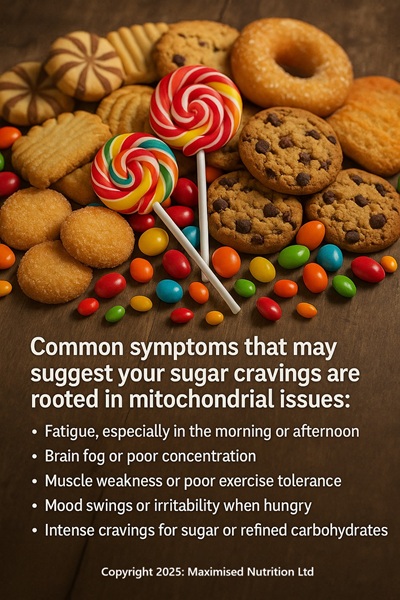
While these symptoms aren’t exclusive to mitochondrial problems, they can be key indicators—especially when combined with frequent sugar cravings
How to Break the Sugar-Mitochondria Cycle
The good news is that supporting your mitochondria can help reduce sugar cravings naturally. Here’s how:
1. Cut Back on Added Sugar
Reducing processed sugar in your diet gives your mitochondria a break. Choose natural sugars from whole fruits, and avoid soft drinks, candy, and ultra-processed snacks.
2. Eat Foods That Support Mitochondrial Health
Try adding these foods to your daily meals:
• Leafy greens (spinach, kale): rich in magnesium and antioxidants
• Berries and colorful vegetables: fight oxidative stress
• Healthy fats (olive oil, avocado, nuts): nourish mitochondrial membranes
• Protein (legumes, eggs, fish): build mitochondrial enzymes
3. Exercise Regularly
Movement stimulates mitochondrial biogenesis, helping your body produce more energy-producing cells (Kim et al., 2008). Even walking or light resistance training can have major benefits.
4. Prioritize Restorative Sleep
Your mitochondria need sleep to repair and detox. Aim for 7–9 hours of consistent, quality rest each night.
5. Reduce Toxin Exposure
Limit plastics, processed foods, and air pollutants when possible. These environmental toxins are known to damage mitochondria.6. Support with Key Nutrients (If Needed)
Talk to your Clinical Dietitian – Nutritionist about nutrients and the right diet that support mitochondrial energy, such as:
* Coenzyme Q10
* Magnesium
* B-complex vitamins
* NAD⁺ precursors (like niacin)
Maximised Nutrition understands that each individual’s body functions differently, so recommends getting an individualised supplement recommendations after an assessment as part of an holistic lifestyle approach instead of you just buying things of the shelf.
Final Thoughts
Craving sugar doesn’t always mean you're undisciplined or emotionally eating. Sometimes, sugar cravings are a biological cry for help—a sign your mitochondria are struggling to keep up.
By understanding the connection between sugar cravings and mitochondrial dysfunction, you can take steps to restore your cellular energy from the inside out. When your mitochondria are nourished and supported, cravings begin to fade—and natural energy returns.
For an individualised nutrition and lifestyle plan to break the sugar cycle, make an appointment at maximisednutrition.com.
References
• Hochrein, S. M., Wu, H., Eckstein, M., et al. (2022). Glucose metabolism and mitochondrial function in T helper 17 cells. Cell Metabolism. https://www.cell.com/cell-metabolism/fulltext/S1550-4131(22)00095-X
• Kim, J. A., Wei, Y., & Sowers, J. R. (2008). Role of mitochondrial dysfunction in insulin resistance. Circulation Research, 102(4), 401–414. https://doi.org/10.1161/CIRCRESAHA.107.165472
• Morino, K., Petersen, K. F., & Shulman, G. I. (2006). Molecular mechanisms of insulin resistance in humans and their potential links with mitochondrial dysfunction. Diabetes, 55(Suppl 2), S9–S15.
• Rangel Rojas, D., Kuner, R., & Agarwal, N. (2018). Metabolomic signature of type 1 diabetes induced sensory loss and nerve damage in diabetic neuropathy. arXiv preprint arXiv:1803.06740.
• Stanhope, K. L., et al. (2022). The bitter side of sugar consumption: A mitochondrial perspective. Metabolites, 12(8), 733. https://doi.org/10.3390/metabo12080733
• Wu, N., et al. (2021). Excess glucose disrupts mitochondrial lipid composition and reduces function. Cell Reports, Van Andel Institute.

Holistic Nutrition For A Happy, Healthy, Confident You!
Quick Links
INFORMATION ON THIS WEBSITE IS FOR INFORMATIONAL PURPOSES ONLY.
PLEASE ALWAYS CONSULT A QUALIFIED HEALTH PRACTITIONER FOR A PERSONALISED ADVICE FOR YOUR HEALTH CONDITION
© 2025 MAXIMISED NUTRITION LTD. All Rights Reserved.