Is Chronic Inflammation Sneaking Up on You? Find out in just 60 seconds with this simple test

Diagnostic Overshadowing: Delayed Diagnosis?
Author: Prem Nand, NZRD (Clinical Dietitian - Nutritionist) Published July 2026 Copyright: Maximised Nutrition Ltd
Introduction
Many people living with chronic symptoms have experienced the frustration of hearing phrases such as:
• "It's probably just stress."
• "It's your IBS."
• "That's part of getting older."
• "Your blood tests are normal."
• "It's just menopause."
• "It's your anxiety."
Sometimes these explanations are entirely appropriate. Stress, irritable bowel syndrome (IBS), menopause and anxiety can all produce genuine physical symptoms. However, problems can arise when every new or changing symptom is automatically attributed to an existing diagnosis without considering whether something else may also be contributing.
This phenomenon is known as diagnostic overshadowing.
Diagnostic overshadowing is increasingly recognised within healthcare as a form of cognitive bias that can contribute to delayed diagnosis and treatment. While originally described in people living with intellectual disabilities and mental illness, researchers now recognise that it can affect patients across many areas of medicine, including gastrointestinal disorders, chronic pain, autoimmune diseases and complex multi-system conditions (Cipriano et al., 2024; National Academies of Sciences, Engineering, and Medicine [NASEM], 2015).
Understanding diagnostic overshadowing does not mean blaming healthcare professionals. Rather, it highlights the importance of remaining curious when symptoms change, fail to improve, or no longer fit the current diagnosis.
What Is Diagnostic Overshadowing?
Diagnostic overshadowing occurs when healthcare professionals attribute new or worsening symptoms to an existing diagnosis instead of considering whether another medical condition may also be present.
For example:
A person diagnosed with IBS develops persistent diarrhoea, weight loss and iron deficiency. If these new symptoms are assumed to be "just IBS" without further assessment, conditions such as coeliac disease, inflammatory bowel disease, bile acid diarrhoea or microscopic colitis could potentially be overlooked.
Similarly, someone living with anxiety may develop palpitations and fatigue. While anxiety certainly can cause these symptoms, they may also reflect hyperthyroidism, cardiac rhythm disorders, iron deficiency or other underlying medical conditions that warrant investigation.
The key point is not that the original diagnosis was incorrect. Rather, it is recognising that people can have more than one condition at the same time, and new symptoms deserve thoughtful reassessment.
One of the areas where I find diagnostic overshadowing is where patients have a rare disease. Since specialists tend to look for the common conditions for the symptoms, it is easy to look for new causes for the symptoms.
Why Does Diagnostic Overshadowing Occur?
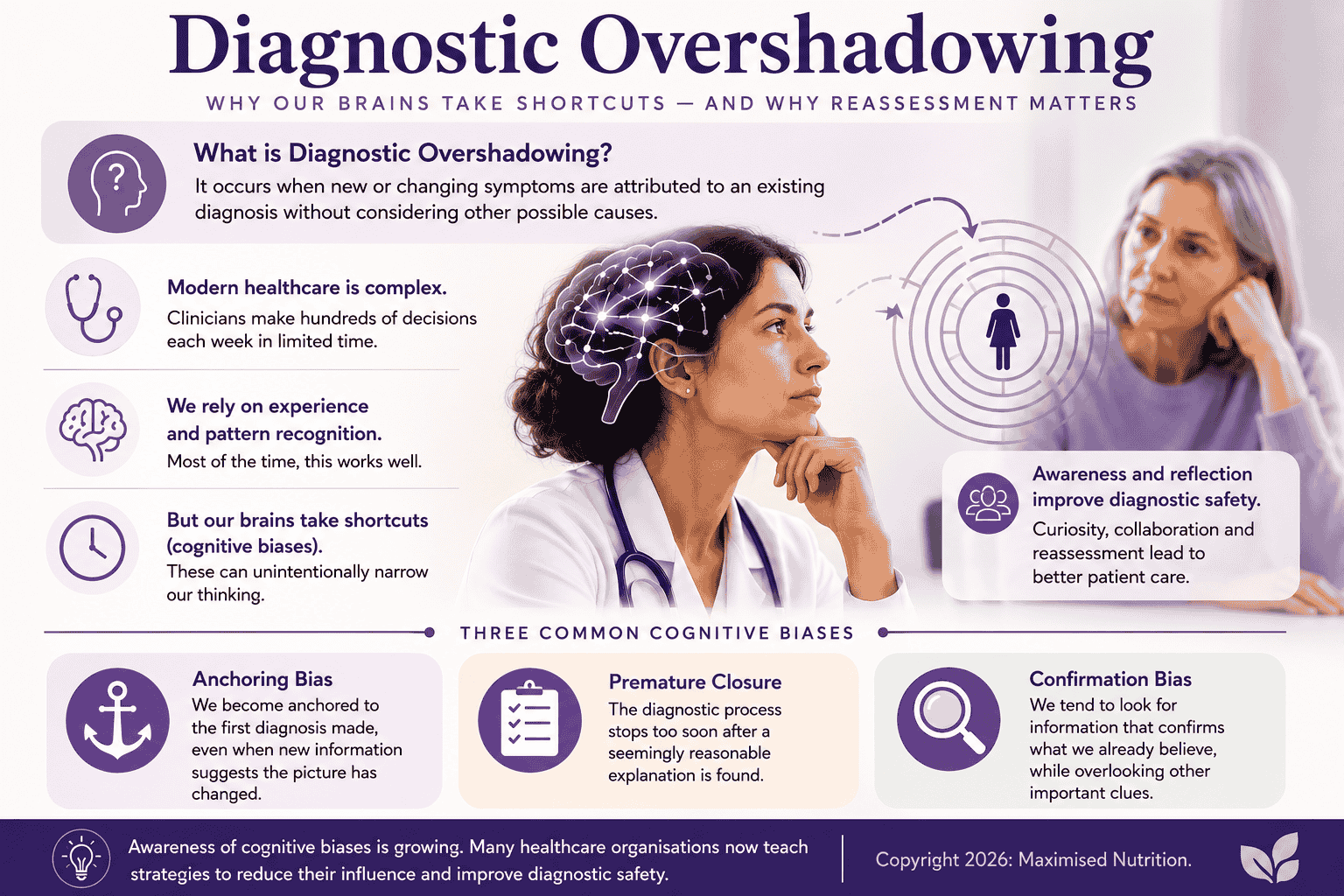
Diagnostic Overshadowing Can Affect Anyone
Although diagnostic overshadowing was first recognised among people living with intellectual disabilities and mental illness, research now shows it can occur across a broad range of health conditions.
Individuals may be particularly vulnerable when they already have a diagnosis that appears capable of explaining many different symptoms.
Examples include:
• Irritable bowel syndrome (IBS)
• Fibromyalgia
• Chronic fatigue syndrome (ME/CFS)
• Long COVID
• Anxiety disorders
• Depression
• Menopause
• Obesity
• Diabetes
• Autoimmune diseases
* post-traumatic stress syndrome (especially those related to childhood trauma)
• Persistent pain conditions
Importantly, having one of these conditions does not mean diagnostic overshadowing will occur. Rather, it highlights why healthcare professionals should remain open to reassessing symptoms when they change, worsen or fail to respond to appropriate treatment.
A good diagnosis should guide clinical care—but it should never prevent clinicians from asking whether new symptoms deserve a fresh evaluation.
In fact, the National Academies of Sciences, Engineering, and Medicine (2015) emphasise that improving diagnosis requires ongoing collaboration between patients and healthcare professionals, recognising that diagnosis is an evolving process rather than a single event.
Could Diagnostic Overshadowing Affect Digestive Health?
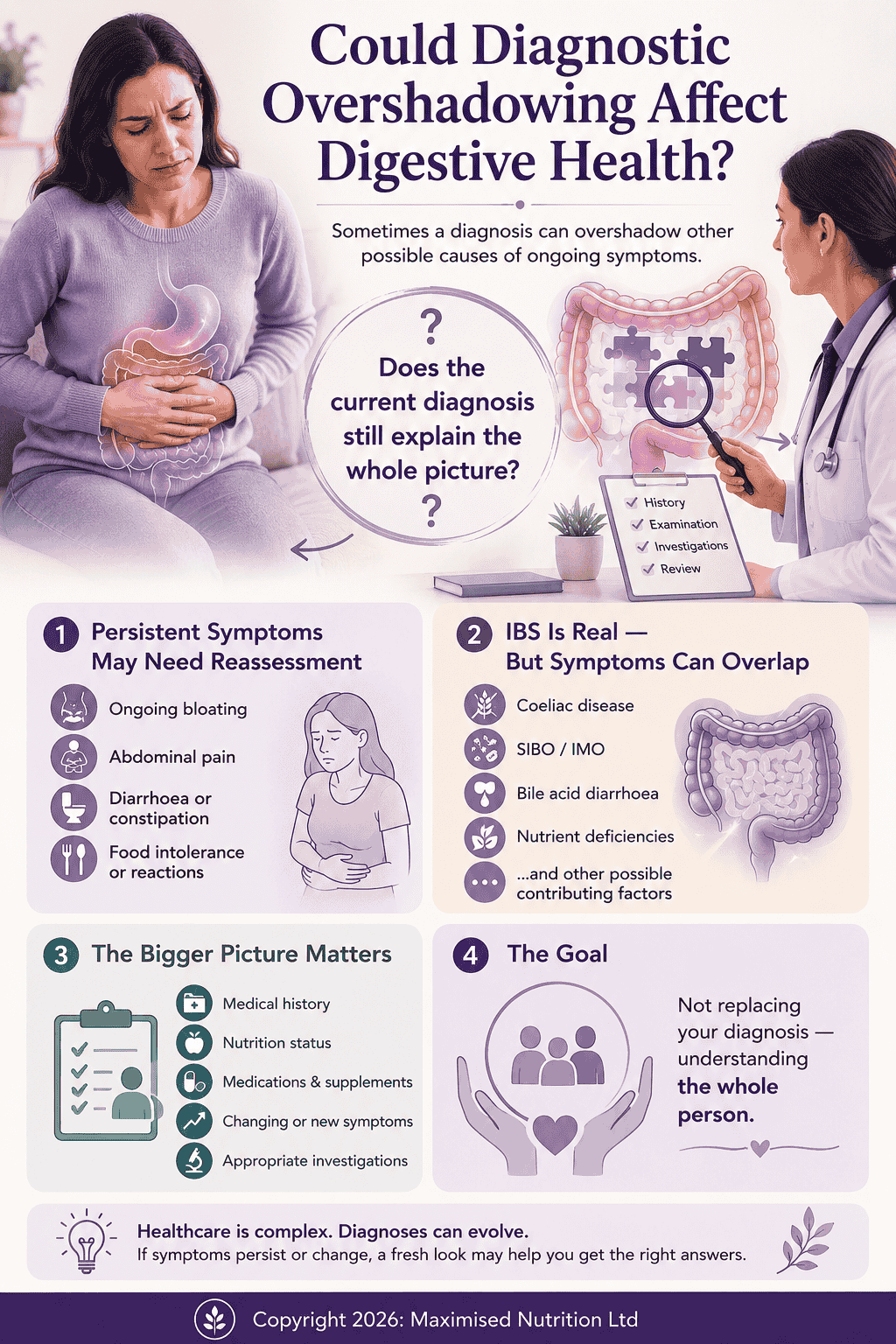
Nutrition Assessment Can Reveal Important Clinical Clues
One of the unique strengths of nutrition assessment is that it examines the person as a whole.
An Integrative Clinical Dietitian–Nutritionist does far more than assess food intake. A comprehensive nutrition assessment considers symptom patterns, weight history, medication use, biochemical markers, gastrointestinal function, lifestyle factors, and the relationship between nutrition and disease.
Occasionally, this broader perspective identifies patterns that suggest the current diagnosis may not fully explain the patient's presentation.
For example, nutrition assessment may identify:
• Unintentional weight loss despite adequate food intake.
• Iron, vitamin B12 or folate deficiencies.
• Poor tolerance to fats suggesting possible malabsorption.
• Persistent nausea unrelated to dietary triggers.
• Progressive food avoidance because eating consistently worsens symptoms.
• Symptoms that fail to improve despite carefully implemented dietary interventions.
• Significant changes in bowel habits or digestive function.
These findings do not establish a diagnosis. However, they may indicate that further medical review would be appropriate.
This collaborative process represents good clinical practice. Dietitians frequently communicate with general practitioners and specialists when nutrition assessment raises concerns that require further investigation.
Conditions and Mechanisms That May Overlap With IBS Symptoms
IBS is a recognised disorder of gut–brain interaction diagnosed using established symptom criteria after appropriate assessment has excluded other important conditions. For many people, an IBS diagnosis is accurate, and evidence-based strategies can significantly improve quality of life.
However, digestive symptoms are complex. Persistent bloating, abdominal pain, diarrhoea, constipation, nausea or food intolerance may sometimes involve additional conditions or underlying mechanisms that require different management approaches.
Depending on an individual's symptoms, medical history and clinical presentation, healthcare professionals may consider factors such as:
* Coeliac disease — an autoimmune condition triggered by gluten exposure.
* Inflammatory bowel disease (Crohn's disease and ulcerative colitis)** — immune-mediated inflammation of the gastrointestinal tract.
* Microscopic colitis — inflammation of the colon that can cause chronic watery diarrhoea.
* Bile acid diarrhoea — excess bile acids reaching the colon, contributing to urgency and diarrhoea.
* Small intestinal bacterial overgrowth (SIBO) — increased bacteria within the small intestine associated with bloating, abdominal discomfort and altered bowel habits.
* Intestinal methanogen overgrowth (IMO) — excess methane-producing microorganisms associated with slowed gut transit and constipation patterns.
* Gut microbiome imbalance (dysbiosis) — changes in microbial diversity and function that may influence digestion, immune signalling and gut sensitivity.
* Impaired migrating motor complex (MMC) function — altered small bowel cleansing waves that may contribute to bacterial overgrowth and symptom recurrence.
* Post-infectious IBS — ongoing gut symptoms following gastrointestinal infections, potentially involving immune activation and altered gut motility.
* Exocrine pancreatic insufficiency — reduced digestive enzyme production affecting nutrient absorption, particularly fat digestion.
* Lactose, fructose or carbohydrate malabsorption — difficulty absorbing specific carbohydrates that can increase fermentation and symptoms.
* Intestinal parasites or chronic gastrointestinal infections — which may contribute to persistent symptoms in selected individuals depending on exposure history and risk factors.
* Histamine intolerance or mast-cell related gut symptoms — where immune signalling may influence food reactions and gastrointestinal symptoms.
* Endometriosis involving the bowel — which may mimic digestive disorders, particularly when symptoms fluctuate with hormonal cycles.
* Pelvic floor dysfunction — affecting bowel emptying and contributing to constipation, straining or incomplete evacuation.
* Thyroid disorders — which can influence bowel motility and digestive function.
* Medication-related gastrointestinal effects — including symptoms associated with certain medications such as acid suppressants, antibiotics, iron supplements and others.
Importantly, these possibilities do not mean that an IBS diagnosis is incorrect. Many people with IBS have a valid diagnosis, but additional factors may coexist and influence symptom severity.
This highlights why new symptoms—or symptoms that significantly change, worsen, or fail to respond to appropriate management—should be reviewed within the context of the whole person.
The goal is not to replace one label with another, but to better understand the factors contributing to an individual's health.
When Is It Reasonable to Seek Further Medical Review?
Most chronic digestive symptoms fluctuate over time, and not every symptom change requires extensive investigation. However, certain features should prompt discussion with your healthcare provider because they may suggest the need for further assessment.
These include:
• Unexplained weight loss.
• Persistent or worsening abdominal pain.
• Blood in the stool.
• Anaemia or unexplained iron deficiency.
• Ongoing vomiting or severe nausea.
• Difficulty swallowing.
• Persistent diarrhoea that does not respond to treatment.
• Nocturnal symptoms that regularly wake you from sleep.
• A strong family history of bowel cancer, inflammatory bowel disease or coeliac disease.
• Symptoms that continue despite appropriate dietary and medical management.
These are often referred to as "red flag" symptoms and should never be ignored.
Equally serious are situations where symptoms continue to affect quality of life despite repeated treatment attempts.
Even if previous investigations have been reassuring, changes over time may justify reconsidering the diagnosis or repeating selected investigations.
The Role of an Integrative Clinical Dietitian–Nutritionist
Many people assume that dietitians simply advise what to eat. In reality, clinical dietetics involves detailed assessment of the relationship between nutrition, physiology and disease.
An Integrative Clinical Dietitian–Nutritionist works collaboratively within the healthcare team to identify nutritional factors that may influence health while recognising when symptoms fall outside the expected pattern.
This may involve:
• Reviewing symptom timelines.
• Assessing dietary adequacy and nutritional status.
• Identifying possible nutrient deficiencies.
• Evaluating medication–nutrition interactions.
• Considering gastrointestinal physiology and digestive function.
• Monitoring response to nutrition interventions.
• Liaising with the patient's GP or specialist when further medical assessment appears appropriate.
Importantly, dietitians do not diagnose medical conditions outside their professional scope of practice. Instead, they contribute valuable clinical observations that may support a more comprehensive medical assessment.
The goal is never to replace medical care—it is to strengthen it.
Patients benefit most when healthcare professionals remain curious, communicate openly and work together to ensure that evolving symptoms receive the attention they deserve.
What Can Patients Do If They Feel Their Symptoms Are Being Overlooked?
Living with persistent symptoms can be physically and emotionally exhausting. It is understandable to feel frustrated if treatments have not improved your health or if you feel your concerns have not been fully addressed.
Fortunately, there are constructive ways to participate in your healthcare without damaging the important relationship you have with your healthcare team.
Keep a Symptom Timeline
Rather than relying on memory during an appointment, keep a written record of:
• When symptoms began.
• What makes them better or worse.
• Changes in bowel habits.
• Weight changes.
• Foods that consistently trigger symptoms.
• New symptoms that have developed since your original diagnosis.
• Medications or supplements that have helped—or worsened—your symptoms.
A clear timeline often helps clinicians identify patterns that may not be immediately obvious during a consultation.
Ask Open Questions
Healthcare works best when patients and clinicians work together.
Instead of saying:
"I think my diagnosis is wrong."
Consider asking:
• "Could there be another explanation for these new symptoms?"
• "Do you think my diagnosis still explains everything that I'm experiencing?"
• "Would any further investigations be appropriate given these changes?"
• "Could this be more than one condition occurring together?"
These questions invite discussion rather than confrontation and support shared clinical decision-making.
Recognise That Diagnoses Can Evolve
Medicine is not static.
Some conditions develop gradually over months or years. Others may only become apparent as new symptoms emerge. A diagnosis made five years ago may still be correct, but it may no longer explain the entire clinical picture.
Reassessment is therefore a normal part of good healthcare—not a sign that anyone has failed.
Why Collaborative Healthcare Matters
One of the greatest strengths of modern healthcare is that no single clinician is expected to know everything.
General practitioners, specialists, dietitians, psychologists, physiotherapists, nurses and pharmacists each contribute a different perspective to patient care.
For people living with complex or persistent symptoms, this collaborative approach is particularly valuable.
Dietitians may recognise nutritional deficiencies or patterns of malabsorption.
General practitioners coordinate ongoing care and determine which investigations are appropriate.
Specialists contribute detailed expertise in specific body systems.
When these perspectives are shared, patients are more likely to receive comprehensive, person-centred care.
This collaborative model also helps reduce the risk of diagnostic error by encouraging clinicians to revisit previous assumptions when new evidence emerges (National Academies of Sciences, Engineering, and Medicine, 2015).
The Take-Home Message
Diagnostic overshadowing is not about blaming healthcare professionals.
It is about recognising that healthcare is complex, diagnoses evolve and new symptoms deserve thoughtful consideration.
Most diagnoses are made accurately. However, no diagnosis should prevent clinicians from remaining curious when a person's health changes or fails to improve as expected.
If you continue to experience persistent digestive symptoms, unexplained weight changes, nutritional deficiencies or ongoing fatigue despite appropriate treatment, it is reasonable to discuss these concerns with your healthcare team.
An Integrative Clinical Dietitian–Nutritionist can play an important role by undertaking a comprehensive nutrition assessment, identifying clinical patterns that may warrant further discussion and working collaboratively with your GP or specialist to support the next steps in your care.
Ultimately, the goal is not simply to find a diagnosis.
The goal is to understand the whole person.
Because every symptom tells part of the story—and sometimes, listening carefully to that story is what leads to the next important question.
Conclusion
Good healthcare begins with listening.
Diagnostic labels are valuable because they guide treatment, but they should never prevent us from reconsidering the clinical picture when symptoms change, persist, or no longer make sense.
Diagnostic overshadowing reminds us that curiosity, collaboration and open communication remain essential to safe, high-quality healthcare.
For patients, this means feeling heard.
For healthcare professionals, it means remaining willing to ask, "Could there be another explanation?"
Sometimes, that simple question can make all the difference.
Important: This article is intended for education only. Most ongoing symptoms are not caused by diagnostic overshadowing, and many people receive appropriate diagnoses and treatment. However, if symptoms change, worsen or fail to improve as expected, discussing reassessment with your healthcare team may be appropriate. This article should not replace personalised medical advice.
References
Chey, W. D., Kurlander, J., & Eswaran, S. (2021). Irritable bowel syndrome: A clinical review. JAMA, 325(9), 865–877. https://doi.org/10.1001/jama.2020.22532
Cipriano, A., Segatto, B., Frighi, V., & colleagues. (2024). Diagnostic overshadowing in physical healthcare: A contemporary review of mechanisms, consequences and strategies for improvement. Frontiers in Psychiatry, 15, Article 1368319. https://doi.org/10.3389/fpsyt.2024.1368319
Croskerry, P. (2003). The importance of cognitive errors in diagnosis and strategies to minimise them. Academic Medicine, 78(8), 775–780. https://doi.org/10.1097/00001888-200308000-00003
Lacy, B. E., Pimentel, M., Brenner, D. M., Chey, W. D., Keefer, L. A., Long, M. D., Moshiree, B., & Rao, S. S. C. (2021). ACG Clinical Guideline: Management of irritable bowel syndrome. American Journal of Gastroenterology, 116(1), 17–44. https://doi.org/10.14309/ajg.0000000000001036
National Academies of Sciences, Engineering, and Medicine. (2015). Improving diagnosis in health care. National Academies Press. https://doi.org/10.17226/21794
Norman, G. R., Monteiro, S. D., Sherbino, J., Ilgen, J. S., Schmidt, H. G., & Mamede, S. (2017). The causes of errors in clinical reasoning: Cognitive biases, knowledge deficits, and dual process thinking. Academic Medicine, 92(1), 23–30. https://doi.org/10.1097/ACM.0000000000001421
World Health Organization. (2024). Patient safety: Facts and key messages. https://www.who.int/health-topics/patient-safety

About the Author
Prem Nand, NZRD, is an Integrative Clinical Dietitian–Nutritionist and founder of Maximised Nutrition
in New Zealand. She uses a whole-body, systems-based nutrition approach to support people with complex and medically layered health conditions, considering the interconnected role of the gut, brain, nervous system, hormones, metabolism, inflammation, and lifestyle factors in human health.

Holistic Nutrition For A Happy, Healthy, Confident You!
INFORMATION ON THIS WEBSITE IS FOR INFORMATIONAL PURPOSES ONLY.
PLEASE ALWAYS CONSULT A QUALIFIED HEALTH PRACTITIONER FOR A PERSONALISED ADVICE FOR YOUR HEALTH CONDITION
© 2025 MAXIMISED NUTRITION LTD. All Rights Reserved.