Is Chronic Inflammation Sneaking Up on You? Find out in just 60 seconds with this simple test


Digestive Problems After Gastric Bypass
Could SIBO, Intestinal Methanogen Overgrowth and Malabsorption Be Contributing?
Author: Prem Nand, NZRD (Clinical Dietitian - Nutritionist) Published 19 May 2026 Copyright: Maximised Nutrition Ltd
Introduction
Roux-en-Y gastric bypass is a life-changing bariatric surgery that can support significant weight loss and improve metabolic conditions such as type 2 diabetes, hypertension and fatty liver disease. However, because this surgery permanently changes the structure and function of the digestive tract, some people experience ongoing digestive symptoms long after the initial recovery period.
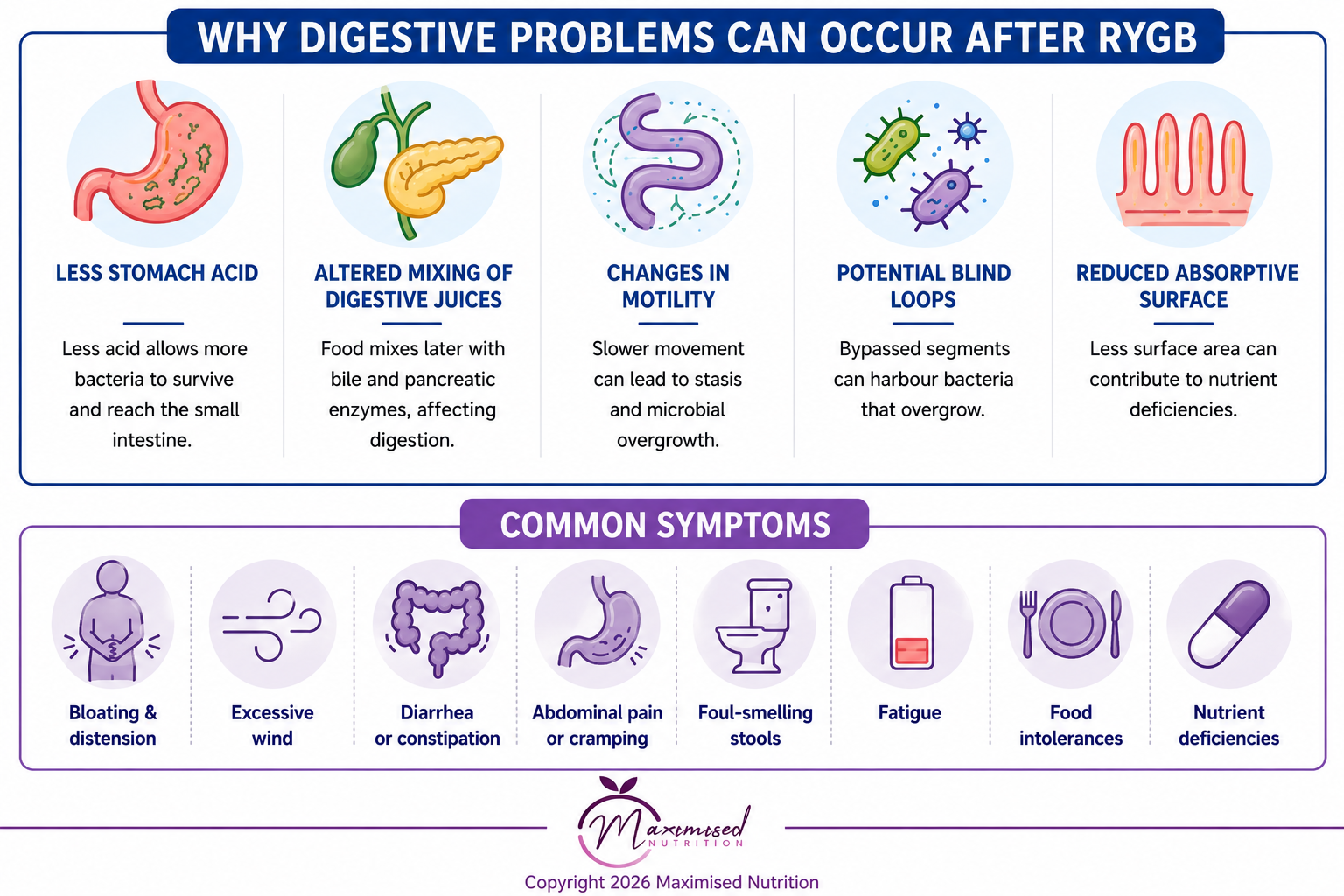
Bloating, excessive wind, foul-smelling stools, diarrhea, constipation, abdominal discomfort, food intolerance, fatigue and nutrient deficiencies are sometimes dismissed as “normal after bypass.” While some digestive adaptation is expected, persistent or worsening symptoms may suggest an underlying issue such as Small Intestinal Bacterial Overgrowth, Intestinal Methanogen Overgrowth, bile acid malabsorption or pancreatic enzyme insufficiency.
These conditions are clinically important because they can affect not only digestion, but also nutrient absorption, energy levels, bowel function, weight stability and quality of life.
What Happens to Digestion After Roux-en-Y Gastric Bypass?
Roux-en-Y gastric bypass creates a small stomach pouch and connects it directly to a lower section of the small intestine. This means food bypasses most of the stomach, the duodenum and part of the jejunum. While this supports weight loss by reducing food intake and altering gut hormone signalling, it also changes how food mixes with stomach acid, bile and pancreatic enzymes.
Normal digestion relies on coordinated timing. Food usually enters the duodenum where it mixes with bile from the liver and gallbladder, pancreatic enzymes and bicarbonate. After Roux-en-Y surgery, this mixing is delayed or less efficient. This can contribute to maldigestion, altered gut motility and increased risk of microbial imbalance (Borbély et al., 2017; Mechanick et al., 2020).
The altered anatomy may also create areas of slowed flow or stagnation, which can allow bacteria or methane-producing archaea to overgrow in parts of the intestine where they do not usually dominate.
Small Intestinal Bacterial Overgrowth After Gastric Bypass
Small Intestinal Bacterial Overgrowth, commonly called SIBO, occurs when excessive bacteria are present in the small intestine. The small intestine is not sterile, but bacterial numbers are normally much lower than in the colon. When bacteria overgrow in the small bowel, they can ferment carbohydrates too early in the digestive process, producing gas and irritating the intestinal environment.
Symptoms of SIBO can include:
• bloating
• abdominal distension
• excessive wind
• diarrhea
• abdominal discomfort
• nausea
• fatigue
• nutrient deficiencies
• food intolerances
SIBO has long been associated with malabsorption, especially in people with altered anatomy, impaired motility or surgically created blind loops (Dukowicz et al., 2007; Quigley et al., 2020). Roux-en-Y gastric bypass can create several of these risk factors.
A study by Machado et al. (2008) identified intestinal bacterial overgrowth in patients after Roux-en-Y gastric bypass. More recent literature reviews have also highlighted that SIBO can occur after bariatric bypass procedures and may contribute to bloating, abdominal pain, diarrhea and nutritional issues (Kitaghenda et al., 2024; Novljan et al., 2022).
Intestinal Methanogen Overgrowth: The Constipation Connection
Not all overgrowth is bacterial. Intestinal Methanogen Overgrowth, or IMO, refers to an excess of methane-producing archaea, especially Methanobrevibacter smithii. These organisms are not bacteria, but they live in the gut and produce methane gas.
Methane is clinically relevant because it has been associated with slowed intestinal transit. This means IMO may contribute to constipation, hard stools, incomplete evacuation, bloating and abdominal pressure. Pimentel et al. (2006) found that methane production during breath testing was associated with constipation-predominant symptoms.
For people after Roux-en-Y gastric bypass, constipation may be multifactorial. Possible contributors include reduced food volume, low fibre intake, dehydration, iron supplements, calcium supplements, reduced gut motility and methane production. When constipation occurs alongside severe bloating and gas, IMO should be considered.
Why Malabsorption Can Develop After Roux-en-Y
Malabsorption after Roux-en-Y gastric bypass may occur for several reasons. First, food bypasses key absorptive and digestive areas of the upper small intestine. Second, food may not mix efficiently with bile and pancreatic enzymes. Third, microbial overgrowth can damage the intestinal environment and interfere with nutrient absorption.
SIBO may worsen malabsorption by deconjugating bile acids, consuming nutrients and irritating the small intestinal lining (Dukowicz et al., 2007; Bushyhead et al., 2022). This can contribute to symptoms such as diarrhea, steatorrhea, fatigue and deficiencies in iron, vitamin B12, fat-soluble vitamins and other micronutrients.
The most common nutrient concerns after Roux-en-Y include:
• iron deficiency
• low ferritin
• vitamin B12 deficiency
• folate deficiency
• vitamin D deficiency
• calcium deficiency
• zinc deficiency
• copper deficiency
• thiamine deficiency
• protein malnutrition
Clinical practice guidelines for bariatric surgery strongly emphasise lifelong nutritional monitoring after bariatric procedures because deficiencies may occur months or years after surgery (Mechanick et al., 2020).
Bile Acid Malabsorption and Diarrhea
Diarrhea after Roux-en-Y gastric bypass is not always caused by dumping syndrome. Bile acid malabsorption may also contribute.
Bile acids are produced by the liver and help digest fats. Normally, most bile acids are reabsorbed in the terminal ileum and recycled. When this process is disrupted, bile acids can enter the colon and trigger watery diarrhea, urgency and abdominal cramping.
Bariatric procedures with malabsorptive components can significantly change bowel habits and may contribute to malodorous wind and diarrhea (Borbély et al., 2017).
Bile acid malabsorption can also overlap with SIBO. Bacterial overgrowth can deconjugate bile acids, making them less effective for fat digestion. This can worsen fat malabsorption, stool changes and fat-soluble vitamin deficiencies.
Exocrine Pancreatic Insufficiency After Roux-en-Y
Exocrine Pancreatic Insufficiency, or EPI, occurs when there are insufficient pancreatic enzymes available to digest food properly.
After Roux-en-Y gastric bypass, the pancreas may still produce enzymes, but the altered anatomy can cause “post-cibal asynchrony,” meaning food and enzymes do not meet at the right time or place.
Borbély et al. (2016) investigated exocrine pancreatic insufficiency after Roux-en-Y gastric bypass and found it can occur as a clinically relevant complication. A later study by Kwon et al. (2022) also reported that EPI can occur after bariatric surgery, with higher rates seen after Roux-en-Y compared with sleeve gastrectomy.
Symptoms that may suggest EPI include:
• greasy stools
• floating stools
• difficult-to-flush stools
• foul-smelling stools
• weight loss or difficulty maintaining weight
• bloating
• fat-soluble vitamin deficiencies
• protein-energy malnutrition
Pancreatic enzyme replacement therapy may help some people, but tolerance varies. If enzymes worsen wind, odour or discomfort, this does not necessarily mean pancreatic insufficiency is absent. It may mean the dose, timing, formulation, fat intake, bile flow or coexisting SIBO/IMO needs further assessment.
The Role of Hydrogen Methane Breath Testing
Hydrogen methane breath testing is a non-invasive tool used to assess for SIBO and IMO. During the test, the patient consumes a substrate such as lactulose or glucose. Breath samples are collected over time to measure hydrogen and methane gases produced by gut microbes and exhaled via the lungs.
The North American Consensus recommends that a rise in hydrogen of at least 20 ppm by 90 minutes may support a diagnosis of SIBO, while methane of at least 10 ppm at any point is considered methane-positive (Rezaie et al., 2017).
For post-Roux-en-Y patients, breath testing can be helpful when symptoms include bloating, excessive wind, diarrhea, constipation, abdominal discomfort or unexplained nutrient deficiencies.
However, interpretation should always consider surgical anatomy, transit time, symptoms and clinical history.
When to Suspect SIBO, IMO or Malabsorption After Gastric Bypass
These conditions should be considered when symptoms persist beyond the expected post-surgical adjustment period or when symptoms worsen over time.
Possible indicators include:
• bloating after meals
• excessive or foul-smelling wind
• diarrhea or urgency
• constipation or incomplete bowel emptying
• greasy or floating stools
• abdominal discomfort
• unexplained fatigue
• low ferritin despite supplementation
• recurrent vitamin B12 deficiency
• low vitamin D
• poor tolerance to many foods
• unintentional weight loss
• poor protein status
A comprehensive assessment may include hydrogen methane breath testing, blood tests, stool testing and review of dietary intake, medications, supplements and bowel patterns.
Nutrition Management: A Structured Approach
Nutrition management after Roux-en-Y gastric bypass should be individualised. The goal is not simply to restrict more foods. Many patients are already eating limited diets due to fear of symptoms. Over-restriction can worsen protein intake, micronutrient status, and overall resilience.
A structured approach may include:
1. Assessing protein adequacy
2. Reviewing iron, B12, folate, vitamin D, calcium, zinc and copper status
3. Investigating SIBO or IMO where symptoms fit
4. Assessing stool quality and fat malabsorption
5. Considering bile acid diarrhea where urgency is present
6. Considering pancreatic insufficiency where greasy stools or malnutrition are present
7. Supporting hydration, fibre tolerance and bowel motility
8. Using targeted dietary strategies rather than broad long-term restriction
Low-FODMAP or lower-fermentation diets may temporarily reduce symptoms in some people, but they should be used with caution after bariatric surgery. Long-term restriction without professional guidance may increase risk of nutrient inadequacy.
Red Flags That Need Medical Review
Post-bypass digestive symptoms should not be ignored when red flags are present. Medical review is important if there is:
• blood in stools
• black tarry stools
• persistent vomiting
• progressive difficulty swallowing
• severe abdominal pain
• unexplained weight loss
• persistent diarrhea
• recurrent dehydration
• severe fatigue
• low albumin or protein malnutrition
• neurological symptoms
• persistent iron deficiency despite treatment
These symptoms may require investigation beyond nutrition therapy.
Key Takeaways
Digestive symptoms after Roux-en-Y gastric bypass are common, but they should not automatically be dismissed as normal. SIBO, Intestinal Methanogen Overgrowth, bile acid malabsorption and exocrine pancreatic insufficiency can all contribute to bloating, gas, diarrhea, constipation, malabsorption and nutrient deficiencies.
Hydrogen methane breath testing can be a useful non-invasive investigation when symptoms suggest SIBO or IMO. A comprehensive nutrition and gastrointestinal assessment can help identify the likely drivers and guide a more targeted plan.
For people living with ongoing digestive problems after gastric bypass, the most important message is this: persistent symptoms deserve proper investigation. With the right assessment, many contributing factors can be identified and managed.
References
Borbély, Y., Kroll, D., Nett, P. C., Inglin, R., & Beldi, G. (2017). Diarrhea after bariatric procedures: Diagnosis and therapy. World Journal of Gastroenterology, 23(26), 4689–4700.
Borbély, Y., Plebani, A., Kröll, D., Ghisla, S., Nett, P. C., & Beldi, G. (2016). Exocrine pancreatic insufficiency after Roux-en-Y gastric bypass. Surgery for Obesity and Related Diseases, 12(4), 790–794.
Bushyhead, D., Quigley, E. M. M., & Rao, S. S. C. (2022). Small intestinal bacterial overgrowth: Pathophysiology and clinical management. Gastroenterology, 163(3), 593–607.
Dukowicz, A. C., Lacy, B. E., & Levine, G. M. (2007). Small intestinal bacterial overgrowth: A comprehensive review. Gastroenterology & Hepatology, 3(2), 112–122.
Kitaghenda, F. K., Akhter, N., & Abell, T. L. (2024). The prevalence of small intestinal bacterial overgrowth after Roux-en-Y gastric bypass: A systematic review and meta-analysis. Obesity Surgery, 34, 1–10.
Kwon, J. Y., Shah, N. D., Wargo, J. A., & Abu Dayyeh, B. K. (2022). Exocrine pancreatic insufficiency after bariatric surgery. Surgery for Obesity and Related Diseases, 18(10), 1242–1248.
Machado, J. D., Campos, C. S., Lopes Dah Silva, C., Marques Suen, V. M., Barbosa Nonino-Borges, C., Dos Santos, J. E., Ceneviva, R., & Marchini, J. S. (2008). Intestinal bacterial overgrowth after Roux-en-Y gastric bypass. Obesity Surgery, 18(2), 139–143.
Mechanick, J. I., Apovian, C., Brethauer, S., Garvey, W. T., Joffe, A. M., Kim, J., Kushner, R. F., Lindquist, R., Pessah-Pollack, R., Seger, J., Urman, R. D., Adams, S., Cleek, J. B., Correa, R., Figaro, M. K., Flanders, K., Grams, J., Hurley, D. L., Kothari, S., … Still, C. D. (2020). Clinical practice guidelines for the perioperative nutrition, metabolic, and nonsurgical support of patients undergoing bariatric procedures: 2019 update. Obesity, 28(S1), O1–O58.
Novljan, U., Glavač, N. K., & Pfeifer, M. (2022). Small intestinal bacterial overgrowth in patients with Roux-en-Y gastric bypass and one-anastomosis gastric bypass. Obesity Surgery, 32, 3471–3479.
Pimentel, M., Mayer, A. G., Park, S., Chow, E. J., Hasan, A., & Kong, Y. (2006). Methane production during lactulose breath test is associated with gastrointestinal disease presentation. Digestive Diseases and Sciences, 51(8), 1298–1301.
Quigley, E. M. M., Murray, J. A., & Pimentel, M. (2020). AGA clinical practice update on small intestinal bacterial overgrowth: Expert review. Gastroenterology, 159(4), 1526–1532.
Rezaie, A., Buresi, M., Lembo, A., Lin, H., McCallum, R., Rao, S., Schmulson, M., Valdovinos, M., Zakko, S., & Pimentel, M. (2017). Hydrogen and methane-based breath testing in gastrointestinal disorders: The North American Consensus. The American Journal of Gastroenterology, 112(5), 775–784.

About the Author
Prem Nand, NZRD, is an Integrative Clinical Dietitian–Nutritionist and founder of Maximised Nutrition
in New Zealand. She uses a whole-body, systems-based nutrition approach to support people with complex and medically layered health conditions, considering the interconnected role of the gut, brain, nervous system, hormones, metabolism, inflammation, and lifestyle factors in human health.

Holistic Nutrition For A Happy, Healthy, Confident You!
INFORMATION ON THIS WEBSITE IS FOR INFORMATIONAL PURPOSES ONLY.
PLEASE ALWAYS CONSULT A QUALIFIED HEALTH PRACTITIONER FOR A PERSONALISED ADVICE FOR YOUR HEALTH CONDITION
© 2025 MAXIMISED NUTRITION LTD. All Rights Reserved.