Is Chronic Inflammation Sneaking Up on You? Find out in just 60 seconds with this simple test


Insulin Resistance and Missed Periods: The Hidden Fertility Link
Author: Prem Nand, NZRD (Clinical Dietitian - Nutritionist) Published May 2026 Copyright: Maximised Nutrition Ltd
Introduction
Most people associate insulin resistance with type 2 diabetes, weight gain, or obesity. However, insulin resistance can affect far more than blood sugar levels. In women and teenage girls, it may contribute to missed periods, irregular menstrual cycles, ovulation problems, and fertility difficulties — sometimes years before diabetes develops.
What makes this particularly important is that some women may have:
• normal blood glucose
• normal HbA1c
• normal hormone blood tests
• normal ovarian ultrasounds
Yet still experience reproductive symptoms linked to underlying metabolic dysfunction.
Understanding the relationship between insulin, hormones, and ovulation helps explain why reproductive health and metabolic health are deeply connected.
What Is Insulin Resistance?
Insulin is a hormone produced by the pancreas. Its main role is to help move glucose (sugar) from the bloodstream into cells where it can be used for energy.
Normally:
• food is eaten
• blood sugar rises
• insulin is released
• cells respond to insulin and absorb glucose
However, in insulin resistance, the body’s cells become less responsive to insulin. The pancreas then compensates by producing more insulin to keep blood sugar levels stable (DeFronzo & Tripathy, 2009).
Over time, this may lead to:
• elevated insulin levels
• increased fat storage
• fatigue
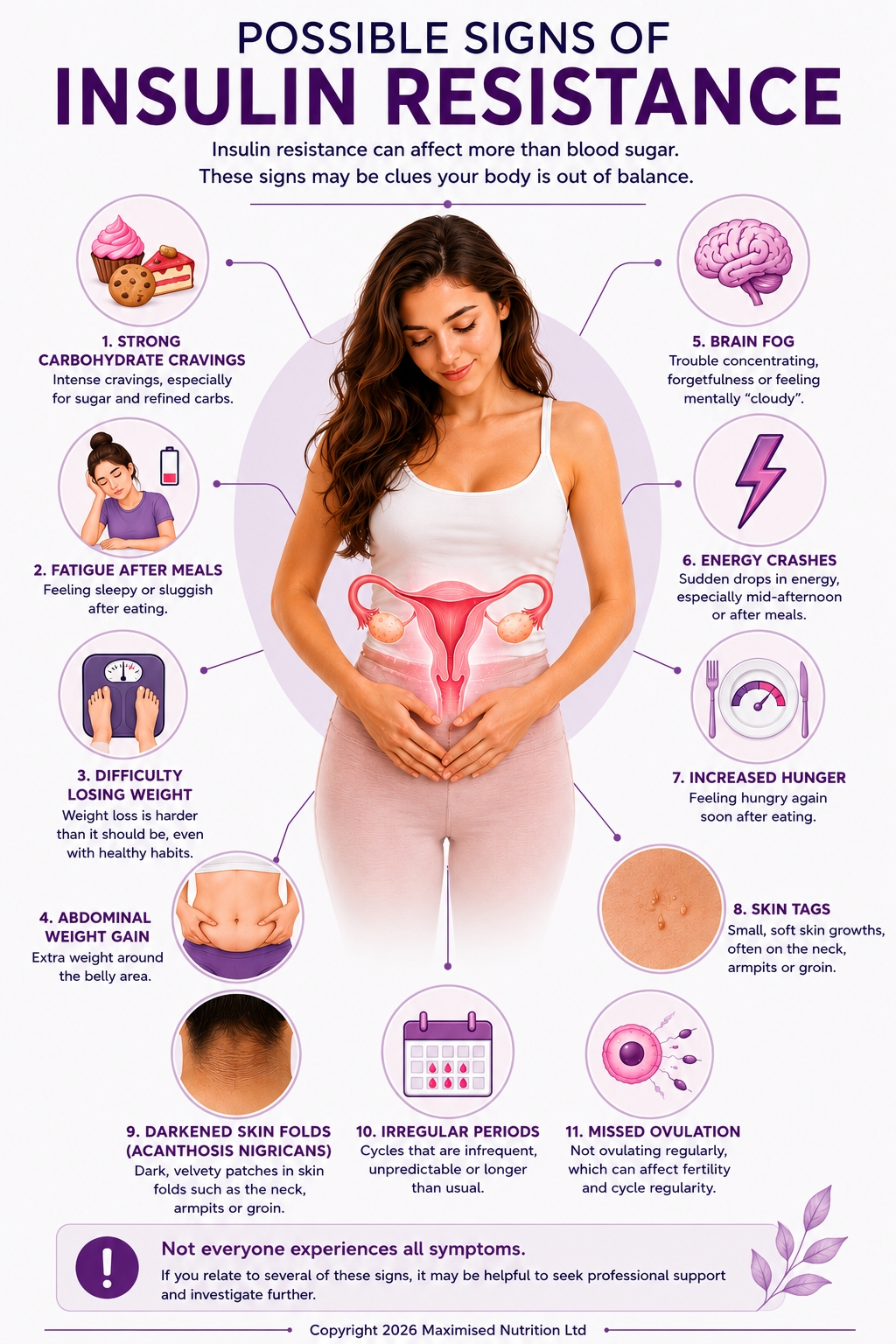
• strong carbohydrate cravings
• inflammation
• hormonal disruption
• difficulty losing weight
Importantly, insulin resistance can exist long before diabetes develops.
Insulin Is Also a Hormonal Signalling Molecule
Many people think insulin only controls blood sugar.
In reality, insulin is also involved in:
• reproductive hormone regulation
• ovarian function
• appetite control
• brain signalling
• inflammation
• fat storage
• energy metabolism
The ovaries are highly sensitive to hormonal communication. When insulin levels become chronically elevated, ovarian signalling may become disrupted.
This is one reason why insulin resistance can contribute to irregular menstrual cycles and ovulation problems.
How Insulin Resistance Affects Ovulation
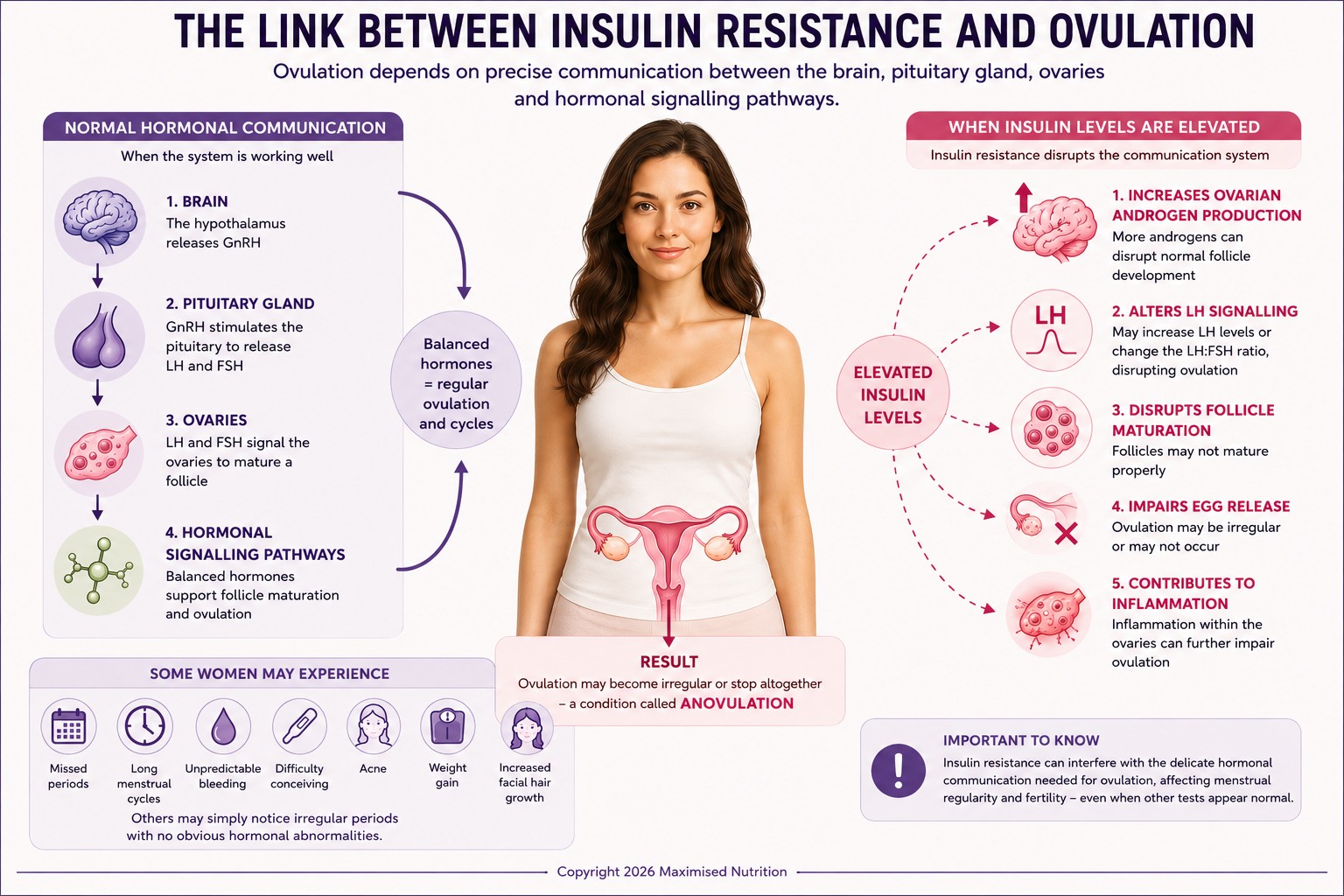
Ovulation is the release of an egg from the ovary during the menstrual cycle. This process requires precise communication between:
• the brain
• the pituitary gland
• the ovaries
• multiple hormone pathways
Chronically elevated insulin may interfere with this system.
Research suggests high insulin levels may:
• increase androgen production in the ovaries
• alter luteinising hormone (LH) signalling
• impair follicle maturation
• disrupt ovulation
• increase ovarian inflammation (Diamanti-Kandarakis & Dunaif, 2012)
As a result, ovulation may become irregular or stop altogether. This is known as anovulation.
Some women may experience:
• missed periods
• irregular cycles
• long menstrual cycles
• fertility difficulties
• acne
• increased facial hair growth
• weight gain
• fatigue
Others may simply notice irregular periods despite “normal” investigations.
You Can Have Insulin Resistance Without Diabetes
One of the biggest misconceptions is that insulin resistance only matters once blood sugar becomes abnormal.
In reality, insulin levels often rise years before:
• fasting glucose changes
• HbA1c becomes elevated
• type 2 diabetes develops
A woman may therefore be told:
• “Your blood tests are normal”
• “Your glucose is fine”
• “Your hormones are okay”
Yet still experience symptoms linked to metabolic dysfunction.
This is particularly important in teenage girls and younger women.
Why Some Teenage Girls May Stop Ovulating
Teenage girls with insulin resistance may not always fit the classic picture of Polycystic Ovary Syndrome.
Increasingly, clinicians are recognising the term:
PMOM — Polycystic Multifollicular Ovarian Morphology
(previously commonly referred to as PCOS or polycystic ovaries on ultrasound).
This newer terminology reflects the fact that the ovaries do not actually contain true “cysts.” Instead, multiple immature follicles may accumulate because ovulation is not occurring normally.
However, some teenage girls may:
• have no PMOM changes on ultrasound
• have normal testosterone levels
• not meet formal diagnostic criteria
Yet still experience:
• missed periods
• irregular cycles
• strong carbohydrate cravings
• fatigue
• weight gain
• anovulation
This is because insulin resistance may affect ovulation before obvious ovarian changes appear.
Adolescence is already a time of major hormonal adjustment. Metabolic dysfunction during this stage may further disrupt reproductive signalling.
The Link Between Insulin Resistance and PMOM
Many women with PMOM (previously commonly referred to as PCOS) also have insulin resistance (Teede et al., 2018).
In these women:
• elevated insulin stimulates the ovaries to produce excess androgens
• ovulation becomes impaired
• immature follicles accumulate within the ovaries
• menstrual cycles become irregular
However, not all women with insulin resistance develop PMOM.
Some women may sit somewhere along a metabolic–hormonal spectrum where ovulation is affected before ultrasound changes develop.
Diet Patterns May Contribute More Than People Realise
Insulin resistance is not simply caused by “eating too much sugar.”
Modern lifestyle patterns may contribute through:
• ultra-processed foods
• irregular meal timing
• large evening meals
• skipping meals
• chronic stress
• poor sleep
• sedentary behaviour
• low fibre intake
Interestingly, some people with insulin resistance may actually eat very little overall.
For example, eating very little during the day followed by one large evening meal may:
• create larger insulin surges
• disrupt appetite hormones
• alter cortisol rhythms
• reduce metabolic flexibility
Highly processed foods may also trigger rapid glucose spikes and increased insulin demand.
Why Weight Gain Can Occur Despite Eating Very Little
Many women become frustrated because they feel they “hardly eat” yet continue to gain weight.
Insulin resistance may increase the body’s tendency to:
• store energy
• preserve fat mass
• reduce fat-burning efficiency
Chronically elevated insulin levels may make weight loss more difficult.
Additionally:
• sleep disruption
• stress
• hormonal imbalance
• irregular eating patterns
• emotional eating
• fatigue
may further contribute to metabolic dysfunction.
This does not mean calories are irrelevant, but it does highlight that metabolism is far more complex than simply “eat less and move more.”
Stress, Cortisol and Menstrual Function
The stress response system also interacts closely with reproductive hormones.
Chronic stress may affect:
• insulin sensitivity
• appetite
• sleep quality
• inflammation
• menstrual function
• cravings
The hypothalamic-pituitary-adrenal (HPA) axis communicates closely with the reproductive system.
In some women, chronic stress and insulin resistance may coexist together, creating a more complex picture of missed periods, fatigue, and hormonal dysregulation.
Fertility Implications
If ovulation becomes irregular, fertility may also be affected.
Without regular ovulation:
• Eggs may not be released consistently
• hormone balance may fluctuate
• conception may become more difficult
Some women may not realise they are not ovulating regularly until they begin trying to conceive.
Early identification of insulin resistance may therefore be important not only for metabolic health, but also for long-term reproductive health.
Why Metformin Is Sometimes Used
Metformin is commonly used in type 2 diabetes, but it is also sometimes prescribed for:
• insulin resistance
• irregular menstrual cycles
• anovulation
• PMOM (previously commonly referred to as PCOS)
Metformin works partly by improving insulin sensitivity and reducing glucose production by the liver (Rojas & Gomes, 2013).
In some women, improving insulin sensitivity may help:
• restore ovulation
• improve menstrual regularity
• reduce androgen excess
• improve fertility outcomes
Responses vary between individuals, and further investigation may sometimes be needed if cycles do not improve.
Supporting Metabolic and Hormonal Health
Addressing insulin resistance often requires a whole-body approach.
Depending on the individual, support may include:
• improving meal balance
• increasing protein and fibre intake
• reducing ultra-processed foods
• improving sleep quality
• supporting stress management
• improving meal timing consistency
• increasing physical activity
In some individuals, gut health, inflammation, nervous system dysregulation, and poor sleep may also contribute to metabolic dysfunction.
When to Seek Medical Advice
It is important to seek professional assessment if there are:
• missed periods
• irregular menstrual cycles
• fertility concerns
• excessive fatigue
• unexplained weight gain
• signs of androgen excess
• metabolic symptoms
Medical investigations may include:
• hormonal blood tests
• glucose and insulin markers
• thyroid testing
• pelvic ultrasound
• nutritional assessment
Early assessment may help identify contributing factors before more significant metabolic disease develops.
Final Thoughts
Insulin resistance is far more than a diabetes problem. It is a whole-body metabolic condition that may affect hormones, ovulation, menstrual cycles, inflammation, appetite, and fertility.
For some women and teenage girls, missed periods may be one of the earliest signs that the body’s metabolic systems are struggling — even when standard blood tests appear normal.
Understanding the relationship between insulin and reproductive health helps move the conversation beyond weight alone toward a more integrated understanding of women’s hormonal and metabolic wellbeing.
References
Barber, T. M., Hanson, P., Weickert, M. O., & Franks, S. (2019). Obesity and polycystic ovary syndrome: Implications for pathogenesis and novel management strategies. Clinical Medicine Insights: Reproductive Health, 13, 1–11. https://doi.org/10.1177/1179558119874042
DeFronzo, R. A., & Tripathy, D. (2009). Skeletal muscle insulin resistance is the primary defect in type 2 diabetes. Diabetes Care, 32(Suppl 2), S157–S163. https://doi.org/10.2337/dc09-S302
Diamanti-Kandarakis, E., & Dunaif, A. (2012). Insulin resistance and the polycystic ovary syndrome revisited: An update on mechanisms and implications. Endocrine Reviews, 33(6), 981–1030. https://doi.org/10.1210/er.2011-1034
Dunaif, A. (1997). Insulin resistance and the polycystic ovary syndrome: Mechanism and implications for pathogenesis. Endocrine Reviews, 18(6), 774–800. https://doi.org/10.1210/edrv.18.6.0318
Pasquali, R., Patton, L., & Gambineri, A. (2007). Obesity and infertility. Current Opinion in Endocrinology, Diabetes and Obesity, 14(6), 482–487. https://doi.org/10.1097/MED.0b013e3282f1d6cb
Rojas, L. B. A., & Gomes, M. B. (2013). Metformin: An old but still the best treatment for type 2 diabetes. Diabetology & Metabolic Syndrome, 5(1), 6. https://doi.org/10.1186/1758-5996-5-6
Shanik, M. H., Xu, Y., Skrha, J., Dankner, R., Zick, Y., & Roth, J. (2008). Insulin resistance and hyperinsulinemia: Is hyperinsulinemia the cart or the horse? Diabetes Care, 31(Suppl 2), S262–S268. https://doi.org/10.2337/dc08-s264
Teede, H. J., Misso, M. L., Costello, M. F., Dokras, A., Laven, J., Moran, L., Piltonen, T., & Norman, R. J. (2018). Recommendations from the international evidence-based guideline for the assessment and management of polycystic ovary syndrome. Human Reproduction, 33(9), 1602–1618. https://doi.org/10.1093/humrep/dey256
Wilcox, G. (2005). Insulin and insulin resistance. Clinical Biochemist Reviews, 26(2), 19–39.

About the Author
Prem Nand, NZRD, is an Integrative Clinical Dietitian–Nutritionist and founder of Maximised Nutrition
in New Zealand. She uses a whole-body, systems-based nutrition approach to support people with complex and medically layered health conditions, considering the interconnected role of the gut, brain, nervous system, hormones, metabolism, inflammation, and lifestyle factors in human health.

Holistic Nutrition For A Happy, Healthy, Confident You!
Quick Links
INFORMATION ON THIS WEBSITE IS FOR INFORMATIONAL PURPOSES ONLY.
PLEASE ALWAYS CONSULT A QUALIFIED HEALTH PRACTITIONER FOR A PERSONALISED ADVICE FOR YOUR HEALTH CONDITION
© 2025 MAXIMISED NUTRITION LTD. All Rights Reserved.