Is Chronic Inflammation Sneaking Up on You? Find out in just 60 seconds with this simple test

Melatonin for Pain: The Sleep–Pain Connection
How the Hormone Melatonin Can Possibly Alleviate Pain
Author: Prem Nand, NZRD (Clinical Dietitian - Nutritionist) Published June 2026 Copyright: Maximised Nutrition Ltd
Introduction
Pain and sleep are deeply interconnected. People with migraines, fibromyalgia, arthritis, neuropathic pain, or chronic back pain often struggle to sleep well. Poor sleep, in turn, increases next day pain sensitivity. This relationship is biological, neurological, hormonal, and inflammatory, not merely psychological (Finan et al., 2013).
Melatonin — traditionally viewed as a sleep hormone — is now recognised as a molecule with broader roles in inflammation, oxidative stress, immune signalling, and nervous system regulation (Srinivasan et al., 2012).
Chronic pain may alter melatonin secretion patterns, while disrupted melatonin signalling may increase pain sensitivity. This creates a self reinforcing cycle:
• Pain disrupts sleep
• Poor sleep reduces melatonin
• Low melatonin increases pain sensitivity
• Increased pain further disrupts sleep
Clinical Dietitian-Nutritionist, Prem Nand, NZRD believes that a holistic management to chronic pain is needed instead of just the use of pain killers.
What Is Melatonin?
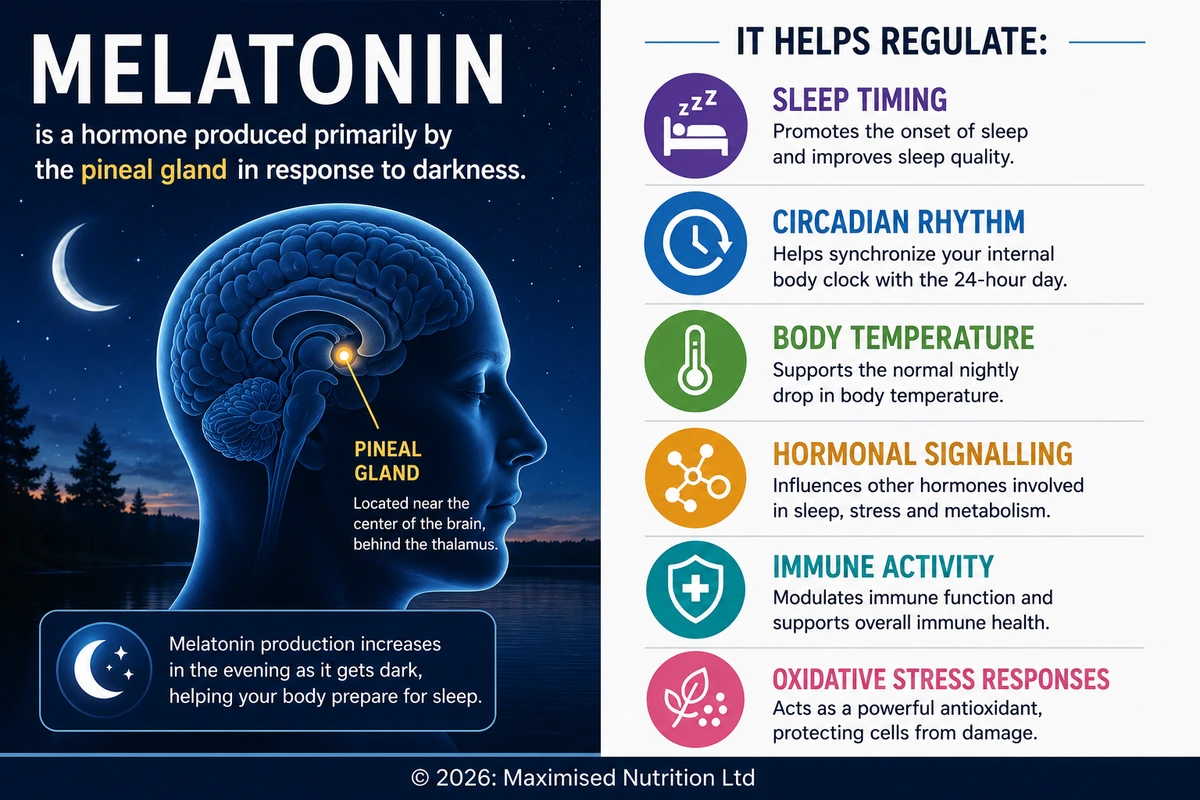
Melatonin is also produced outside the brain — in the gut, immune cells, retina, and mitochondria — suggesting whole body functions beyond sleep (Reiter et al., 2017).
The Relationship Between Pain and Sleep
Sleep disruption is extremely common in chronic pain conditions such as:
• Fibromyalgia
• Migraines
• Arthritis
• Neuropathic pain
• Chronic back pain
• Endometriosis
• TMJ dysfunction
• Post traumatic pain
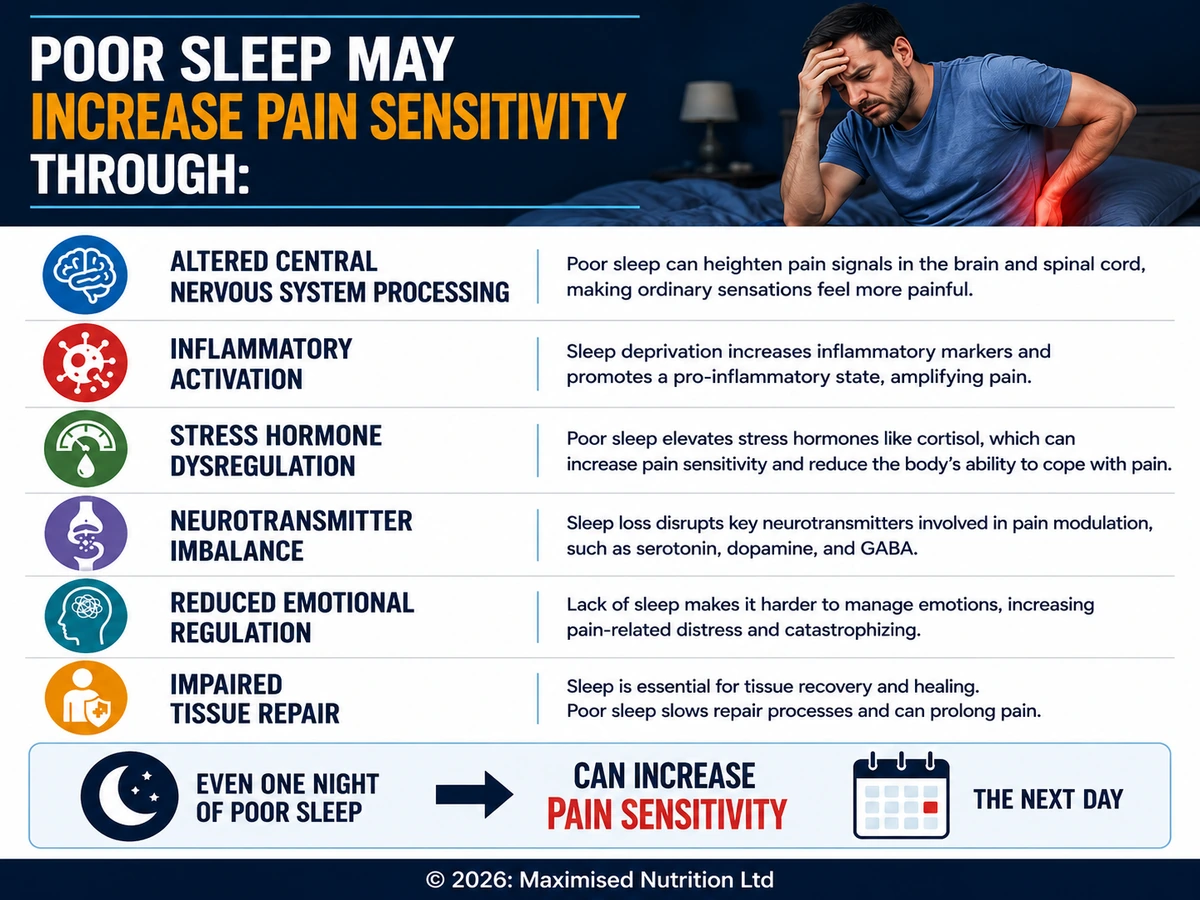
Reference: Finan et al, 2013
How Chronic Pain May Disrupt Melatonin Production
Chronic pain may alter melatonin rhythms through several pathways.
1. Stress System Activation
Persistent pain activates the HPA axis, increasing cortisol. Elevated evening cortisol and sympathetic activation can blunt melatonin secretion (Vgontzas et al., 2001).
2. Inflammation and Cytokines
Inflammatory cytokines such as IL 6, TNF α, and IL 1β can disrupt circadian rhythms and melatonin signalling (Irwin, 2015).
3. Light Exposure and Lifestyle
Chronic pain often leads to:
• More time indoors
• Increased screen use
• Night time awakenings
Blue light exposure at night suppresses melatonin (Chang et al., 2015).
How Melatonin May Influence Pain
Researchers propose several mechanisms through which melatonin may influence pain pathways.
1. Anti Inflammatory Effects
Melatonin may reduce:
• Pro inflammatory cytokines
• Oxidative stress
• Nitric oxide overproduction
• Neuroinflammation
(Srinivasan et al., 2012)
2. Antioxidant Activity
Melatonin is a potent antioxidant and supports mitochondrial function (Reiter et al., 2017). Oxidative stress and mitochondrial dysfunction are implicated in fibromyalgia and neuropathic pain.
3. Nervous System Regulation
Melatonin interacts with:
• GABAergic pathways
• Opioid receptors
• Serotonin signalling
These pathways influence pain processing (Ambriz Tututi et al., 2009).
4. Improved Sleep Quality
Better sleep improves:
• Tissue repair
• Immune regulation
• Hormonal balance
• Nervous system recovery
• Pain thresholds
Melatonin’s sleep enhancing effects may indirectly reduce pain.
Chronic pain releases stress hormones which in turn can cause weight gain in people.
Melatonin and Chronic Pain Conditions
Fibromyalgia
Early studies (Citera et al., 2000; Hussain et al., 2011) found improvements in sleep and pain.
• A 2019 RCT found melatonin improved pain scores and sleep quality when combined with exercise therapy.
• A 2021 systematic review concluded melatonin shows promise but evidence remains limited by small sample sizes.
Overall: promising but not definitive.
Migraines and Headaches
A landmark RCT found 3 mg melatonin was as effective as amitriptyline for migraine prevention, with fewer side effects (Gonçalves et al., 2016).
• A 2020 RCT showed melatonin reduced migraine frequency in adolescents.
• A 2022 meta analysis found melatonin reduced monthly migraine days and improved sleep quality.
Neuropathic Pain
Animal studies show strong antioxidant and neuroprotective effects.
• A 2020 pilot RCT in diabetic neuropathy found melatonin improved sleep and modestly reduced pain.
• Evidence remains early stage.
Endometriosis and Pelvic Pain
A phase II RCT found melatonin reduced pelvic pain and improved sleep (Schwertner et al., 2013).
Updated evidence
• A 2021 follow up trial confirmed reductions in dysmenorrhea and sleep disturbance.
• Anti inflammatory effects may be particularly relevant in endometriosis.
Melatonin in Acute Pain Management
Melatonin has been studied in surgical settings.
Evidence
• May reduce preoperative anxiety
• May reduce postoperative pain
• May reduce analgesic requirements
(Hansen et al., 2015)
• A 2018 RCT found melatonin reduced opioid use after abdominal surgery.
• A 2023 meta analysis reported small but significant reductions in postoperative pain, though evidence quality was low–moderate.
Can Poor Melatonin Levels Increase Pain Sensitivity?
Low melatonin may contribute to increased pain sensitivity through:
• Increased inflammation
• Poor sleep architecture
• Heightened nervous system reactivity
• Increased oxidative stress
• Reduced mitochondrial efficiency
Shift workers and people with circadian disruption show higher rates of chronic pain.
Safety and Considerations With Melatonin Supplementation
Melatonin is generally considered safe for short term use, but:
Possible side effects
• Daytime drowsiness
• Vivid dreams
• Dizziness
• Morning grogginess
• Headaches
Medication interactions
• Anticoagulants
• Sedatives
• Blood pressure medications
• Diabetes medications
• Immunosuppressants
Important considerations
• Melatonin regulation varies by country (supplement vs. medicine).
• Long term safety data is limited.
• Dosing needs vary widely between individuals.
• People with complex medical conditions should seek medical guidance.
The Bigger Picture: Pain Is More Than Tissue Damage
Chronic pain involves:
• Sleep quality
• Nervous system regulation
• Stress physiology
• Inflammation
• Gut health
• Hormonal signalling
• Immune function
• Mitochondrial function
Melatonin sits at the intersection of many of these systems.
It is not a cure, but may be a useful supportive tool within a broader pain management strategy.
Conclusion
Melatonin is more than a sleep hormone. It influences inflammation, oxidative stress, nervous system activity, and pain perception.
Chronic pain may disrupt melatonin rhythms, while low melatonin may worsen pain sensitivity.
Evidence for melatonin supplementation is strongest in:
• Migraines
• Fibromyalgia
• Endometriosis
• Postoperative pain
More high quality research is needed, but melatonin may support sleep, reduce inflammation, and help regulate pain pathways in some individuals.
References
Ambriz-Tututi, M., Rocha-González, H. I., Cruz, S. L., & Granados-Soto, V. (2009). Melatonin: A hormone that modulates pain. Life Sciences, 84(15–16), 489–498. https://doi.org/10.1016/j.lfs.2009.01.024
Chang, A. M., Aeschbach, D., Duffy, J. F., & Czeisler, C. A. (2015). Evening use of light-emitting eReaders negatively affects sleep, circadian timing, and next-morning alertness. PNAS, 112(4), 1232–1237. https://doi.org/10.1073/pnas.1418490112
Citera, G., et al. (2000). The effect of melatonin in patients with fibromyalgia. Clinical Rheumatology, 19(1), 9–13.
Finan, P. H., Goodin, B. R., & Smith, M. T. (2013). The association of sleep and pain: An update and a path forward. The Journal of Pain, 14(12), 1539–1552.
Gonçalves, A. L., et al. (2016). Randomised clinical trial comparing melatonin 3 mg, amitriptyline 25 mg and placebo for migraine prevention. JNNP, 87(10), 1127–1132.
Hansen, M. V., et al. (2015). Melatonin for pre- and postoperative anxiety in adults. Cochrane Database of Systematic Reviews, CD009861.
Hardeland, R., et al. (2011). Melatonin — A pleiotropic, orchestrating regulator molecule. Progress in Neurobiology, 93(3), 350–384.
Hussain, S. A., et al. (2011). Adjuvant use of melatonin for treatment of fibromyalgia. Journal of Pineal Research, 50(3), 267–271.
Irwin, M. R. (2015). Why sleep is important for health: A psychoneuroimmunology perspective. Annual Review of Psychology, 66, 143–172.
Reiter, R. J., et al. (2017). Melatonin, a full-service anti-cancer agent. International Journal of Molecular Sciences, 18(4), 843.
Schwertner, A., et al. (2013). Efficacy of melatonin in the treatment of endometriosis. Pain, 154(6), 874–881.
Srinivasan, V., et al. (2012). Melatonin in antinociception: Its therapeutic applications. Current Neuropharmacology, 10(2), 167–178.
Vgontzas, A. N., et al. (2001). Chronic insomnia is associated with nychthemeral activation of the HPA axis. JCEM, 86(8), 3787–3794.

About the Author
Prem Nand, NZRD, is an Integrative Clinical Dietitian–Nutritionist and founder of Maximised Nutrition
in New Zealand. She uses a whole-body, systems-based nutrition approach to support people with complex and medically layered health conditions, considering the interconnected role of the gut, brain, nervous system, hormones, metabolism, inflammation, and lifestyle factors in human health.

Holistic Nutrition For A Happy, Healthy, Confident You!
INFORMATION ON THIS WEBSITE IS FOR INFORMATIONAL PURPOSES ONLY.
PLEASE ALWAYS CONSULT A QUALIFIED HEALTH PRACTITIONER FOR A PERSONALISED ADVICE FOR YOUR HEALTH CONDITION
© 2025 MAXIMISED NUTRITION LTD. All Rights Reserved.