Is Chronic Inflammation Sneaking Up on You? Find out in just 60 seconds with this simple test

Perimenopause Fatigue and Brain Fog
How hormonal changes, sleep disruption and other overlapping factors can affect energy and mental clarity
Author: Prem Nand, NZRD (Clinical Dietitian - Nutritionist) Published August 2026 Copyright: Maximised Nutrition Ltd
Key Takeaways
• Perimenopause can contribute to fatigue, forgetfulness, poor concentration and difficulty finding words.
• Hormonal fluctuations may affect cognition directly and indirectly by disrupting sleep, mood and temperature regulation.
• Brain fog is a genuine symptom experience, but it is not a diagnosis or necessarily a sign of dementia.
• Fatigue and cognitive symptoms should not automatically be attributed to perimenopause because iron deficiency, thyroid dysfunction, sleep apnea and other conditions can look similar.
• The most effective treatment begins by identifying the combination of factors affecting the individual—not by searching for one universal supplement or “hormone-balancing” solution.
Can Perimenopause Cause Fatigue and Brain Fog?
Yes. Perimenopause can contribute to fatigue and brain fog, particularly when changing reproductive hormones occur alongside disrupted sleep, hot flushes, night sweats, mood changes or heavier menstrual bleeding.
“Brain fog” is not a formal medical diagnosis. It is a commonly used description for a cluster of cognitive symptoms, including:\
• difficulty concentrating
• slower recall of names or words
• forgetfulness
• losing track of a task
• feeling mentally overloaded
• needing more effort to organize or process information.
These symptoms can be frustrating and may affect confidence at work, relationships and the ability to manage several responsibilities at once. However, the cognitive changes associated with the menopause transition are generally subtle and are not the same as dementia (Greendale et al., 2020; Maki & Jaff, 2022).
The central clinical message is important:
Perimenopause may be contributing to fatigue and brain fog, but it should not automatically be assumed to be the only cause.
What Does Perimenopause Fatigue Feel Like?
Perimenopause fatigue may involve physical tiredness, reduced stamina, mental exhaustion—or a combination of all three.
A person may notice that they:
• wake feeling unrefreshed despite spending enough time in bed
• run out of energy earlier in the day
• experience an afternoon energy crash
• need longer to recover from exercise or a demanding week
• struggle to begin or complete familiar tasks
• feel mentally depleted after conversations, meetings or decision-making
• rely increasingly on caffeine or sugary foods to keep functioning.
Some people describe being tired but unable to sleep. Others sleep for an apparently adequate number of hours but wake repeatedly or obtain insufficient restorative sleep.
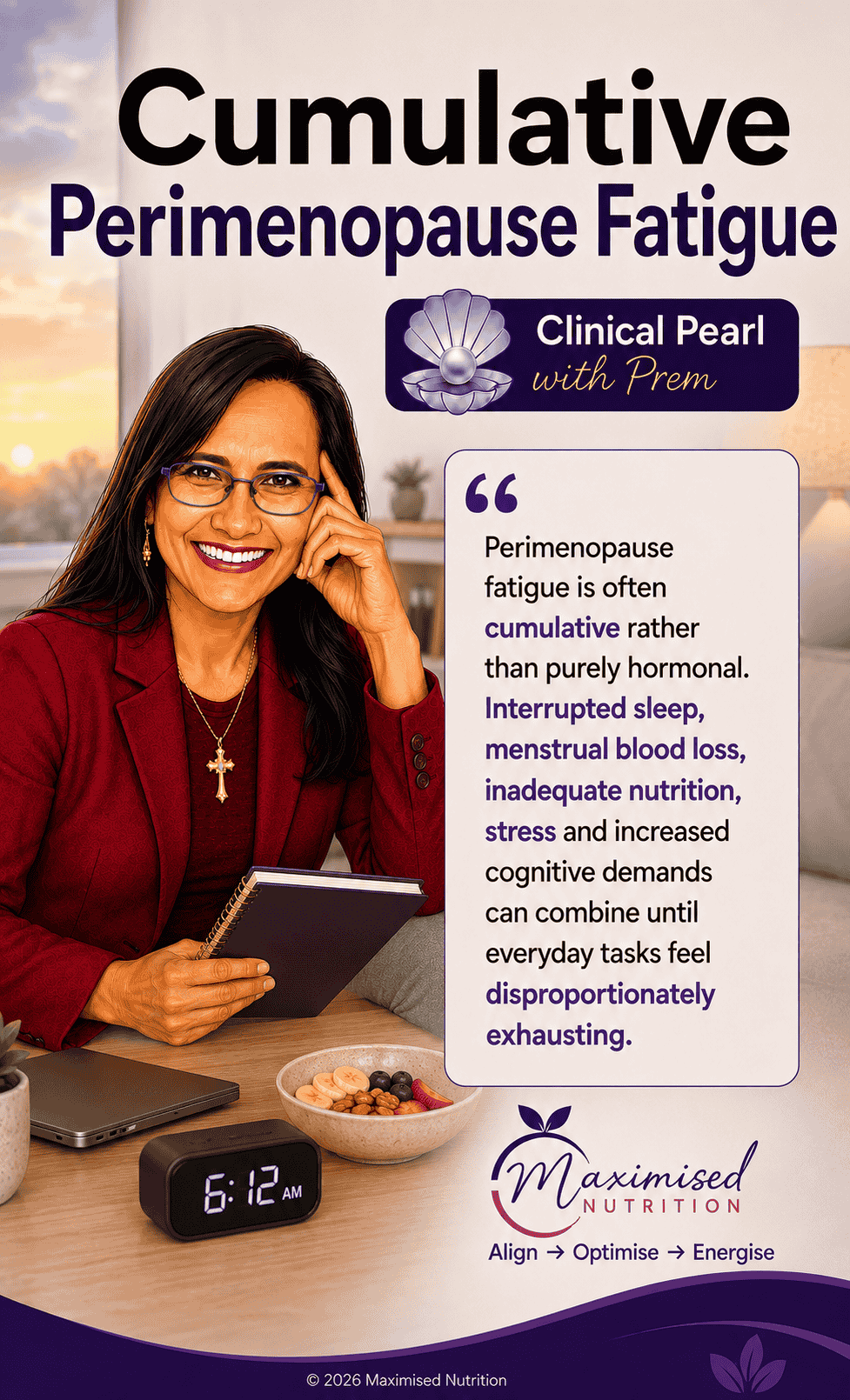
These symptoms may fluctuate. A person can feel relatively well during one week and markedly fatigued the next as menstrual cycles, bleeding, sleep and hormonal symptoms become less predictable.
Why Can Perimenopause Affect Energy and Mental Clarity?
Hormonal Fluctuations
During perimenopause, estrogen and progesterone do not simply decline in a smooth, predictable line. Their levels may fluctuate substantially before menstrual periods eventually stop.
Estrogen interacts with brain systems involved in memory, attention, mood and temperature regulation. Changes in estrogen signaling may therefore contribute to problems with verbal recall, attention, processing speed and working memory. However, cognitive symptoms cannot usually be explained by one isolated hormone result (Maki & Jaff, 2022).
For otherwise healthy people aged 45 years and over with typical symptoms, perimenopause is generally identified from menstrual changes and the clinical symptom pattern—not from repeated reproductive hormone tests alone (NICE, 2024).
Sleep Disruption
Sleep disturbance is often one of the most important—and potentially modifiable—contributors to fatigue and brain fog.
Hot flushes and night sweats may cause repeated awakenings. Perimenopause can also coincide with difficulty falling asleep, early-morning waking or lighter, more fragmented sleep, even when night sweats are not obvious.
Poor sleep can reduce attention, memory, emotional regulation and decision-making the following day. Pain, anxiety, low mood, alcohol, restless legs, caregiving demands and sleep apnea may add further disruption.
This can create a self-reinforcing cycle:
Hormonal or vasomotor symptoms → fragmented sleep → daytime fatigue and brain fog → increased stress → greater difficulty sleeping.

How Can Heavy Periods and Low Iron Affect Energy?
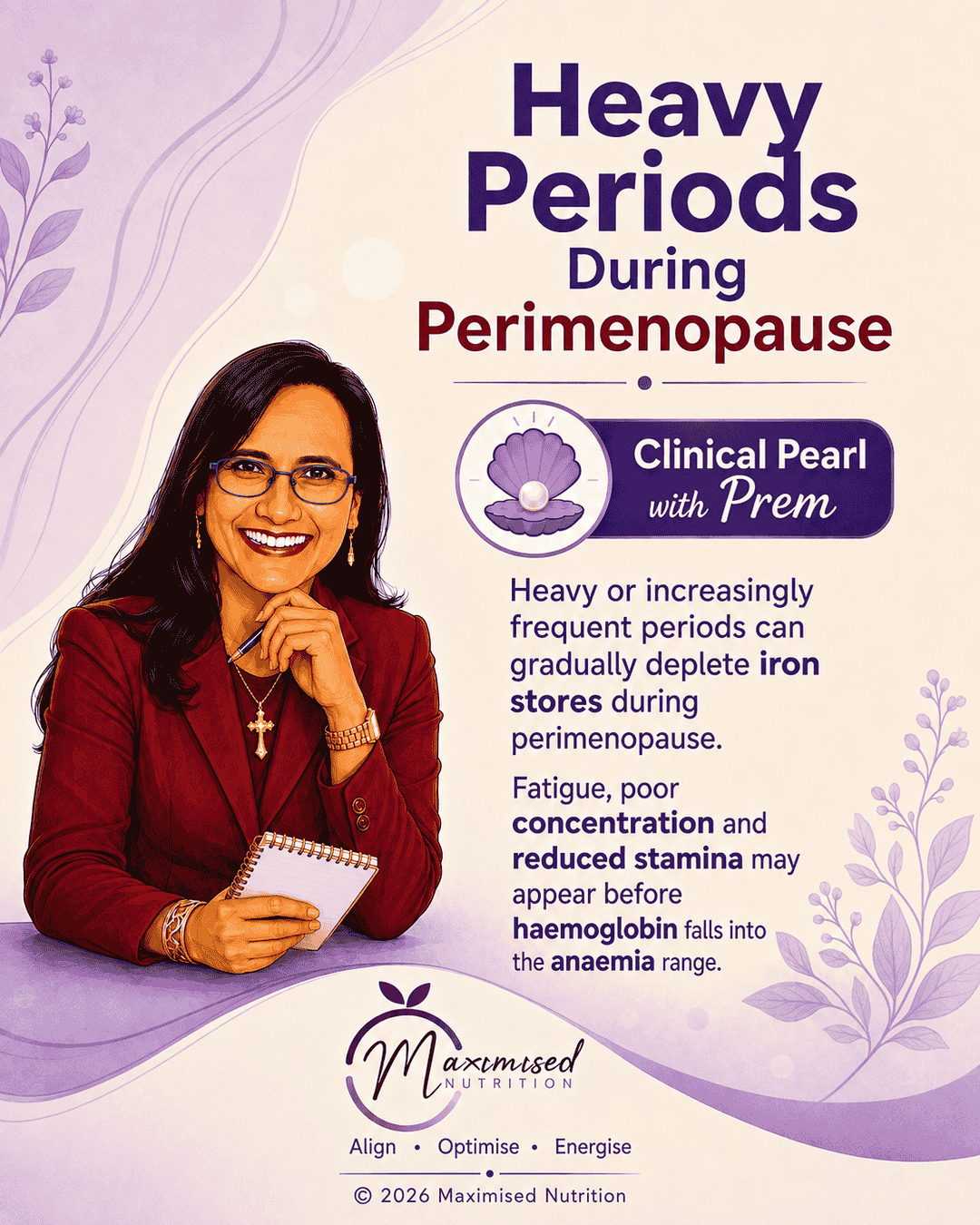
Changes in menstrual bleeding are common during perimenopause. Periods may become heavier, last longer or occur closer together. Over time, this increased blood loss can reduce iron stores and contribute to fatigue, poor concentration and reduced physical stamina.
Iron is essential for hemoglobin production, oxygen transport and cellular energy metabolism. When iron stores become depleted, symptoms may include:
• persistent tiredness or reduced exercise tolerance
• difficulty concentrating
• headaches or dizziness
• breathlessness during usual activities
• heart palpitations
• restless legs
• feeling unusually cold
• increased hair shedding or brittle nails.
Importantly, iron deficiency can cause symptoms before hemoglobin falls sufficiently to meet the diagnostic criteria for anaemia. Evidence suggests that treating confirmed iron deficiency without anemia may reduce subjective fatigue in some adults (Houston et al., 2018; Yokoi & Konomi, 2017).
A full blood count may therefore be only one part of the assessment. Depending on symptoms and medical history, a GP may also consider ferritin and other iron studies. Ferritin needs to be interpreted carefully because inflammation, infection and certain chronic conditions can elevate it and potentially obscure depleted iron stores.
Iron supplementation should be based on clinical need. Taking iron indefinitely without appropriate assessment can cause adverse effects and may delay investigation of the underlying bleeding.
Can Nutrition Affect Perimenopause Fatigue and Brain Fog?
Nutrition cannot prevent normal hormonal fluctuations, but inadequate or irregular eating can intensify fatigue and reduce mental clarity.
Skipping meals, eating too little or relying mainly on rapidly digested carbohydrates may contribute to hunger, irritability, headaches and afternoon energy crashes. Restrictive diets can also make it more difficult to obtain sufficient protein, iron, vitamin B12, folate and other nutrients involved in energy metabolism and neurological function.
A balanced meal does not need to be complicated.
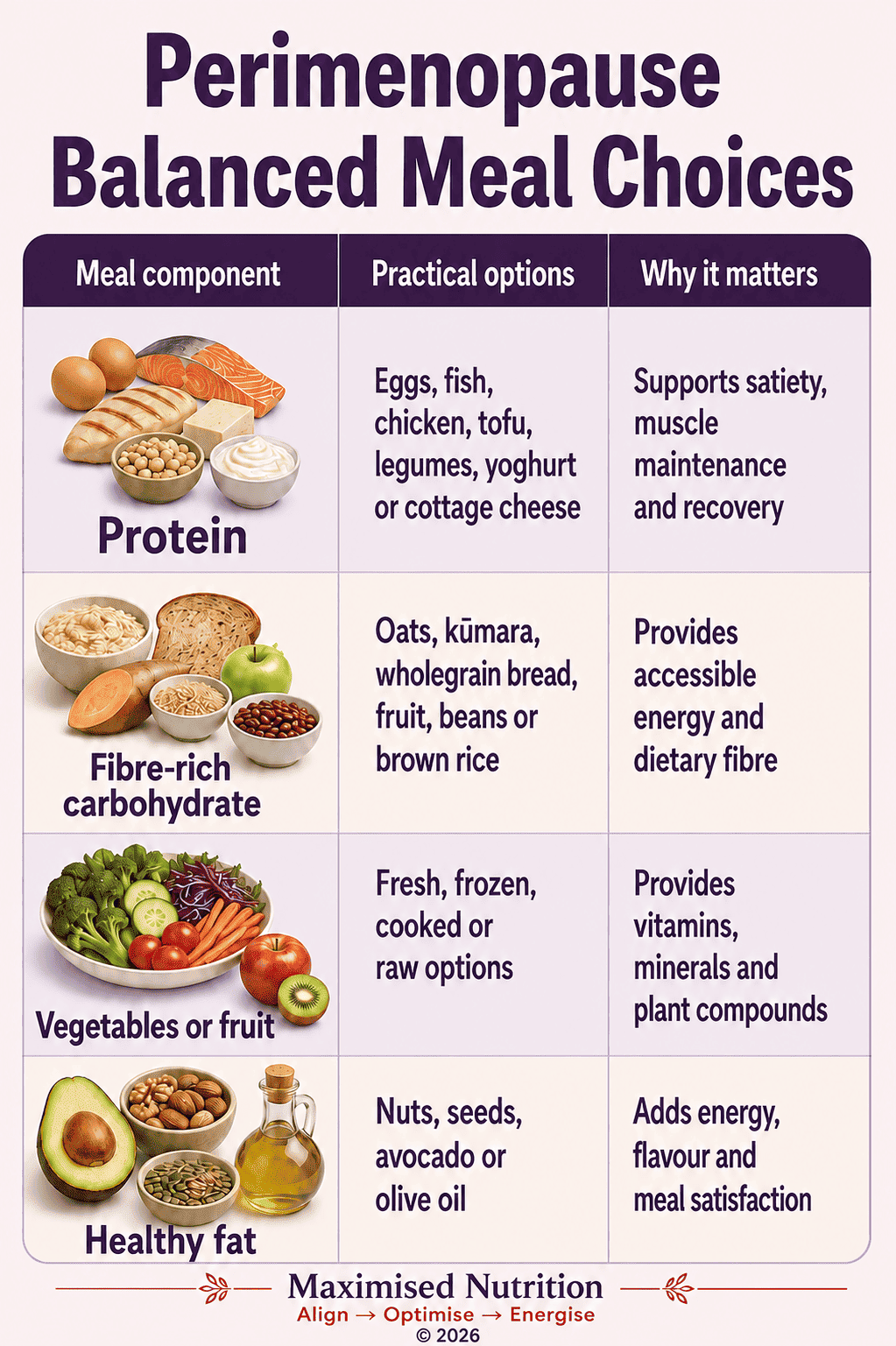
Protein becomes particularly important during midlife because maintaining muscle supports strength, metabolic health and functional independence. However, carbohydrates do not need to be eliminated. The brain relies heavily on glucose, and very restrictive eating may worsen tiredness, food preoccupation and difficulty concentrating.
Regular meals may help stabilise energy, but they are not a treatment for every cause of fatigue. Persistent symptoms still require appropriate investigation.
What Vitamins Help Menopause Brain Fog?
There is no single vitamin proven to cure menopause-related brain fog.
Iron, vitamin B12, folate or vitamin D may be helpful when a deficiency or inadequate intake has been identified. However, taking supplements “just in case” is unlikely to correct symptoms caused primarily by fragmented sleep, vasomotor symptoms, thyroid dysfunction, depression or another medical condition.
The most useful question is not, “Which supplement treats brain fog?” but:
“Is there evidence that this person lacks a nutrient necessary for normal energy or cognitive function?”
This distinction helps prevent unnecessary supplementation and directs treatment towards the factors actually contributing to symptoms.
How Do You Know Whether Fatigue Is From Perimenopause?
There is no single test that proves fatigue or brain fog is caused by perimenopause.
Timing provides useful information: symptoms may emerge alongside changing periods, hot flushes, night sweats, sleep disturbance or mood changes. However, several other conditions can produce a similar clinical picture.
Table below shows the contributing conditions that can overlap with perimenopause symptoms.
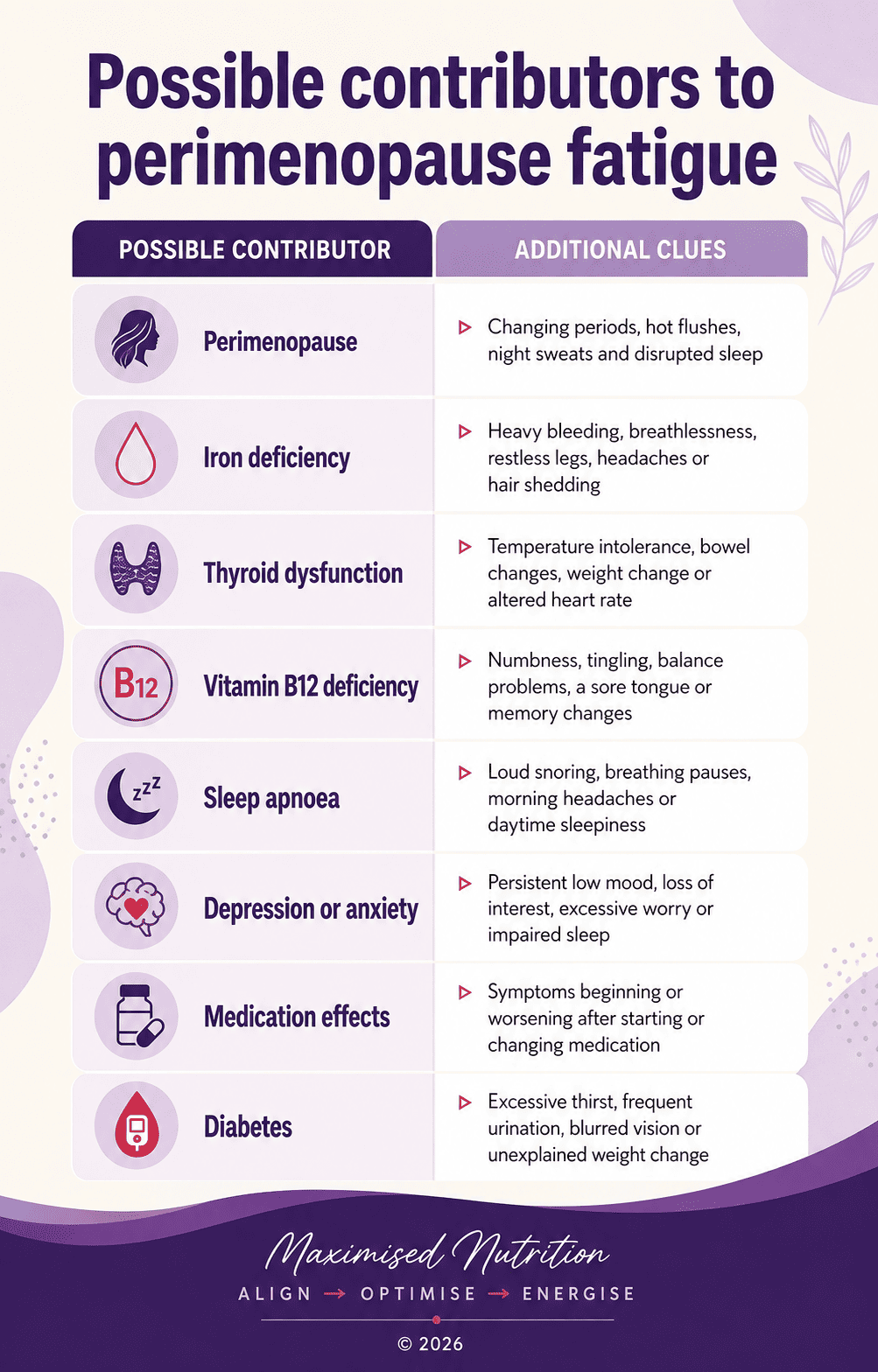
These contributors are not mutually exclusive. Perimenopause may disrupt sleep while heavy bleeding depletes iron stores, restrictive eating reduces nutrient intake and chronic stress increases cognitive load.
When Should Fatigue or Brain Fog Be Investigated?
Arrange a GP assessment when symptoms are severe, persistent, progressively worsening or interfering with work, driving, exercise or everyday responsibilities.
Medical review is also important for:
• very heavy periods or bleeding between periods
• bleeding after sexual intercourse
• fainting, chest pain or marked breathlessness
• new weakness, numbness, balance problems or speech changes
• persistent excessive thirst or frequent urination
• unexplained weight loss
• memory problems that compromise safety or independence.
What Helps Perimenopause Fatigue and Brain Fog?
The most effective approach is not one universal “brain-fog treatment.” It is a targeted plan based on the factors affecting the individual.
1. Investigate the Likely Contributors
Begin by reviewing the timing and severity of symptoms alongside:
• menstrual changes and bleeding
• hot flushes and night sweats
• sleep quality
• dietary intake
• stress and mood
• medication use
• relevant medical history.
Depending on the clinical picture, a GP may consider a full blood count, iron studies, thyroid function, vitamin B12, folate, vitamin D or blood-glucose testing. Testing should be guided by symptoms rather than ordering every possible test without a clear rationale.
2. Eat Regularly and Sufficiently
Regular meals can help reduce the additional fatigue caused by inadequate energy intake, long gaps between meals or overly restrictive dieting.
Aim to include protein, fibre-rich carbohydrate, vegetables or fruit, and healthy fats across the day. If appetite is poor, smaller meals and nourishing snacks may be more manageable than forcing large portions.
3. Protect Sleep and Recovery
Sleep deserves active treatment rather than being accepted as an unavoidable part of perimenopause.
Helpful strategies may include:
• maintaining a consistent waking time
• reducing caffeine later in the day
• limiting alcohol, particularly close to bedtime
• keeping the bedroom cool
• seeking treatment for disruptive hot flushes or night sweats
• addressing persistent insomnia
• investigating snoring, breathing pauses or excessive daytime sleepiness.
Cognitive behavioural therapy can be considered for menopause-associated sleep problems, either alongside other treatment or when HRT is unsuitable or not preferred (NICE, 2024).
4. Use Physical Activity Strategically
Regular walking, resistance training and aerobic activity can support sleep, mood, cardiovascular health, muscle maintenance and long-term cognitive health.
When fatigue is substantial, however, the answer is not always to exercise harder. Begin at a tolerable level and increase gradually. Persistent exhaustion, dizziness, unusual breathlessness or poor recovery should be investigated rather than pushed through.
5. Reduce Cognitive Overload
Practical supports can protect limited mental capacity while the underlying contributors are addressed. These may include:
• using written lists and calendar reminders
• completing one task at a time
• reducing unnecessary multitasking
• scheduling demanding work during the clearest part of the day
• building short recovery periods into busy days.
These strategies are not signs of cognitive failure. They are legitimate tools for reducing functional strain.
Does HRT Help With Brain Fog and Fatigue?
Menopausal hormone therapy—commonly called HRT—is an effective treatment for hot flushes and night sweats. If these symptoms are repeatedly disrupting sleep, successful treatment may indirectly improve daytime energy, concentration and perceived brain fog.
However, HRT is not currently recommended solely to treat cognitive decline or prevent dementia. Evidence that it directly improves memory in otherwise healthy people remains insufficient (Maki & Jaff, 2022; The North American Menopause Society Advisory Panel, 2022).
Whether HRT is appropriate should be discussed with a qualified prescriber. The decision depends on the person’s age, stage of menopause, symptoms, medical history, preferences and individual balance of potential benefits and risks.
HRT should not replace investigation of heavy bleeding, iron deficiency, thyroid dysfunction, sleep apnoea or another possible cause of fatigue.
How Long Does Menopause Brain Fog Last?
There is no fixed duration. Brain fog may fluctuate throughout perimenopause and become more noticeable during periods of poor sleep, frequent hot flushes, increased stress or low mood.
Research is generally reassuring. Menopause-associated cognitive changes are usually subtle and are not considered equivalent to dementia. Some difficulties may stabilize after the menopause transition, although each person’s experience differs (Greendale et al., 2020; Maki & Jaff, 2022).
Progressive memory loss, becoming lost in familiar places, difficulty managing finances, marked personality changes or worsening problems with independent daily functioning require medical assessment.
Frequently Asked Questions
Can perimenopause cause extreme fatigue?
Perimenopause can contribute to significant fatigue, especially when sleep disruption, night sweats or heavy menstrual bleeding are present. Extreme or persistent exhaustion should still be investigated for other causes.
How can I get my energy back during perimenopause?
Start with adequate meals, appropriate movement and sleep support while investigating heavy bleeding, iron status and other medical contributors. Treatment should reflect the underlying cause rather than relying on stimulants or supplements alone.
What vitamin is best for menopause brain fog?
There is no single best vitamin. Iron, vitamin B12, folate or vitamin D may help when deficiency or inadequate intake is present. They are not universal treatments for hormonally or sleep-related brain fog.
Does HRT help with brain fog and memory?
It may help indirectly by reducing hot flushes, night sweats and related sleep disruption. HRT is not currently recommended solely to improve cognition or prevent dementia.
Is brain fog caused by low estrogen?
Changing o=estrogen signaling may contribute, but brain fog is usually multifactorial. Sleep, stress, mood, nutrition, medication and medical conditions may also affect cognition.
Can menopause brain fog be permanent?
For most people, brain fog during the menopause transition is not regarded as permanent cognitive decline. Persistent, progressive or functionally significant symptoms should be medically assessed.
The Bottom Line
Perimenopause can affect energy, memory and concentration—but hormones are rarely the whole story. Sleep disruption, heavy menstrual bleeding, low iron, inadequate nutrition, mood changes and other health conditions may overlap.
References
Greendale, G. A., Karlamangla, A. S., & Maki, P. M. (2020). The menopause transition and cognition. JAMA, 323(15), 1495–1496. https://doi.org/10.1001/jama.2020.1757
Houston, B. L., Hurrie, D., Graham, J., Perija, B., Rimmer, E., Rabbani, R., Bernstein, C. N., Turgeon, A. F., Fergusson, D. A., Houston, D. S., Abou-Setta, A. M., & Zarychanski, R. (2018). Efficacy of iron supplementation on fatigue and physical capacity in non-anaemic iron-deficient adults: A systematic review of randomised controlled trials. BMJ Open, 8(4), e019240. https://doi.org/10.1136/bmjopen-2017-019240
Maki, P. M., & Jaff, N. G. (2022). Brain fog in menopause: A health-care professional’s guide for decision-making and counseling on cognition. Climacteric, 25(6), 570–578. https://doi.org/10.1080/13697137.2022.2122792
National Institute for Health and Care Excellence. (2024). Menopause: Identification and management (NICE Guideline NG23). https://www.nice.org.uk/guidance/ng23
The North American Menopause Society Advisory Panel. (2022). The 2022 hormone therapy position statement of The North American Menopause Society. Menopause, 29(7), 767–794. https://doi.org/10.1097/GME.0000000000002028
Yokoi, K., & Konomi, A. (2017). Iron deficiency without anaemia is a potential cause of fatigue: Meta-analyses of randomised controlled trials and cross-sectional studies. British Journal of Nutrition, 117(10), 1422–1431. https://doi.org/10.1017/S0007114517001349

About the Author
Prem Nand, NZRD, is an Integrative Clinical Dietitian–Nutritionist and founder of Maximised Nutrition
in New Zealand. She uses a whole-body, systems-based nutrition approach to support people with complex and medically layered health conditions, considering the interconnected role of the gut, brain, nervous system, hormones, metabolism, inflammation, and lifestyle factors in human health.

Holistic Nutrition For A Happy, Healthy, Confident You!
INFORMATION ON THIS WEBSITE IS FOR INFORMATIONAL PURPOSES ONLY.
PLEASE ALWAYS CONSULT A QUALIFIED HEALTH PRACTITIONER FOR A PERSONALISED ADVICE FOR YOUR HEALTH CONDITION
© 2025 MAXIMISED NUTRITION LTD. All Rights Reserved.