Is Chronic Inflammation Sneaking Up on You? Find out in just 60 seconds with this simple test


Post-Viral Fatigue and Mitochondria
Why Recovery Can Take Months
Author: Prem Nand, NZRD (Clinical Dietitian - Nutritionist) Published June 2026 Copyright: Maximised Nutrition Ltd
Introduction
Most people expect to bounce back quickly after a viral infection. The fever settles, the cough fades, and life is supposed to return to normal. But for many, recovery is far from straightforward. Weeks or even months later, they may still feel exhausted, foggy, dizzy or unable to tolerate the activities they once managed with ease. This lingering exhaustion is known as post-viral fatigue.
Although it became widely recognized during the COVID 19 pandemic, it has been documented for decades across many viral illnesses (Komaroff & Lipkin, 2021).
Researchers now understand that persistent symptoms often involve a combination of immune activation, inflammation, nervous system changes and disruptions in the body’s energy producing systems.
What Is Post-Viral Fatigue?
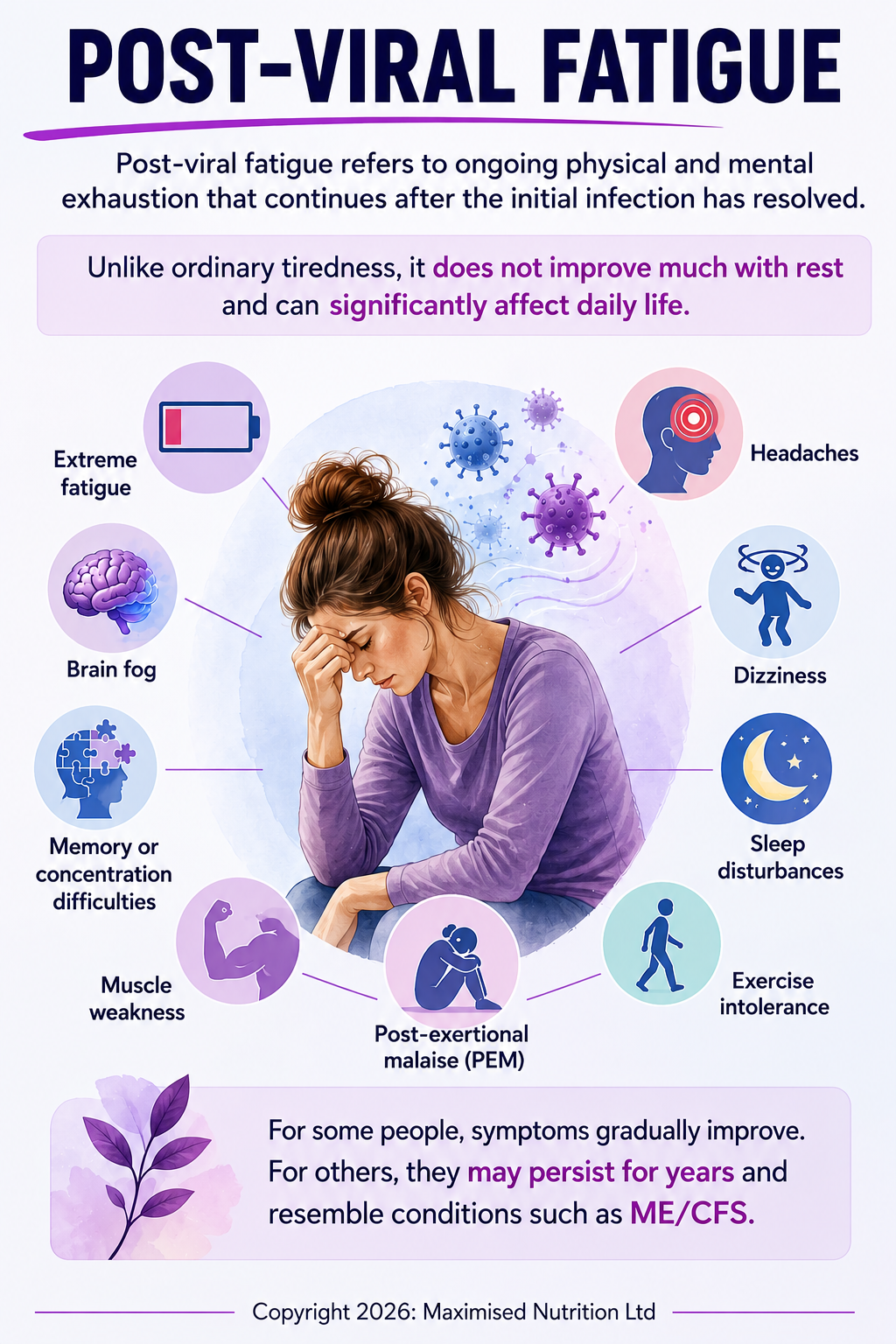
Ref: Komaroff & Bateman, 2021
Viral Infections Commonly Linked to Post-Viral Fatigue
COVID 19
Fatigue is one of the most common symptoms in Long COVID, often accompanied by cognitive difficulties and exercise intolerance (Davis et al., 2023).
Epstein-Barr Virus (Glandular Fever)
EBV has a long history of triggering prolonged fatigue and slow recovery (Hickie et al., 2006).
Dengue Fever
Some individuals experience months of fatigue, headaches and muscle pain after dengue infection (Seet et al., 2007).
Ross River Virus
Known for causing prolonged fatigue, joint pain and reduced physical capacity (Suhrbier et al., 2012).
Influenza and Other Viral Illnesses.
Even common viruses can trigger post-viral fatigue, and the severity of lingering symptoms does not always match the severity of the initial illness.
How the Immune System Responds to Infection
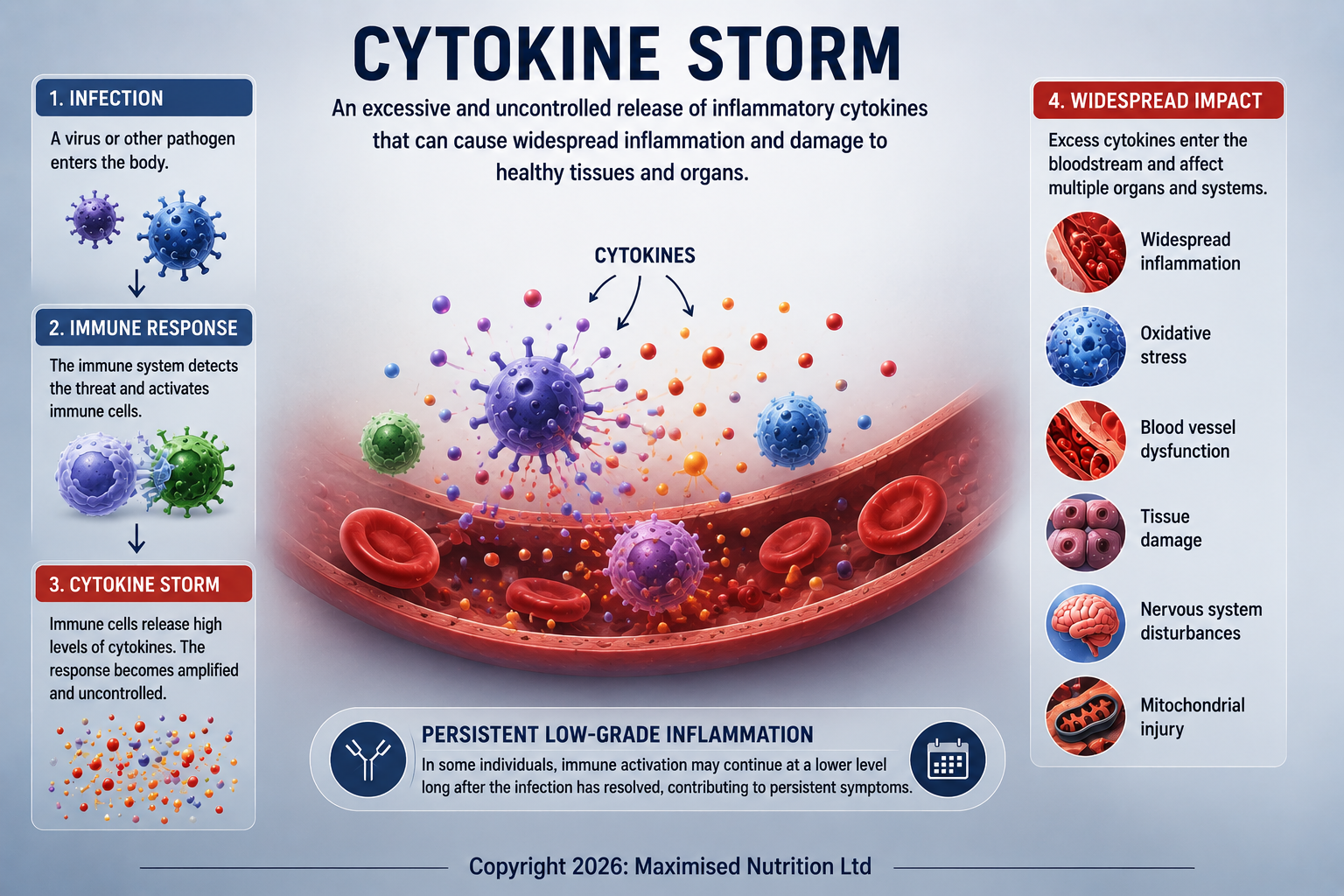
When a virus enters the body, the immune system releases cytokines—chemical messengers that coordinate inflammation and defence. Key cytokines include IL 1, IL 6, TNF α and interferons.
Under normal circumstances, cytokine levels fall once the infection clears. But sometimes this process becomes dysregulated, leading to prolonged inflammation..
What Is a Cytokine Storm?
A cytokine storm is an excessive, uncontrolled release of inflammatory cytokines (Fajgenbaum & June, 2020, Proal & VanElzakker, 2021
How Inflammation Affects the Brain
Many people with post-viral fatigue experience:
• Brain fog
• Forgetfulness
• Slower thinking
• Reduced motivation
• Difficulty concentrating
Inflammatory cytokines can alter brain signalling and neurotransmitter pathways, producing what researchers call sickness behaviour (Dantzer et al., 2008). When inflammation persists, these cognitive symptoms may continue long after the infection has passed.
Mitochondria: The Body’s Energy Factories
Mitochondria produce ATP, the body’s main energy currency. The brain, heart, muscles and immune system rely heavily on mitochondrial energy.
When mitochondrial function is impaired, energy production drops—leading to fatigue, weakness and slower recovery. Read more about mitochondria dysfunction.
How Viral Infections Affect Mitochondria
During infection, immune cells generate reactive oxygen species (ROS). Excessive ROS can damage:
• Mitochondrial DNA
• Cell membranes
• Energy producing proteins
• Cellular signalling pathways
Inflammatory cytokines can further impair mitochondrial respiration (Burtscher et al., 2020). This may leave mitochondria functioning below capacity long after the infection has cleared.
Mitochondrial Dysfunction and Chronic Fatigue
Research in ME/CFS and Long COVID shows altered energy metabolism, oxidative stress and mitochondrial impairment (Nunn et al., 2022).
This can lead to:
• Persistent fatigue
• Muscle weakness
• Exercise intolerance
• Slow recovery
• Cognitive difficulties
Many describe feeling as though their “internal battery never fully recharges.”
The Nervous System Connection
The autonomic nervous system—especially the vagus nerve—regulates heart rate, digestion, temperature and energy distribution.
Autonomic dysfunction is common in Long COVID and other post-viral syndromes (Dani et al., 2021).
Symptoms may include:
• Dizziness
• Rapid heart rate
• Digestive issues
• Temperature sensitivity
• Exercise intolerance
Persistent communication between inflammatory pathways and the nervous system may contribute to ongoing symptoms
Why Symptoms Persist After the Virus Has Gone
Several mechanisms may explain prolonged symptoms:
• Persistent immune activation
• Viral fragments that continue stimulating inflammation
• Autoimmune responses
• Microvascular dysfunction affecting oxygen delivery
Post-viral fatigue likely results from multiple overlapping processes (Komaroff & Lipkin, 2021).
Why Exercise Can Make Symptoms Worse
Many people with post-viral fatigue experience post-exertional malaise (PEM)—a delayed worsening of symptoms after physical or mental activity.
This may occur because impaired energy systems cannot meet increased demands while inflammation remains elevated (Nijs et al., 2021).
Supporting Recovery
Recovery from post-viral fatigue is gradual and highly individual. While general lifestyle strategies can help, the most effective approach is personalised and guided by a qualified clinician.
1. Managing Overall Inflammatory Burden
Eating patterns rich in whole foods, vegetables, fruits, legumes, nuts, seeds, herbs and spices support immune regulation. The specifics vary between individuals, and personalised guidance can help identify what works best.
2. Optimising Sleep
Sleep plays a central role in immune function, nervous system regulation and mitochondrial repair. Identifying the factors disrupting sleep often requires a tailored approach.
3. Managing Stress
Chronic stress can increase inflammatory activity and place additional demands on the body’s recovery systems. Supportive strategies can help reduce this load.
4. Supporting Nutritional Status
Nutrition influences immune function, inflammation and energy production. However, the nutrients or dietary strategies that matter most differ widely between individuals. A personalised assessment can identify whether nutrient levels are adequate, whether absorption is optimal and whether dietary patterns are supporting recovery. This avoids guesswork and ensures that nutrition is working with the body, not against it.
5. Pacing Activity
Pacing helps individuals stay within their available energy envelope and avoid repeated symptom crashes. A clinician can help tailor pacing strategies to each person’s lifestyle and recovery stage.
Final Thoughts
Post-viral fatigue is a complex biological condition involving the immune system, nervous system and mitochondrial energy pathways. Persistent inflammation, oxidative stress and autonomic dysfunction may all contribute to slow recovery.
Growing evidence shows that post-viral fatigue is not simply “being tired.” It reflects genuine physiological changes that can persist long after the infection has resolved.
If you’re experiencing ongoing symptoms after a viral illness, a personalised assessment can help identify what your body needs to recover safely and effectively. You don’t have to navigate this alone — support is available.
References
Burtscher, J., Millet, G. P., Burtscher, M., & Lowery, R. P. (2020). A critical review of the key role of mitochondrial dysfunction in COVID-19. Molecular and Cellular Biochemistry, 476(10), 3717–3729. https://doi.org/10.1007/s11010-020-03984-4
Dani, M., Dirksen, A., Taraborrelli, P., Torocastro, M., Panagopoulos, D., Sutton, R., & Lim, P. B. (2021). Autonomic dysfunction in Long COVID: Rationale, physiology and management strategies. Clinical Medicine, 21(1), e63–e67. https://doi.org/10.7861/clinmed.2020-0896
Dantzer, R., O'Connor, J. C., Freund, G. G., Johnson, R. W., & Kelley, K. W. (2008). From inflammation to sickness and depression: When the immune system subjugates the brain. Nature Reviews Neuroscience, 9(1), 46–56. https://doi.org/10.1038/nrn2297
Davis, H. E., McCorkell, L., Vogel, J. M., & Topol, E. J. (2023). Long COVID: Major findings, mechanisms and recommendations. Nature Reviews Microbiology, 21(3), 133–146. https://doi.org/10.1038/s41579-022-00846-2
Fajgenbaum, D. C., & June, C. H. (2020). Cytokine storm. New England Journal of Medicine, 383(23), 2255–2273. https://doi.org/10.1056/NEJMra2026131
Hickie, I., Davenport, T., Wakefield, D., Vollmer-Conna, U., Cameron, B., Vernon, S. D., Reeves, W. C., & Lloyd, A. (2006). Post-infective and chronic fatigue syndromes precipitated by viral and non-viral pathogens: Prospective cohort study. BMJ, 333(7568), 575. https://doi.org/10.1136/bmj.38933.585764.AE
Komaroff, A. L., & Bateman, L. (2021). Will COVID-19 lead to myalgic encephalomyelitis/chronic fatigue syndrome? Frontiers in Medicine, 7, 606824. https://doi.org/10.3389/fmed.2020.606824
Komaroff, A. L., & Lipkin, W. I. (2021). Insights from myalgic encephalomyelitis/chronic fatigue syndrome may help unravel the pathogenesis of post-acute COVID-19 syndrome. Trends in Molecular Medicine, 27(9), 895–906. https://doi.org/10.1016/j.molmed.2021.06.002
Nijs, J., Vanherberghen, K., Du Bois, M., & De Meirleir, K. (2021). Post-exertional malaise in patients with chronic fatigue syndrome: How to detect and manage. Journal of Translational Medicine, 19, 177.
Nunn, A. V. W., Guy, G. W., Brysch, W., Bell, J. D., & Meier, U. C. (2022). The possible role of mitochondria in Long COVID. Mitochondrion, 66, 35–44. https://doi.org/10.1016/j.mito.2022.08.002
Proal, A. D., & VanElzakker, M. B. (2021). Long COVID or post-acute sequelae of COVID-19 (PASC): An overview of biological factors that may contribute to persistent symptoms. Frontiers in Microbiology, 12, 698169. https://doi.org/10.3389/fmicb.2021.698169
Seet, R. C. S., Quek, A. M. L., & Lim, E. C. H. (2007). Post-infectious fatigue syndrome in dengue infection. Journal of Clinical Virology, 38(1), 1–6. https://doi.org/10.1016/j.jcv.2006.10.011
Suhrbier, A., Jaffar-Bandjee, M. C., & Gasque, P. (2012). Arthritogenic alphaviruses—An overview. Nature Reviews Rheumatology, 8(7), 420–429. https://doi.org/10.1038/nrrheum.2012.64

About the Author
Prem Nand, NZRD, is an Integrative Clinical Dietitian–Nutritionist and founder of Maximised Nutrition
in New Zealand. She uses a whole-body, systems-based nutrition approach to support people with complex and medically layered health conditions, considering the interconnected role of the gut, brain, nervous system, hormones, metabolism, inflammation, and lifestyle factors in human health.

Holistic Nutrition For A Happy, Healthy, Confident You!
INFORMATION ON THIS WEBSITE IS FOR INFORMATIONAL PURPOSES ONLY.
PLEASE ALWAYS CONSULT A QUALIFIED HEALTH PRACTITIONER FOR A PERSONALISED ADVICE FOR YOUR HEALTH CONDITION
© 2025 MAXIMISED NUTRITION LTD. All Rights Reserved.