Is Chronic Inflammation Sneaking Up on You? Find out in just 60 seconds with this simple test


What Is the Purpose of a Low FODMAP Diet? (And Why You May Still Feel Bloated?)
Understanding What the Low FODMAP Diet Was Designed to Do
Author: Prem Nand, NZRD (Clinical Dietitian - Nutritionist) Published July 2026 Copyright: Maximised Nutrition Ltd
Key Takeaways
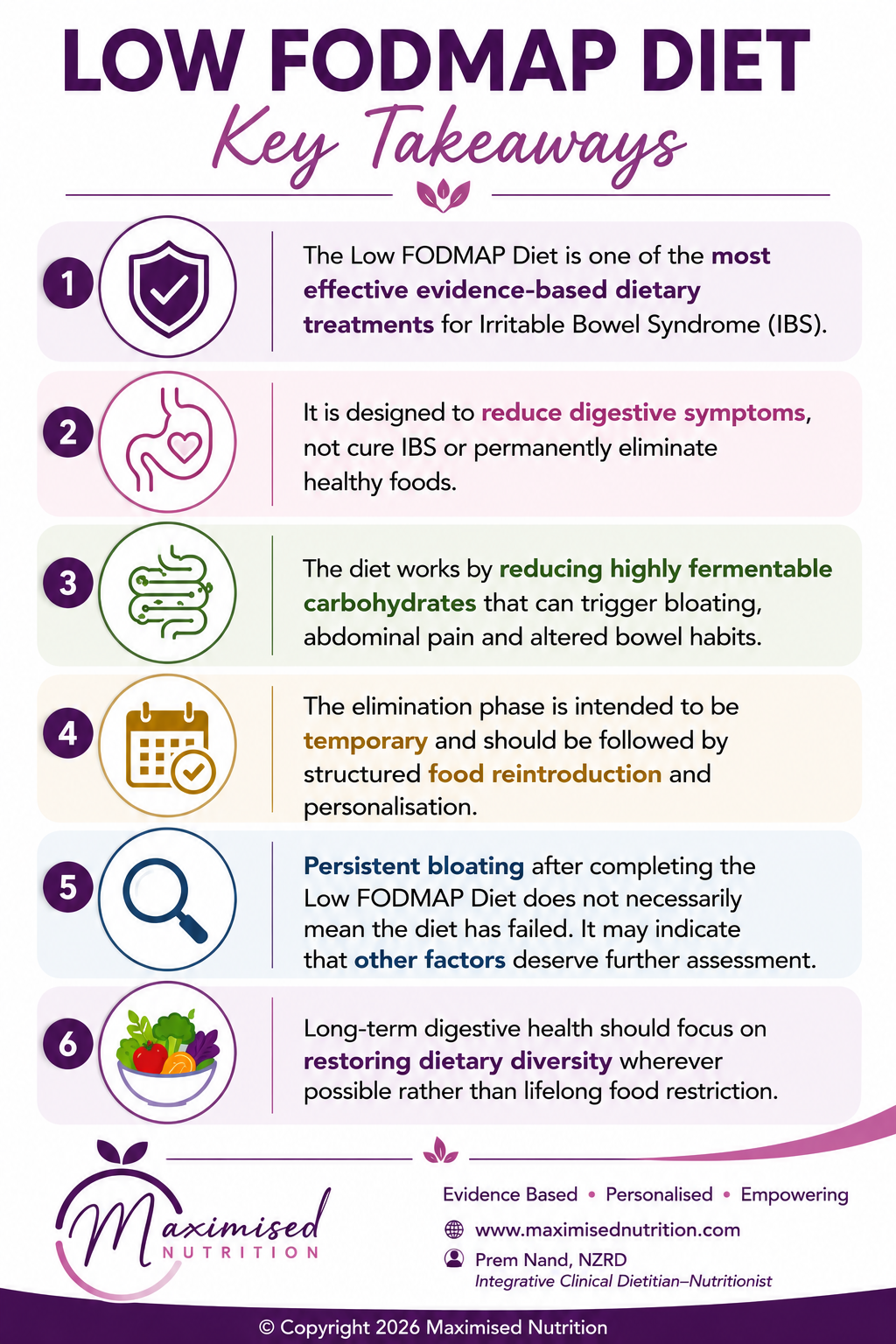
Quick Answer
What is the purpose of a Low FODMAP Diet?
The Low FODMAP Diet is a temporary therapeutic diet developed to reduce symptoms such as bloating, abdominal pain, excessive gas, and altered bowel habits in people with Irritable Bowel Syndrome (IBS). It works by reducing foods high in poorly absorbed fermentable carbohydrates (FODMAPs), allowing symptoms to settle before foods are systematically reintroduced to identify individual tolerance levels (Gibson & Shepherd, 2010).
Who Is This Article For?
This article is designed for people who:
• have Irritable Bowel Syndrome (IBS);
• experience persistent bloating or excessive gas;
• have completed a Low FODMAP Diet but symptoms returned;
• are considering whether they need further gastrointestinal assessment;
• want evidence-based nutrition advice supported by scientific research.
Healthcare professionals may also find this article useful as a concise summary of current evidence regarding the role and limitations of the Low FODMAP Diet.
Why This Question Matters
The question "What is the purpose of a Low FODMAP Diet?" is one of the most common digestive health questions searched online.
Unfortunately, it is also one of the most misunderstood.
Many websites describe the Low FODMAP Diet as though it is designed to "heal the gut" or "fix IBS."
Others dismiss it entirely, claiming that it simply masks symptoms without addressing the underlying problem.
Neither view accurately reflects the scientific evidence.
The Low FODMAP Diet has been extensively researched over the past two decades and is now recommended by several international gastroenterology guidelines as a first-line dietary treatment for IBS (Black et al., 2022).
However, understanding what the diet was designed to achieve—and equally importantly, what it was not designed to achieve—is essential for setting realistic expectations.
What Is the Low FODMAP Diet?
The Low FODMAP Diet was developed by researchers at Monash University in Australia after recognising that certain short-chain carbohydrates consistently triggered digestive symptoms in people with IBS (Gibson & Shepherd, 2010).
Rather than eliminating all carbohydrates, the diet specifically reduces foods rich in FODMAPs, an acronym for:
• Fermentable
• Oligosaccharides
• Disaccharides
• Monosaccharides
• And
• Polyols
These carbohydrates are naturally present in many everyday foods.
Examples include:
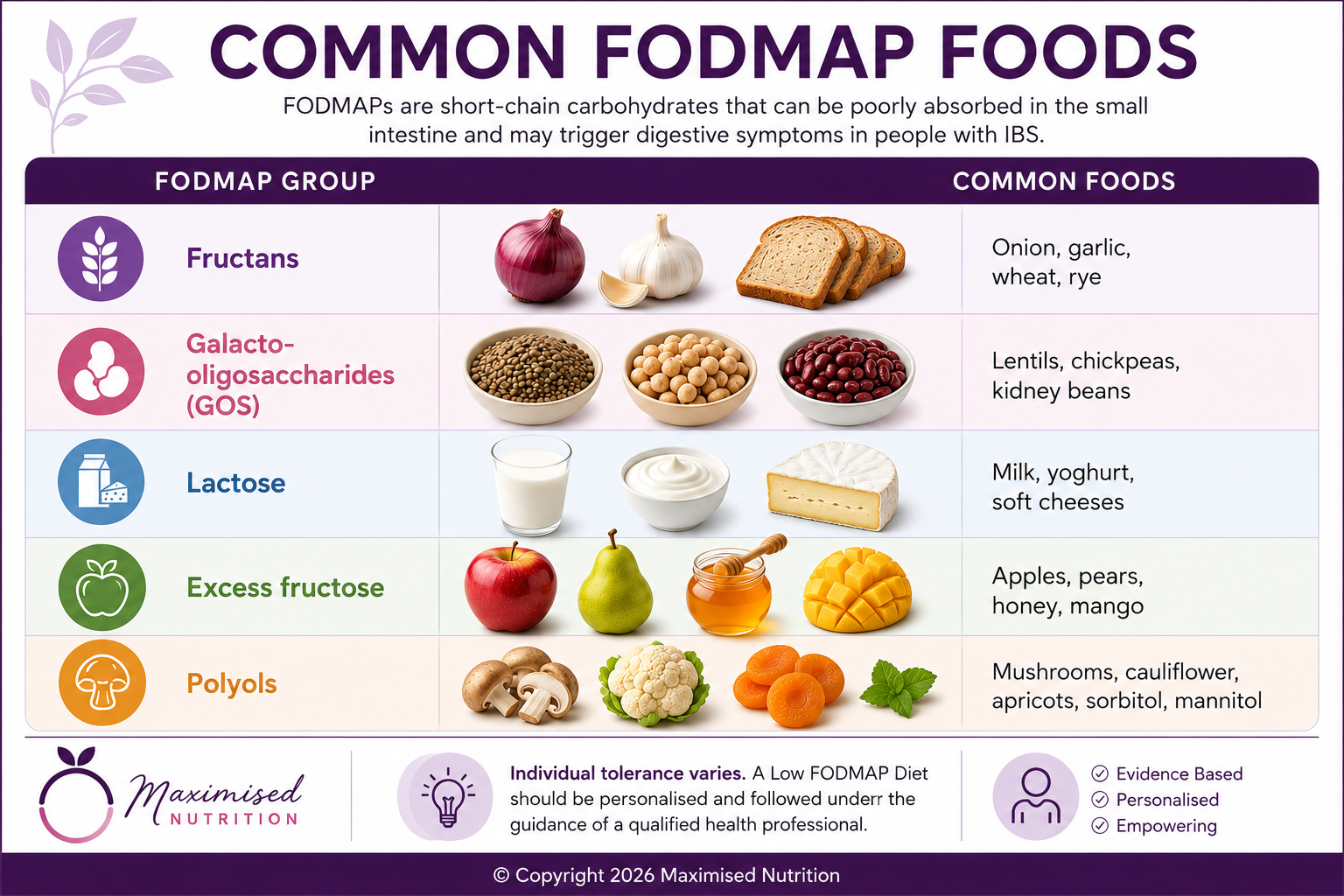
It is important to emphasise that FODMAPs are not unhealthy.
Many high-FODMAP foods are excellent sources of:
• dietary fibre,
• vitamins,
• minerals,
• antioxidants,
• and prebiotics that support a healthy gut microbiome.
For this reason, the Low FODMAP Diet should never be viewed as a long-term "healthy eating diet" for the general population.
Instead, it is a therapeutic diet used for a specific clinical purpose.
How Does the Low FODMAP Diet Work?
The Low FODMAP Diet improves symptoms through two well-established physiological mechanisms.
1. It Reduces Water Entering the Intestine
Some FODMAP carbohydrates are poorly absorbed in the small intestine.
Instead of being absorbed into the bloodstream, they remain within the bowel, where they attract water through osmosis.
For people with IBS, this extra water may contribute to:
• diarrhoea,
• urgency,
• abdominal discomfort,
• loose stools.
Reducing these carbohydrates often improves these symptoms.
2. It Reduces Fermentation
The second mechanism involves fermentation.
Fermentation is a completely normal and healthy digestive process.
Within the large intestine, beneficial bacteria ferment dietary fibre and resistant carbohydrates to produce short-chain fatty acids such as:
• butyrate,
• acetate,
• propionate.
These compounds help support:
• intestinal barrier function,
• immune health,
• colon health,
• metabolic regulation (Morrison & Preston, 2016).
However, fermentation also produces gases including:
• hydrogen,
• methane,
• carbon dioxide.
People with IBS often have visceral hypersensitivity, meaning they experience normal amounts of intestinal gas more intensely than individuals without IBS (Simrén et al., 2013).
By temporarily reducing the amount of fermentable carbohydrate entering the bowel, the Low FODMAP Diet reduces gas production and therefore reduces symptoms.
Importantly, the goal is not to eliminate fermentation.
Normal fermentation remains essential for maintaining a healthy gut microbiome.
The objective is simply to reduce excessive or poorly tolerated fermentation while symptoms are brought under control.
What the Low FODMAP Diet Does—and Does Not Do
One of the greatest misunderstandings surrounding the Low FODMAP Diet is assuming that symptom improvement means the underlying digestive problem has been corrected.
Current evidence does not support that conclusion.
Instead, it is more accurate to think of the Low FODMAP Diet as a highly effective symptom-management strategy.
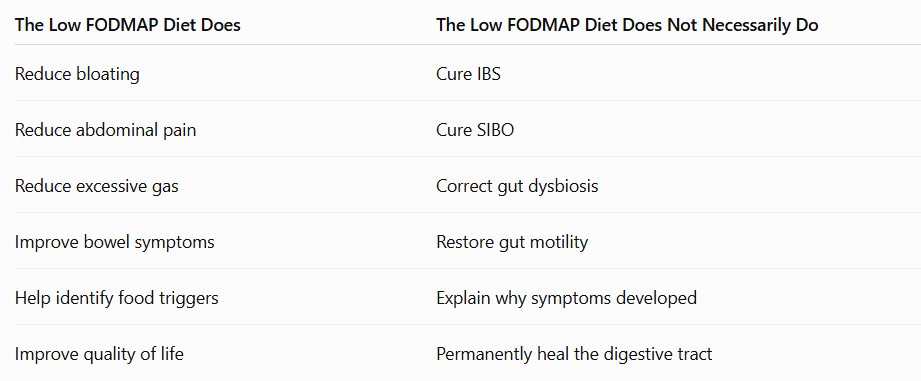
This distinction is not a criticism of the diet.
Rather, it reflects the purpose for which the diet was originally developed.
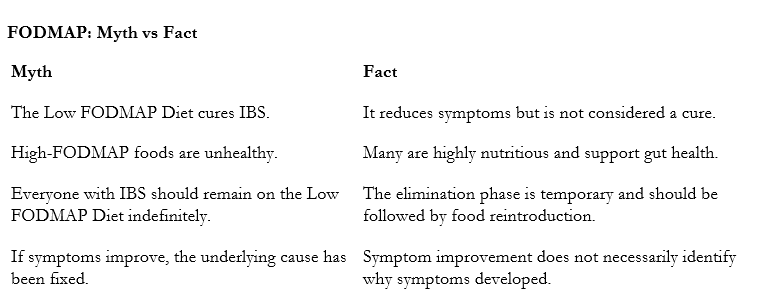
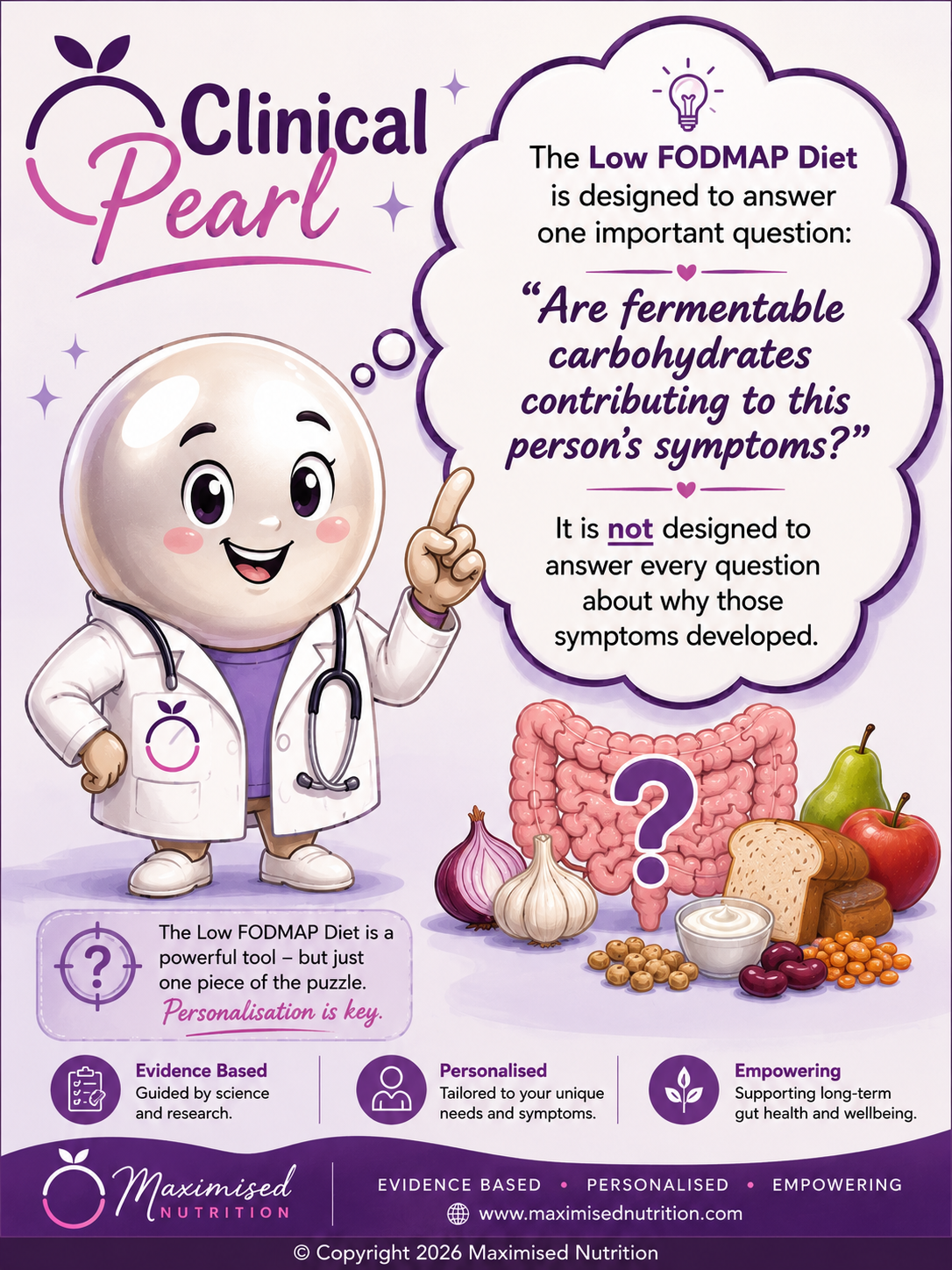
That distinction is crucial.
For many people, the Low FODMAP Diet provides excellent long-term symptom control.
For others, symptoms improve temporarily before returning when foods are reintroduced.
Understanding why this happens is one of the most important developments in modern digestive health research.
Why Am I Still Bloated After Following a Low FODMAP Diet?
By now, you may be wondering:
"If the Low FODMAP Diet is so effective, why am I still bloated?"
This is one of the most common questions I hear in clinical practice.
Many people complete the elimination phase successfully.
Their bloating settles.
Their abdominal pain improves.
They finally feel they have regained control of their digestive system.
Then something unexpected happens.
Foods are reintroduced...
...and the bloating returns.
Others experience something even more frustrating.
Despite following the diet carefully, they never achieve the improvement they were hoping for.
This raises an important question.
Has the Low FODMAP Diet failed?
In most cases, the answer is no.
Instead, persistent symptoms often indicate that another physiological process may also be contributing to digestive dysfunction.
Understanding these possibilities helps explain why dietary restriction alone is not always the complete answer.
The Low FODMAP Diet Was Never Designed to Be Permanent
One of the biggest misconceptions surrounding the Low FODMAP Diet is that it represents a long-term eating plan.
It does not.
The Low FODMAP Diet was always intended to be a three-stage clinical process (Gibson & Shepherd, 2010).
Phase 1 – Elimination
The elimination phase temporarily reduces foods high in fermentable carbohydrates to determine whether they contribute to symptoms.
Its purpose is diagnostic rather than curative.
In other words, it asks:
"Are FODMAPs contributing to this person's symptoms?"
For many people, the answer is yes.
Phase 2 – Food Reintroduction
Once symptoms improve, foods are systematically challenged to determine:
• which FODMAP groups trigger symptoms,
• how much can be tolerated,
• which foods can safely return.
This phase is essential.
Without food challenges, people never discover their individual tolerance levels.
Phase 3 – Personalisation
The final stage develops a long-term eating pattern that restores as much dietary variety as possible while maintaining symptom control.
Success is not measured by how many foods remain excluded.
Success is measured by how many nutritious foods can confidently return to the diet.
Why Food Reintroduction Matters
Many foods removed during the elimination phase are also among the healthiest foods we eat.
These include:
• onions,
• garlic,
• legumes,
• apples,
• pears,
• asparagus,
• wheat products.
These foods provide:
• dietary fibre,
• vitamins,
• minerals,
• antioxidants,
• prebiotic carbohydrates that nourish beneficial gut bacteria.
Remaining on a strict Low FODMAP Diet indefinitely may unnecessarily reduce dietary diversity and beneficial prebiotic intake (Staudacher et al., 2017).
For this reason, the long-term objective is always the broadest nutritious diet that remains comfortable.
Why Do Symptoms Return After FODMAP?
When symptoms return during food reintroduction, people often assume they have "failed" the diet.
Usually, several explanations are possible.
Explanation 1: You Have Identified Genuine Food Triggers
This is actually a successful outcome.
The purpose of food reintroduction is to identify which foods consistently provoke symptoms.
Some people discover they tolerate:
• dairy,
• legumes,
• wheat,
but consistently react to onion and garlic.
Others find the opposite.
IBS is highly individual.
Explanation 2: Portion Size Matters
One of the most important discoveries from Monash University research is that dose matters.
Many foods remain Low FODMAP in small servings but become High FODMAP in larger quantities.
For example:
• a small serve of avocado may be tolerated,
• a larger serve may trigger symptoms.
The same applies to many fruits, vegetables and grains.
Often, people do not need complete avoidance.
They simply need to understand their personal threshold.
Explanation 3: FODMAP Stacking
Sometimes individual foods are tolerated well when eaten alone.
However, combining several moderate-FODMAP foods in the same meal may significantly increase the total fermentable carbohydrate load.
For example:
Breakfast may include:
• wheat toast,
• honey,
• yoghurt,
• apple.
Each food may appear acceptable individually.
Together, however, they may produce enough fermentation to trigger symptoms.
Learning to recognise this phenomenon can significantly improve long-term symptom control.
But What If None of Those Explanations Apply?
This is where digestive physiology becomes increasingly important.
Some people continue to experience bloating despite:
• completing all three Low FODMAP phases,
• following professional dietary advice,
• carefully identifying food triggers.
Others notice that symptoms improve only while eating an increasingly restrictive diet.
This raises another important clinical question.
Could food simply be revealing another underlying digestive problem.
Increasingly, research suggests the answer may be yes.
Small Intestinal Bacterial Overgrowth (SIBO)
One possible explanation is Small Intestinal Bacterial Overgrowth (SIBO).
Normally, relatively few bacteria inhabit the small intestine.
Most fermentation occurs within the large intestine, where it supports healthy digestion.
In SIBO, however, excessive bacteria colonise the small intestine.
As food passes through, these bacteria ferment carbohydrates earlier than intended, producing hydrogen gas and contributing to:
• bloating,
• excessive gas,
• abdominal discomfort,
• diarrhoea,
• food intolerance (Pimentel et al., 2020).
Many people with SIBO improve on a Low FODMAP Diet because reducing fermentable carbohydrates reduces bacterial fermentation.
However, an important distinction remains.
Reducing bacterial food is not the same as eliminating bacterial overgrowth.
Current evidence does not support the Low FODMAP Diet as a treatment that eradicates SIBO itself.
Intestinal Methanogen Overgrowth (IMO)
Another condition increasingly recognised in gastroenterology is Intestinal Methanogen Overgrowth (IMO).
Unlike hydrogen-producing bacteria, methane is produced by microorganisms known as methanogenic archaea, particularly Methanobrevibacter smithii.
Methane production has been consistently associated with:
• constipation,
• slower intestinal transit,
• abdominal fullness,
• visible bloating,
• harder stools (Pimentel et al., 2006).
Slower bowel transit creates another problem.
Food remains within the intestine for longer periods.
The longer food remains available, the longer microorganisms have to ferment it.
This may increase gas production and worsen bloating.
For individuals with IMO, improving bowel transit may become just as important as dietary modification.
Could Constipation Be the Missing Piece?
Constipation is often underestimated.
Many people think constipation simply means opening their bowels infrequently.
In reality, constipation may also involve:
• incomplete emptying,
• excessive straining,
• hard stools,
• slow bowel transit.
Even people opening their bowels daily may still experience delayed colonic transit.
From a physiological perspective, slower transit means food remains available for microbial fermentation for longer.
This can contribute to:
• increased gas,
• abdominal pressure,
• visible bloating,
• discomfort.
Optimising bowel function therefore forms an important part of managing persistent bloating.
Gut Dysbiosis
Another area receiving considerable scientific attention is gut dysbiosis.
Gut dysbiosis refers to alterations in the composition or function of the gut microbiome.
Rather than simply having "good" or "bad" bacteria, dysbiosis may involve:
• reduced microbial diversity,
• altered bacterial balance,
• changes in microbial metabolism,
• altered fermentation patterns (Simrén et al., 2013).
Researchers continue exploring how these microbial changes influence IBS.
However, no single microbiome pattern has yet been shown to define IBS.
This remains an active area of research.
The Gut–Brain Axis
IBS is no longer viewed purely as a disorder of the bowel.
Instead, it is increasingly recognised as involving complex communication between the digestive system and the nervous system.
This communication is known as the gut–brain axis.
Stress does not mean symptoms are "imagined."
Rather, stress may influence:
• gut motility,
• digestive secretions,
• bowel habits,
• intestinal sensitivity,
• pain perception.
People with IBS frequently demonstrate visceral hypersensitivity, meaning normal amounts of intestinal gas may produce disproportionate discomfort (Simrén et al., 2013).
Understanding this relationship helps explain why two people eating identical meals may experience very different symptoms.
What the Evidence on FODMAP Says
Strong Evidence ✔
Current evidence supports:
• the Low FODMAP Diet as an effective treatment for IBS symptoms;
• food reintroduction following elimination;
• methane being associated with slower bowel transit;
• constipation contributing to persistent bloating.
Emerging Evidence ◐
Researchers continue investigating:
• gut dysbiosis,
• the gut microbiome,
• gut motility,
• the Migrating Motor Complex,
• recurrent SIBO,
• why some people remain symptomatic despite dietary therapy.
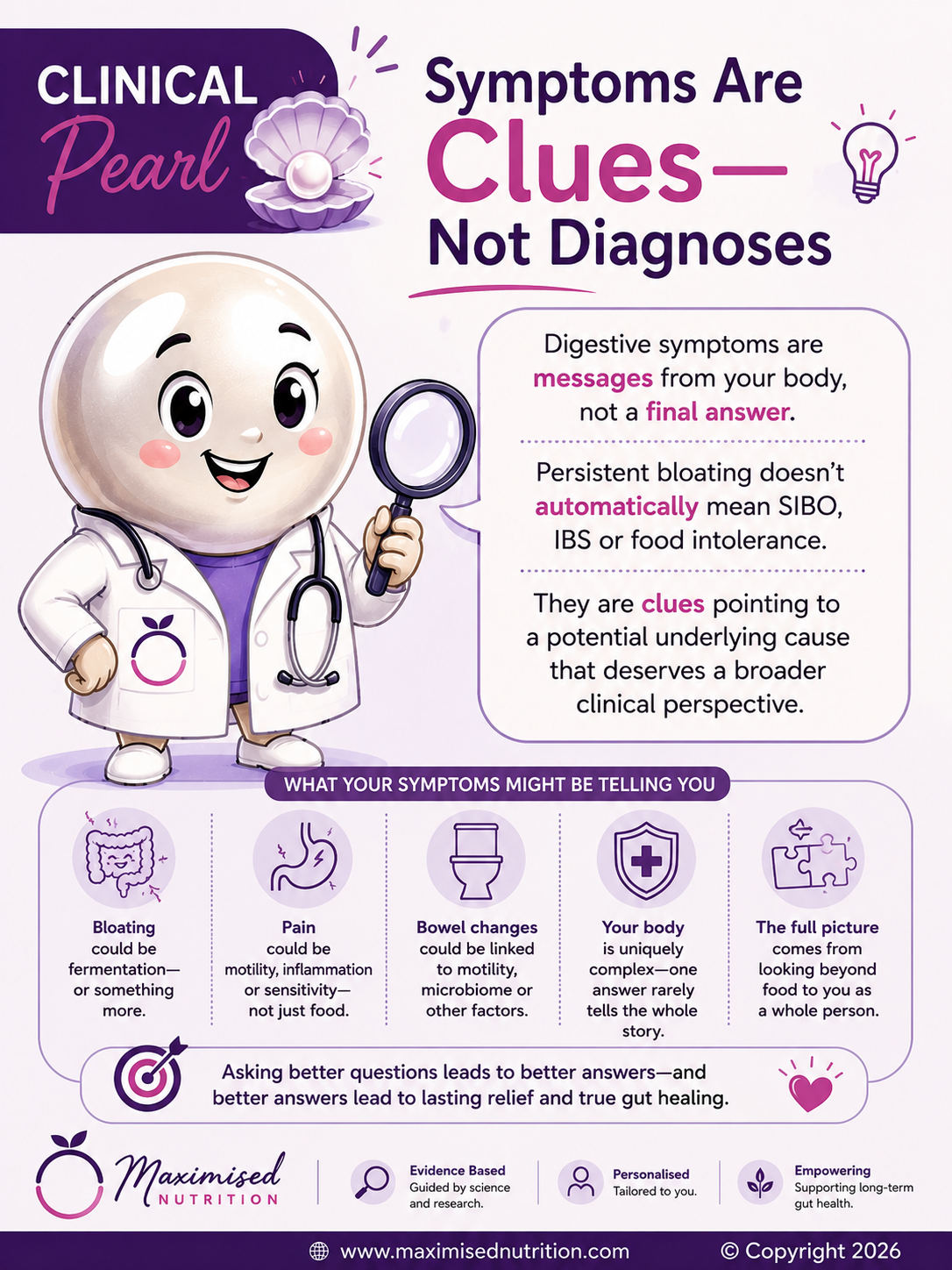
Looking Beyond Food Alone - When FODMAP fails
Persistent bloating does not always mean that more foods need to be eliminated.
As discussed earlier in this article, ongoing digestive symptoms may sometimes be influenced by factors such as:
• constipation or slow bowel transit,
• Small Intestinal Bacterial Overgrowth (SIBO),
• Intestinal Methanogen Overgrowth (IMO),
• altered gut motility,
• gut–brain interactions,
• medication effects,
• or other gastrointestinal conditions.
Not every person with persistent bloating has one of these conditions.
Equally, not every person with IBS has symptoms caused solely by dietary FODMAPs.
This highlights why persistent or recurring symptoms deserve thoughtful assessment rather than increasingly restrictive diets.
Why Personalised Nutrition Matters
One of the challenges of managing IBS is that no two people are exactly alike.
Two individuals may both describe bloating, abdominal discomfort and constipation, yet the factors contributing to their symptoms may be completely different.
This is why nutrition management should be individualised.
A comprehensive nutrition assessment considers much more than food alone. Depending on your circumstances, it may include reviewing:
• your symptom history,
• bowel habits,
• medications,
• previous gastrointestinal illnesses,
• current dietary intake,
• medical investigations,
• and lifestyle factors that may be influencing digestive function.
This broader assessment helps determine whether dietary modification alone is appropriate or whether additional investigation may be beneficial.
When Further Investigation May Be Appropriate
If symptoms persist despite appropriate implementation of the Low FODMAP Diet, your healthcare provider may consider whether further assessment is warranted.
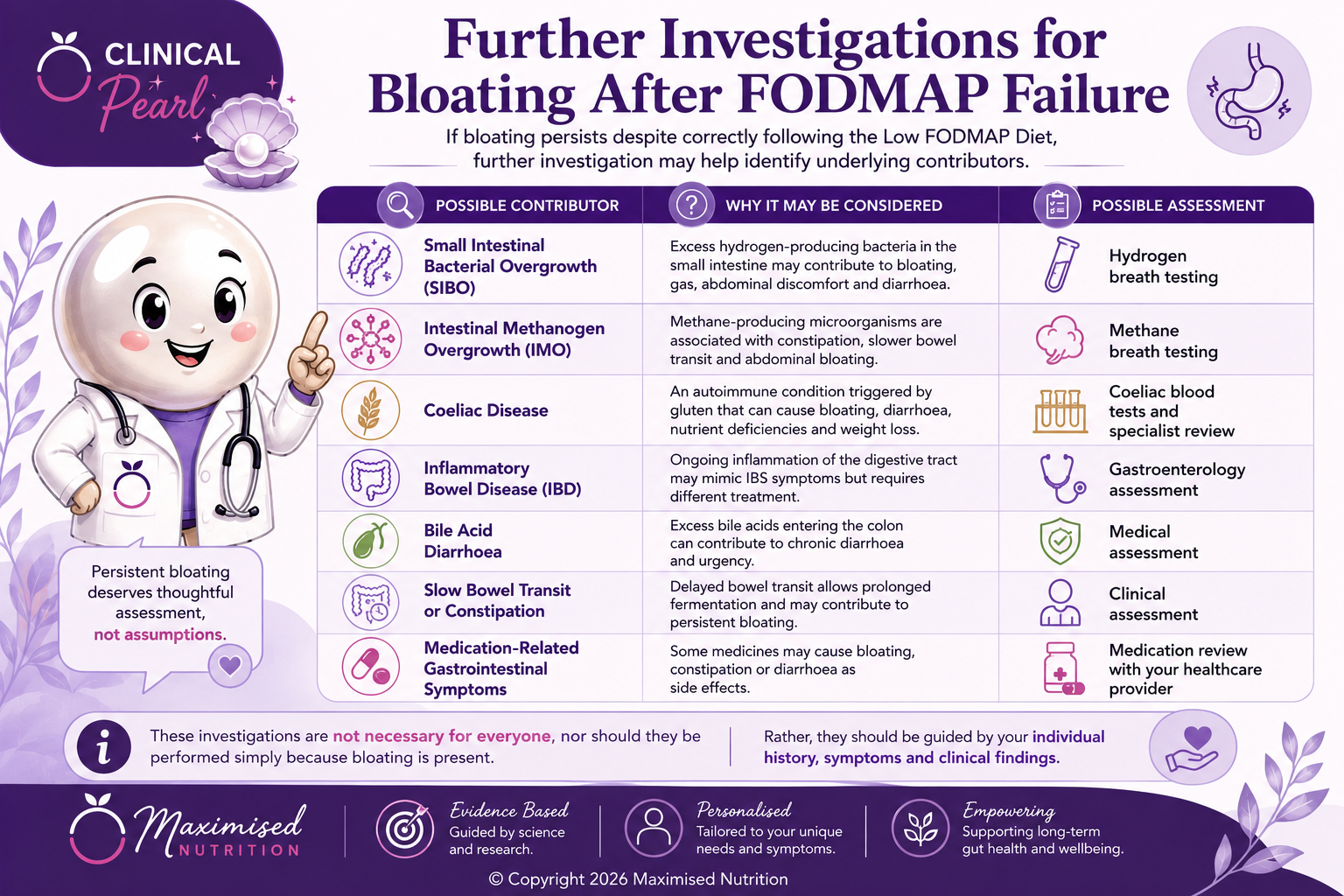
What Should You Do Next?
If you've completed the Low FODMAP Diet but continue to experience bloating, constipation, excessive gas or other digestive symptoms, the next step is not always removing more foods.
A personalised assessment can help determine whether additional investigation or a different nutrition approach may be appropriate.
At Maximised Nutrition, I work with people experiencing complex digestive conditions, including:
• Irritable Bowel Syndrome (IBS)
• Small Intestinal Bacterial Overgrowth (SIBO)
• Intestinal Methanogen Overgrowth (IMO)
• Persistent bloating
• Functional gastrointestinal disorders
• Complex digestive symptoms that have not responded to standard dietary approaches
Depending on your individual circumstances, the next step may include:
• A Hydrogen–Methane Breath Test to help assess for Small Intestinal Bacterial Overgrowth (SIBO) or Intestinal Methanogen Overgrowth (IMO).
• A comprehensive nutrition consultation to review your symptoms, diet, bowel habits and previous investigations.
• A complimentary 15-minute Strategy Call with Prem Nand, NZRD, Integrative Clinical Dietitian–Nutritionist, to discuss your symptoms and help determine the most appropriate next step.
Every person's digestive health journey is different.
The aim is not simply to remove more foods, but to understand what is driving your symptoms and develop an evidence-based management plan tailored to your individual needs.
Frequently Asked Questions
Can I stay on the Low FODMAP Diet permanently?
Generally, no. The elimination phase is designed to be temporary and should be followed by structured food reintroduction and personalisation (Gibson & Shepherd, 2010).
Does the Low FODMAP Diet cure IBS?
No. It is an evidence-based dietary therapy that helps manage symptoms, but it is not considered a cure.
Why do my symptoms return after food reintroduction?
This may occur because you have identified genuine food triggers, exceeded your individual tolerance level, or because another gastrointestinal condition is contributing to your symptoms.
Does persistent bloating always mean I have SIBO?
No. Although SIBO is one possible cause, persistent bloating can have many contributing factors. Appropriate assessment is important before making assumptions about the cause.
Is fermentation harmful?
No. Fermentation is a normal and beneficial digestive process that produces short-chain fatty acids important for gut and immune health (Morrison & Preston, 2016). The goal of treatment is not to eliminate fermentation, but to reduce excessive or poorly tolerated fermentation where it contributes to symptoms.
Clinical Bottom Line for FODMAP & IBS Management
The Low FODMAP Diet remains one of the most effective evidence-based dietary therapies for Irritable Bowel Syndrome.
It helps many people identify food triggers and significantly reduces digestive symptoms.
However, if symptoms persist despite following the diet correctly, continually removing more foods is unlikely to be the best long-term strategy.
Instead, a personalised assessment may help determine whether additional factors are contributing to your symptoms and identify the most appropriate next steps.
The ultimate goal is not simply avoiding foods.
It is understanding your digestive health, restoring confidence in eating and achieving the broadest possible nutritious diet that supports long-term wellbeing.
References
Black, C. J., Staudacher, H. M., Ford, A. C., & Moayyedi, P. (2022). Efficacy of a low FODMAP diet in irritable bowel syndrome: Systematic review and network meta-analysis. Gut, 71(6), 1117–1126. https://doi.org/10.1136/gutjnl-2021-325214
Gibson, P. R., & Shepherd, S. J. (2010). Evidence-based dietary management of functional gastrointestinal symptoms: The FODMAP approach. Journal of Gastroenterology and Hepatology, 25(2), 252–258. https://doi.org/10.1111/j.1440-1746.2009.06149.x
Morrison, D. J., & Preston, T. (2016). Formation of short-chain fatty acids by the gut microbiota and their impact on human metabolism. Gut Microbes, 7(3), 189–200. https://doi.org/10.1080/19490976.2015.1134082
Pimentel, M., Lin, H. C., Enayati, P., van den Burg, B., Lee, H. R., Chen, J. H., Park, S., Kong, Y., Conklin, J., & Soffer, E. E. (2006). Methane, a gas produced by enteric bacteria, slows intestinal transit and augments small intestinal contractile activity. American Journal of Physiology-Gastrointestinal and Liver Physiology, 290(6), G1089–G1095. https://doi.org/10.1152/ajpgi.00574.2004
Pimentel, M., Rezaie, A., Rao, S. S. C., Park, S., Lim, B. S., Callstrom, M., ... & Bredenoord, A. J. (2020). American College of Gastroenterology clinical guideline: Small intestinal bacterial overgrowth. American Journal of Gastroenterology, 115(2), 165–178. https://doi.org/10.14309/ajg.0000000000000501
Simrén, M., Barbara, G., Flint, H. J., Spiegel, B. M. R., Spiller, R. C., Vanner, S., Verdu, E. F., Whorwell, P. J., & Zoetendal, E. G. (2013). Intestinal microbiota in functional bowel disorders: A Rome Foundation report. Gut, 62(1), 159–176. https://doi.org/10.1136/gutjnl-2012-302167
Staudacher, H. M., Whelan, K., Irving, P. M., & Lomer, M. C. E. (2017). Mechanisms and efficacy of dietary FODMAP restriction in IBS. Nature Reviews Gastroenterology & Hepatology, 14(4), 256–266. https://doi.org/10.1038/nrgastro.2017.7

About the Author
Prem Nand, NZRD, is an Integrative Clinical Dietitian–Nutritionist and founder of Maximised Nutrition
in New Zealand. She uses a whole-body, systems-based nutrition approach to support people with complex and medically layered health conditions, considering the interconnected role of the gut, brain, nervous system, hormones, metabolism, inflammation, and lifestyle factors in human health.

Holistic Nutrition For A Happy, Healthy, Confident You!
Quick Links
INFORMATION ON THIS WEBSITE IS FOR INFORMATIONAL PURPOSES ONLY.
PLEASE ALWAYS CONSULT A QUALIFIED HEALTH PRACTITIONER FOR A PERSONALISED ADVICE FOR YOUR HEALTH CONDITION
© 2025 MAXIMISED NUTRITION LTD. All Rights Reserved.