Is Chronic Inflammation Sneaking Up on You? Find out in just 60 seconds with this simple test


Can Chronic Stress Feed Cancer?
New Research Explained
Author: Prem Nand, NZRD (Clinical Dietitian - Nutritionist) Published June 2026 Copyright: Maximised Nutrition Ltd
Introduction
Emerging research suggests that chronic psychological stress may influence how tumours interact with the immune system through changes in the gut microbiome. While this does not mean that stress causes cancer, it provides fascinating new insights into the complex relationship between the gut, immune system and tumour biology.
Published in Cancer Cell in 2026, this groundbreaking research identified a previously unrecognised pathway linking chronic stress, intestinal bacteria and the body's ability to recognise and attack tumour cells (He et al., 2026).
The findings are exciting because they deepen our understanding of the gut–immune–brain axis and reinforce the growing importance of gut health in maintaining overall wellbeing.
For healthcare professionals, this study opens new avenues for cancer research. For patients, it offers another reminder that looking after your gut health, managing chronic stress and seeking help for persistent digestive symptoms are worthwhile investments in long-term health.
Importantly, this study does not demonstrate that chronic stress causes cancer, nor does it suggest that improving gut health can prevent or treat cancer. Instead, it highlights one possible mechanism by which chronic stress may influence tumour behaviour after cancer has already developed.
What Is Chronic Stress?
Stress is a normal part of life. In the short term, it helps us respond to challenges by activating the body's "fight-or-flight" response. During this process, hormones such as adrenaline and cortisol increase alertness, mobilise energy stores and prepare the body to respond to immediate threats.
Problems arise when stress becomes prolonged
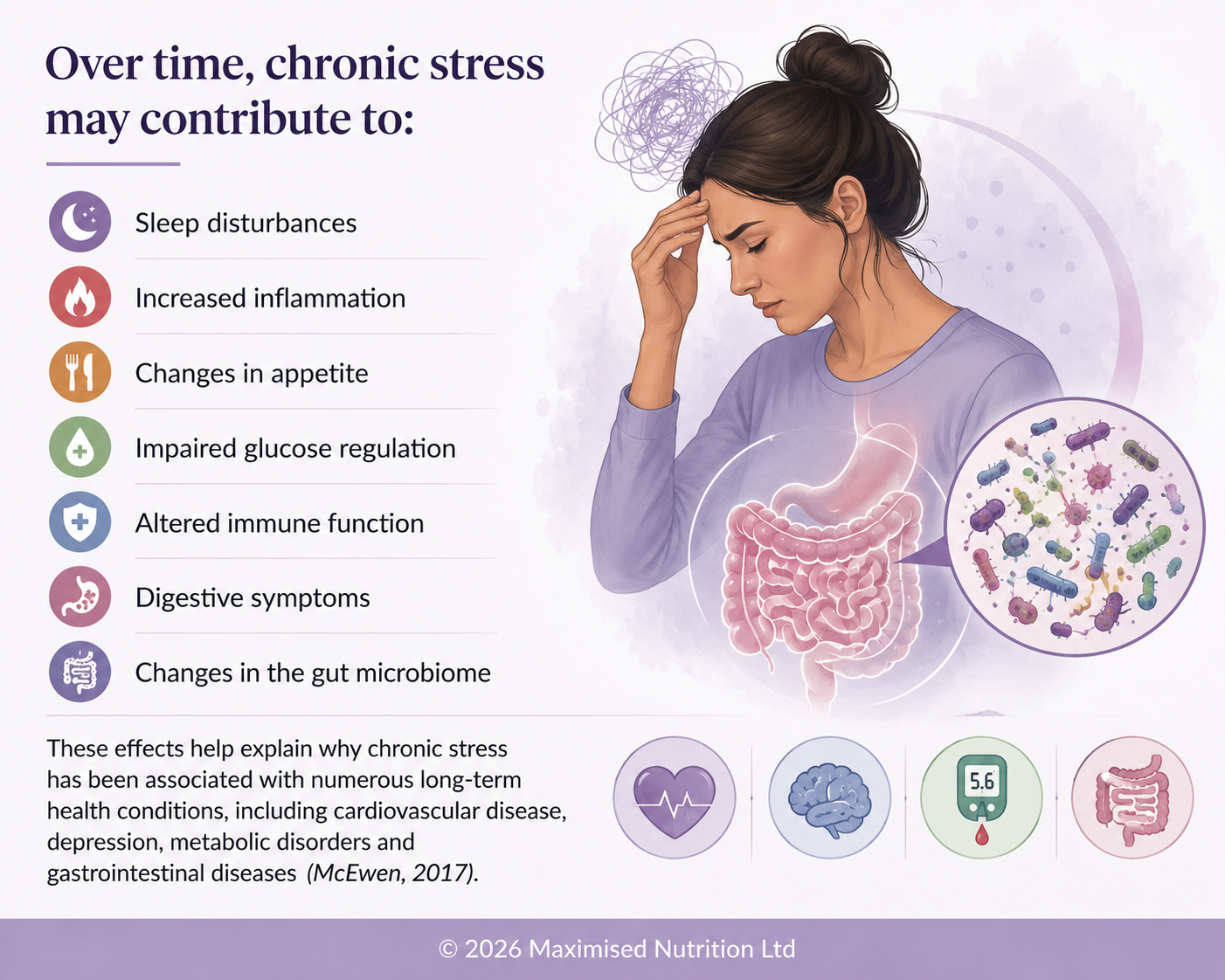
Chronic stress occurs when the body's stress response remains activated for weeks, months or even years. This persistent activation of the hypothalamic–pituitary–adrenal (HPA) axis leads to prolonged exposure to glucocorticoids, including cortisol (McEwen, 2017).
Chronic Stress and Cancer: What Do We Already Know?
For many years, researchers have investigated whether chronic stress influences cancer progression.
Earlier studies suggested that prolonged stress hormones could reduce the effectiveness of immune cells responsible for recognising and destroying abnormal cells (Antoni et al., 2006). Other research demonstrated that chronic stress may promote inflammation, alter blood vessel formation and influence communication between tumour cells and the surrounding tissues (Cole et al., 2015).
However, one important question remained unanswered.
How does psychological stress communicate with the tumour itself?
The 2026 Cancer Cell study provides one possible answer: through the gut microbiome.
The Gut Microbiome: Much More Than Digestion
The human digestive tract contains trillions of microorganisms, including bacteria, fungi and viruses. Collectively, these microorganisms are known as the gut microbiome.
Although many people associate gut bacteria with digestion, their influence extends much further.
A healthy gut microbiome helps:
• Digest dietary fibre.
• Produce short-chain fatty acids that nourish intestinal cells.
• Support vitamin production.
• Regulate inflammation.
• Maintain the intestinal barrier.
• Train and regulate the immune system.
• Protect against harmful microorganisms (Belkaid & Hand, 2014).
In fact, the gastrointestinal tract contains one of the largest concentrations of immune cells in the body. Continuous communication between intestinal microbes and immune cells allows the body to distinguish between harmless organisms and potential threats (Honda & Littman, 2016).
When this delicate ecosystem becomes disrupted—a condition often referred to as gut dysbiosis—immune regulation may also become impaired.
Research has linked gut dysbiosis with a growing number of chronic health conditions, including:
• Irritable bowel syndrome (IBS)
• Inflammatory bowel disease
• Obesity
• Type 2 diabetes
• Autoimmune disorders
• Liver disease
• Neurodegenerative conditions
• Certain cancers (Garrett, 2015)
This growing body of evidence has transformed the way scientists think about the gut. Rather than simply being a digestive organ, it is increasingly recognised as an essential regulator of immune health and whole-body physiology.
How Does Chronic Stress Affect the Gut?
The gut and brain are connected through an intricate communication network known as the gut–brain axis.
Stress hormones influence gastrointestinal function in several important ways.
Research has shown that chronic stress may:
• Alter the composition of gut bacteria.
• Reduce microbial diversity.
• Slow or speed bowel motility.
• Increase intestinal permeability.
• Change immune signalling.
• Promote low-grade inflammation (Foster et al., 2021).
These changes help explain why people experiencing prolonged stress often report digestive symptoms such as bloating, abdominal pain, constipation or diarrhoea.
Importantly, these effects extend beyond digestion. Changes in the gut microbiome may also influence immune function, metabolic health and communication between different organs throughout the body.
Understanding the Intestinal Barrier
The lining of the small intestine forms an important protective barrier between the contents of the gut and the bloodstream.
This barrier has two essential jobs:
1. Allow nutrients to be absorbed.
2. Prevent harmful microorganisms and toxins from entering the body.
When the intestinal barrier becomes impaired, bacteria or bacterial products may cross into surrounding tissues. This process is known as increased intestinal permeability (Camilleri, 2019).
Although the popular term "leaky gut" is frequently used on social media, increased intestinal permeability is a recognised physiological phenomenon observed in several gastrointestinal and inflammatory disorders.
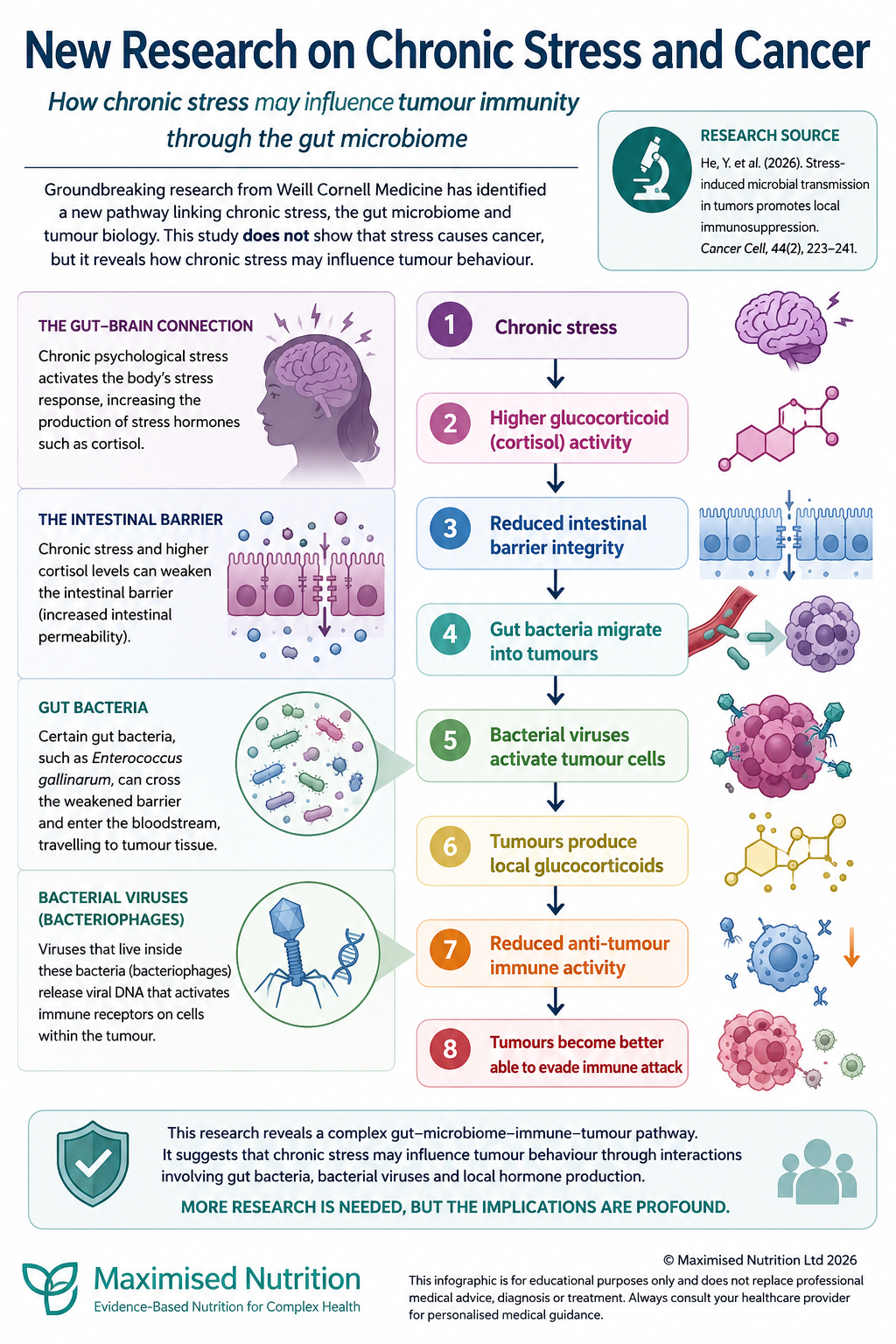
The new Cancer Cell research suggests that chronic stress may weaken this protective barrier, allowing specific gut bacteria to move beyond the intestine.
New Research on Chronic Stress and Cancer
Researchers at Weill Cornell Medicine set out to investigate how chronic stress affects tumour biology.
Using experimental models, they discovered an unexpected series of events linking chronic stress, the gut microbiome and immune function (He et al., 2026): see illustration below:
Gut Bacteria Inside Tumours: A Surprising Discovery
One of the study's most remarkable findings was the identification of Enterococcus gallinarum, a bacterium normally found within the intestine, inside tumour tissue.
Scientists increasingly recognise that many tumours contain their own unique microbial communities, often referred to as the tumour microbiome.
Rather than being passive passengers, these bacteria may actively influence how tumours grow, respond to treatment and interact with the immune system.
In this study, the bacteria themselves were only part of the story.
The researchers discovered that viruses living naturally inside these bacteria—called bacteriophages—appeared to play an equally important role in helping tumours evade immune attack.
Bacteriophages: The Hidden Players Inside Gut Bacteria
Bacteriophages—often shortened to phages—are viruses that infect bacteria. Although viruses are often associated with disease, bacteriophages are a normal and abundant part of the human microbiome.
In the Cancer Cell study, the researchers discovered that when Enterococcus gallinarum migrated into tumour tissue, bacteriophages released viral DNA that activated an immune receptor called Toll-like receptor 9 (TLR9) on specialised cells known as cancer-associated fibroblasts (He et al., 2026).
This finding was unexpected because it suggested that viruses living inside bacteria—not just the bacteria themselves—could influence tumour biology.
The activation of TLR9 triggered another remarkable discovery.
Tumours May Produce Their Own Stress Hormones
Traditionally, scientists believed that cortisol and other glucocorticoids influencing tumours originated primarily from the adrenal glands.
However, the researchers found evidence that tumour-associated fibroblasts could begin producing glucocorticoids within the tumour itself after TLR9 activation (He et al., 2026).
These locally produced glucocorticoids created an environment that suppressed anti-tumour immune responses, particularly those involving B lymphocytes.
As a result, tumour cells appeared better able to avoid immune surveillance.
Although further human research is required, this discovery introduces an entirely new way of thinking about the relationship between chronic stress and cancer.
Rather than acting only through circulating stress hormones, chronic stress may indirectly influence the tumour environment through changes occurring within the gut microbiome.
What Does This Mean for Patients?
This is where careful interpretation becomes essential.
The study provides exciting insights into tumour biology, but it should not be overinterpreted.
This research does not show that:
• Chronic stress causes cancer.
• Everyone living with stress will develop cancer.
• Improving gut health prevents cancer.
• Treating digestive disorders cures cancer.
• Nutrition replaces surgery, chemotherapy, immunotherapy or radiotherapy.
Instead, the research suggests that chronic stress may influence how some existing tumours interact with the immune system through a pathway involving the gut microbiome.
Most of the mechanistic work was performed in experimental models, although supporting evidence was also identified in human tumour samples. Additional clinical studies are needed before these findings influence routine cancer care.
Nevertheless, the study reinforces something nutrition researchers have increasingly recognised over the past decade—the gut microbiome plays a central role in regulating immune health.
Supporting Gut Health: Practical, Evidence-Based Strategies
Although no single food or supplement can guarantee a healthy microbiome, several lifestyle habits consistently support digestive and immune health.
Current evidence supports:
• Eating a wide variety of vegetables and fruit where tolerated.
• Including legumes, nuts, seeds and whole grains when appropriate.
• Consuming fibre gradually according to digestive tolerance.
• Choosing foods naturally rich in polyphenols, including berries, herbs, spices, olives and green tea.
• Including omega-3-rich foods such as oily fish.
• Limiting ultra-processed foods where practical.
• Engaging in regular physical activity.
• Prioritising good-quality sleep.
• Managing chronic psychological stress.
• Avoiding smoking.
These recommendations support overall health regardless of whether someone has a diagnosed gastrointestinal disorder.
Importantly, nutrition should always be individualised. People living with inflammatory bowel disease, coeliac disease or other gastrointestinal disorders may require specific dietary modifications under the guidance of a qualified healthcare professional.
Persistent Digestive Symptoms Deserve Attention
Many people experience bloating, excessive gas, constipation or diarrhoea for months—or even years—without seeking help.
Some assume their symptoms are simply part of ageing.
Others conclude they "just have IBS."
However, ongoing digestive symptoms should not simply be accepted as normal.
Persistent symptoms deserve careful assessment because they may reflect an underlying condition requiring specific management.
Possible causes include:
• Irritable bowel syndrome (IBS)
• Small intestinal bacterial overgrowth (SIBO)
• Intestinal methanogen overgrowth (IMO)
• Food intolerances
• Coeliac disease
• Inflammatory bowel disease
• Bile acid diarrhoea
• Pancreatic insufficiency
• Gastrointestinal infections
• Intestinal parasites
• Medication-related digestive side effects
Many of these conditions produce remarkably similar symptoms.
Consequently, identifying the underlying cause is often the most important step before making significant dietary changes or beginning supplements.
Why Early Assessment Matters
Persistent bloating, abdominal pain, constipation, diarrhoea or excessive gas should not simply be accepted as "normal." Although these symptoms are often associated with irritable bowel syndrome (IBS), they may also be caused by other conditions such as coeliac disease, inflammatory bowel disease, bile acid diarrhoea, pancreatic insufficiency, food intolerances, gastrointestinal infections, intestinal parasites, or small intestinal bacterial overgrowth (SIBO).
Because many digestive conditions produce similar symptoms, it is important to avoid self-diagnosis. A comprehensive assessment helps identify the most likely underlying cause and determines whether further investigations or specialist referral are needed. \
An accurate diagnosis allows nutrition recommendations to be personalised, helping to avoid unnecessary dietary restrictions and ensuring that treatment targets the underlying problem rather than simply masking symptoms.
Could Hydrogen–Methane Breath Testing Help?
For some individuals with persistent bloating, excessive gas, constipation or unexplained diarrhoea, hydrogen and methane breath testing may provide valuable additional information.
Hydrogen–methane breath testing is a non-invasive investigation that measures gases produced after consuming a carbohydrate solution.
The test may help identify conditions such as:
• Small intestinal bacterial overgrowth (SIBO)
• Intestinal methanogen overgrowth (IMO)
when interpreted alongside a detailed clinical assessment (Rezaie et al., 2017; Pimentel et al., 2020).
However, breath testing is not appropriate for everyone, nor does it diagnose every digestive disorder.
Rather, it forms one component of a comprehensive assessment that considers:
• Medical history
• Current symptoms
• Previous investigations
• Medication use
• Dietary intake
• Lifestyle factors
• Relevant laboratory findings
This personalised approach helps ensure that nutrition recommendations are based on evidence rather than guesswork.
How Maximised Nutrition Can Help
Digestive symptoms can affect far more than the gastrointestinal tract. They may influence energy levels, confidence around food, social activities and overall quality of life.
At Maximised Nutrition, I provide evidence-based nutrition assessment for people experiencing complex digestive symptoms.
This includes assessment of conditions such as:
• IBS
• Suspected SIBO
• Intestinal methanogen overgrowth (IMO)
• Food intolerances
• Complex digestive disorders
Where clinically appropriate, hydrogen and methane breath testing can be incorporated into a comprehensive nutrition assessment.
My approach is personalised, collaborative and evidence-based, recognising that similar symptoms can arise from many different underlying conditions.
Where appropriate, I also work alongside your GP, gastroenterologist and other healthcare professionals to help ensure coordinated care.
Key Take Home Messages
• Chronic stress affects much more than mental wellbeing.
• New research suggests chronic stress may influence tumour immunity through interactions involving the gut microbiome.
• This study does not demonstrate that chronic stress causes cancer.
• The gut microbiome plays an important role in immune regulation and overall health.
• Looking after your gut supports whole-body health.
• Persistent digestive symptoms deserve proper assessment.
• Similar digestive symptoms can arise from many different gastrointestinal conditions.
• Nutrition recommendations should always be personalised.
• Hydrogen and methane breath testing may be helpful for selected individuals with persistent digestive symptoms.
• Ongoing research into the gut–immune–brain axis continues to reshape our understanding of human health.
Conclusion
Research into the relationship between chronic stress and cancer is evolving rapidly. This landmark study adds another important piece to the puzzle by identifying a potential pathway linking psychological stress, the gut microbiome and the immune system within the tumour environment.
Although further research is needed before these findings change routine clinical practice, the study reinforces the importance of maintaining good digestive health, managing chronic stress and seeking professional assessment for persistent gastrointestinal symptoms.
As our understanding of the gut microbiome continues to expand, one message is becoming increasingly clear: the gut is far more than a digestive organ. It is a central partner in immune regulation, metabolic health and whole-body wellbeing.
Looking after your gut may not only improve digestion—it may also contribute to healthier ageing and better overall health throughout life.
Book your free 15 minute strategy call to see how Clinical Dietitian-Nutritionist, Prem Nand can help you.
References
Antoni, M. H., Lutgendorf, S. K., Cole, S. W., Dhabhar, F. S., Sephton, S. E., McDonald, P. G., Stefanek, M., & Sood, A. K. (2006). The influence of bio-behavioural factors on tumour biology: Pathways and mechanisms. Nature Reviews Cancer, 6(3), 240–248. https://doi.org/10.1038/nrc1820
Belkaid, Y., & Hand, T. W. (2014). Role of the microbiota in immunity and inflammation. Cell, 157(1), 121–141. https://doi.org/10.1016/j.cell.2014.03.011
Camilleri, M. (2019). Leaky gut: Mechanisms, measurement and clinical implications in humans. Gut, 68(8), 1516–1526. https://doi.org/10.1136/gutjnl-2019-318427
Cole, S. W., Nagaraja, A. S., Lutgendorf, S. K., Green, P. A., & Sood, A. K. (2015). Sympathetic nervous system regulation of the tumour microenvironment. Nature Reviews Cancer, 15(9), 563–572. https://doi.org/10.1038/nrc3978
Foster, J. A., Rinaman, L., & Cryan, J. F. (2021). Stress and the gut–brain axis: Regulation by the microbiome. Neurobiology of Stress, 15, 100332. https://doi.org/10.1016/j.ynstr.2021.100332
Garrett, W. S. (2015). Cancer and the microbiota. Science, 348(6230), 80–86. https://doi.org/10.1126/science.aaa4972
He, Y., et al. (2026). Chronic stress unleashes an intratumor phage-fibroblast-B cell circuit to promote tumor growth. https://www.sciencedirect.com/science/article/pii/S1535610826002916?via%3Dihub
Honda, K., & Littman, D. R. (2016). The microbiota in adaptive immune homeostasis and disease. Nature, 535(7610), 75–84. https://doi.org/10.1038/nature18848
McEwen, B. S. (2017). Neurobiological and systemic effects of chronic stress. Chronic Stress, 1, 1–11. https://doi.org/10.1177/2470547017692328
Pimentel, M., Rao, S. S. C., Park, S., et al. (2020). The small intestinal bacterial overgrowth hypothesis in IBS: Implications for diagnosis and treatment. Gastroenterology Clinics of North America, 49(3), 547–567.
Rezaie, A., Buresi, M., Lembo, A., Lin, H., McCallum, R., Rao, S., Schmulson, M., Valdovinos, M., Zakko, S., Pimentel, M., & the North American Consensus Group. (2017). Hydrogen and methane-based breath testing in gastrointestinal disorders: The North American Consensus. American Journal of Gastroenterology, 112(5), 775–784. https://doi.org/10.1038/ajg.2017.46
Sender, R., Fuchs, S., & Milo, R. (2016). Revised estimates for the number of human and bacterial cells in the body. PLoS Biology, 14(8), e1002533. https://doi.org/10.1371/journal.pbio.1002533
Valdes, A. M., Walter, J., Segal, E., & Spector, T. D. (2018). Role of the gut microbiota in nutrition and health. BMJ, 361, k2179. https://doi.org/10.1136/bmj.k2179
Wong, S. H., Yu, J. (2019). Gut microbiota in colorectal cancer: Mechanisms of action and clinical applications. Nature Reviews Gastroenterology & Hepatology, 16(11), 690–704. https://doi.org/10.1038/s41575-019-0209-8
Zitvogel, L., Ma, Y., Raoult, D., Kroemer, G., & Gajewski, T. F. (2018). The microbiome in cancer immunotherapy: Diagnostic tools and therapeutic strategies. Science, 359(6382), 1366–1370. https://doi.org/10.1126/science.aar6918

About the Author
Prem Nand, NZRD, is an Integrative Clinical Dietitian–Nutritionist and founder of Maximised Nutrition
in New Zealand. She uses a whole-body, systems-based nutrition approach to support people with complex and medically layered health conditions, considering the interconnected role of the gut, brain, nervous system, hormones, metabolism, inflammation, and lifestyle factors in human health.

Holistic Nutrition For A Happy, Healthy, Confident You!
INFORMATION ON THIS WEBSITE IS FOR INFORMATIONAL PURPOSES ONLY.
PLEASE ALWAYS CONSULT A QUALIFIED HEALTH PRACTITIONER FOR A PERSONALISED ADVICE FOR YOUR HEALTH CONDITION
© 2025 MAXIMISED NUTRITION LTD. All Rights Reserved.